My Space. My Feelings. My Voice. runs four weeks. Each week builds on the one before, so start wherever you are and scroll down for what you missed. Posts, videos and articles are added here daily.
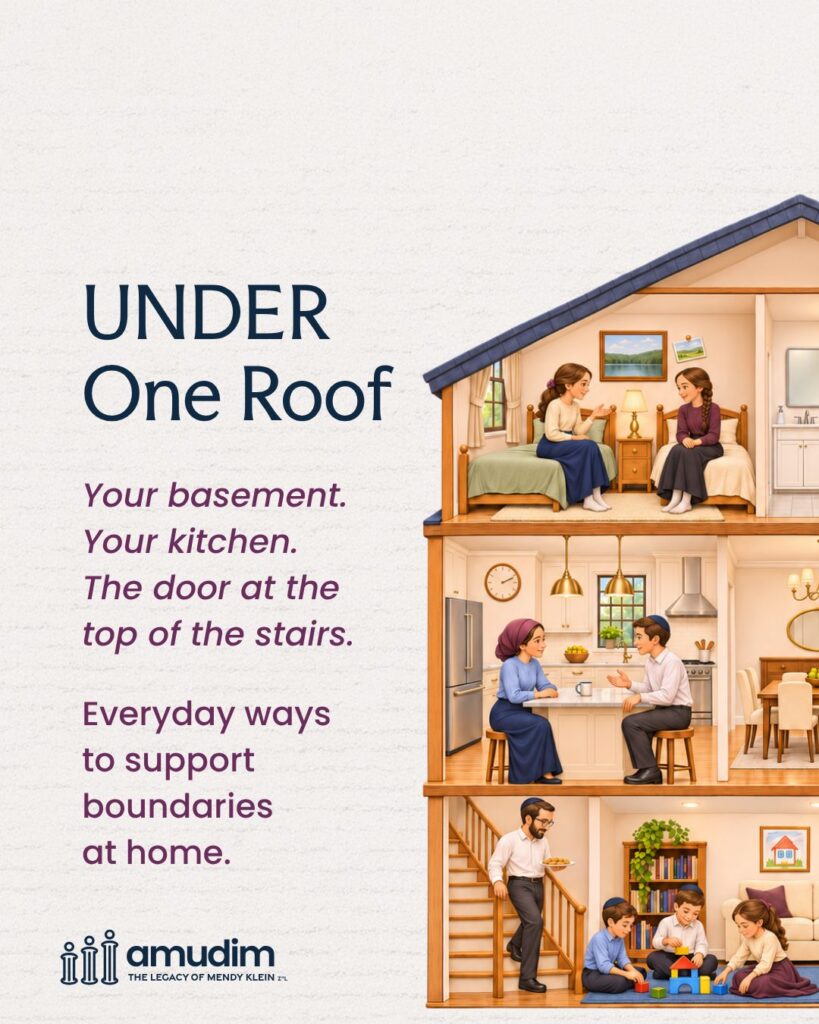
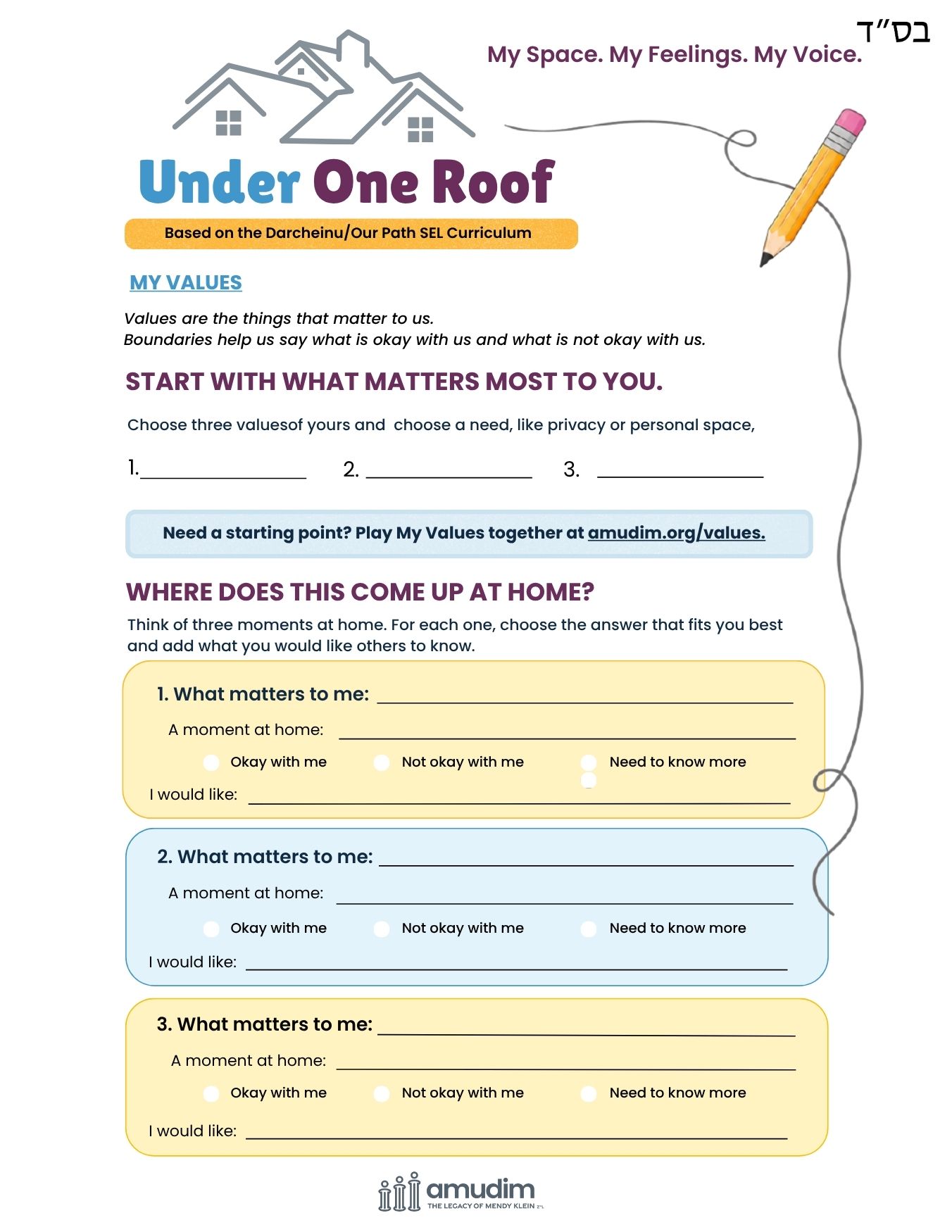
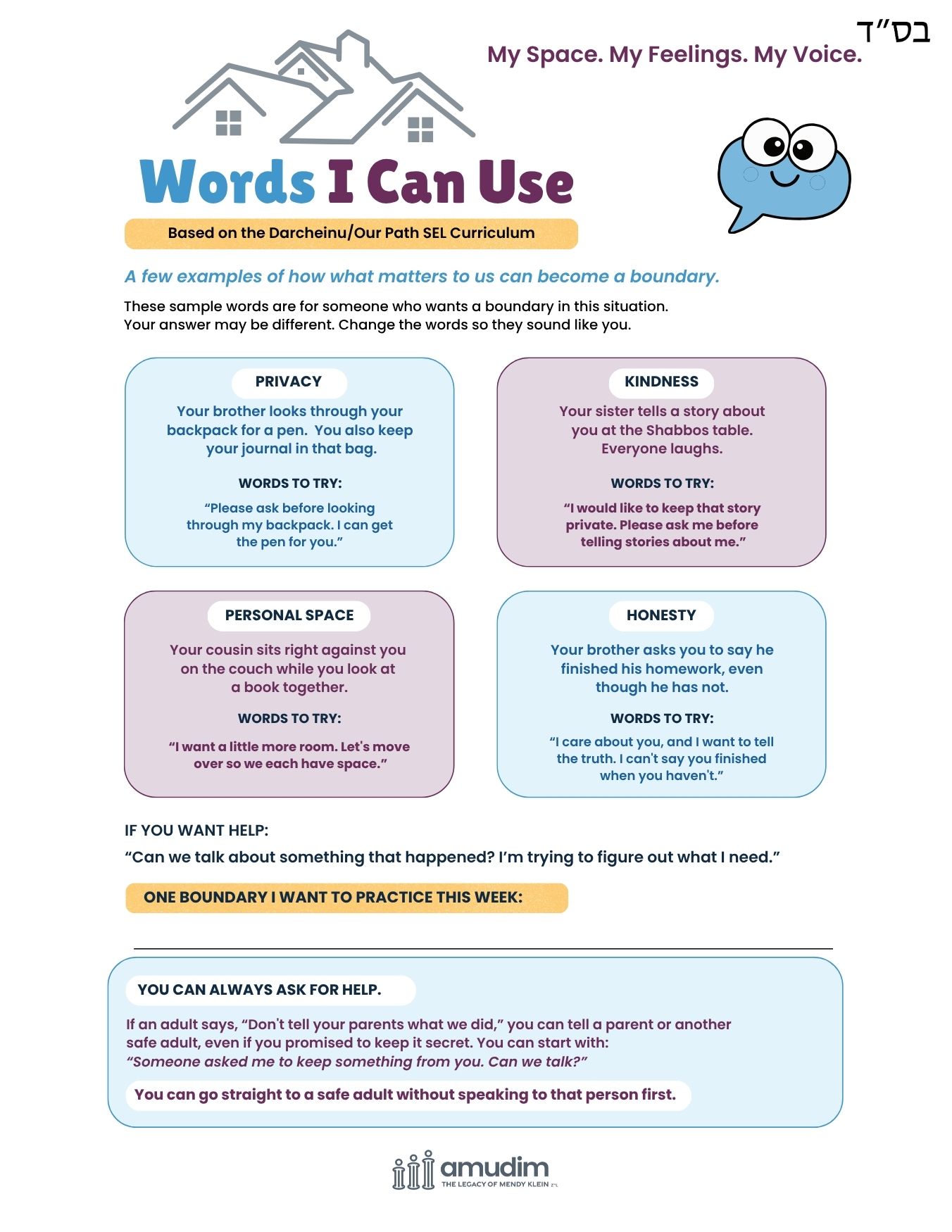
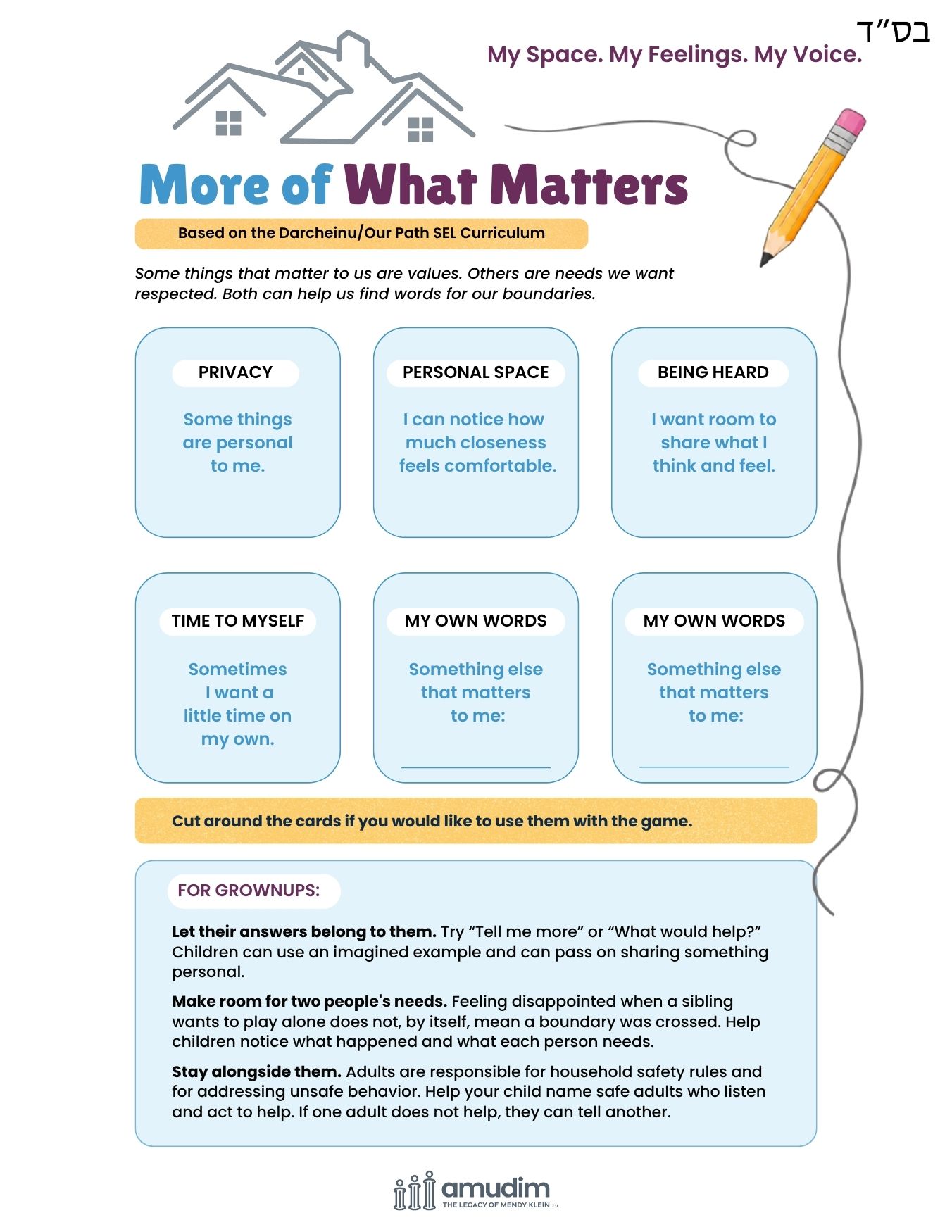
Week 3: Under One Roof
Boundaries among the people who share a home. The safeguards we set, how we follow through, and making sure our children know there’s room to tell us.
POST
The Story at the Shabbos Table
The story everyone laughs about at the Shabbos table may be the one your child wishes you’d stop telling. Our children are watching what happens in this house when somebody wishes something would stop.
Video
Under One Roof: A Conversation with Our SEL Team
Mrs. Shira Berkowitz, LCSW, on the everyday safeguards that are just how the house runs, and Rabbi Avi Landa, LCPC, on making sure our children know they can tell us anything.
Article
Under One Roof: Boundaries at Home
Room by room, what boundaries look like at home, and why “I’m proud of you for telling me” is the sentence that keeps the most important door open.
Read More
POST
A Moment of Understanding
These everyday moments give children something to carry into their friendships, their classrooms, and the lives they’ll build: the experience of being understood and practice offering that to someone else.
Week 2: Empathy
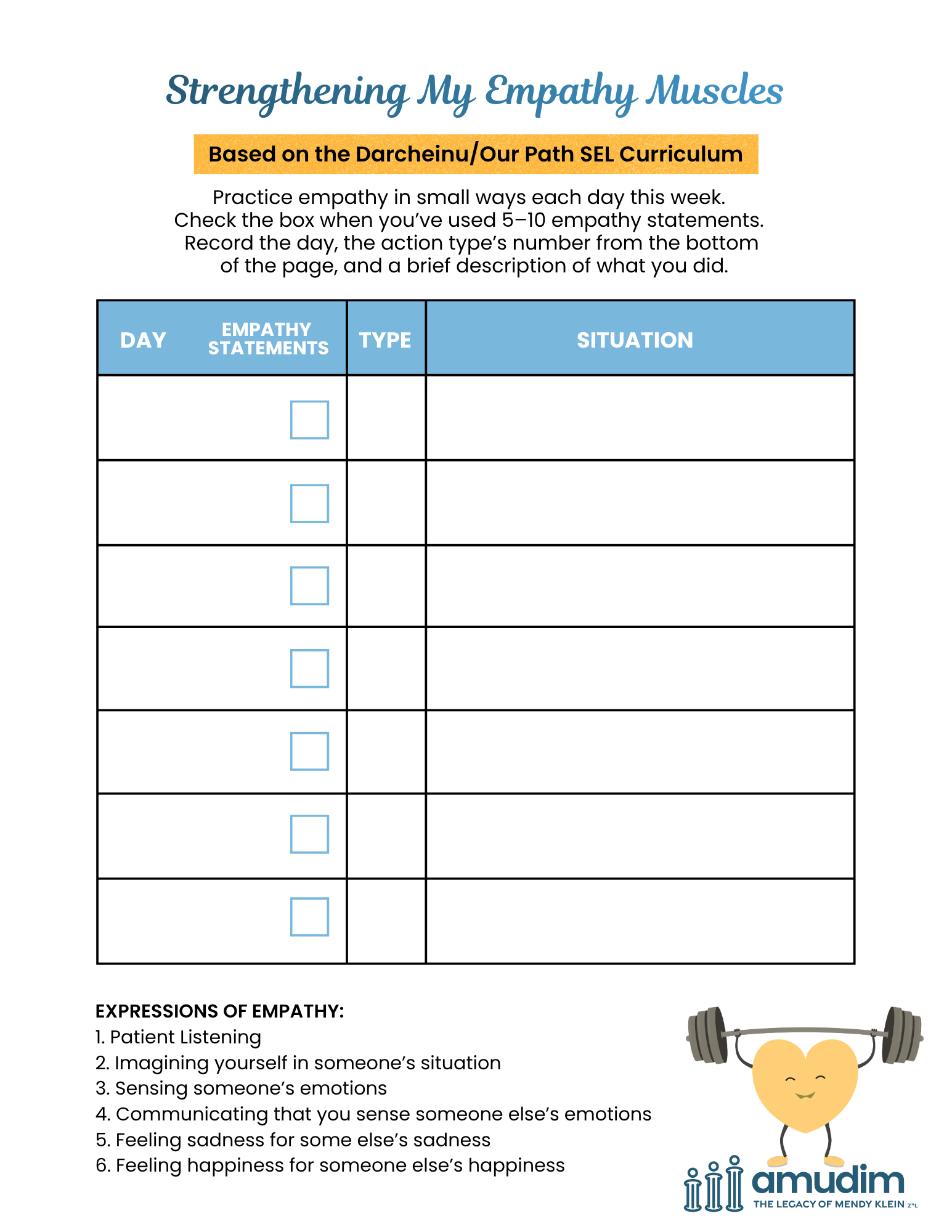
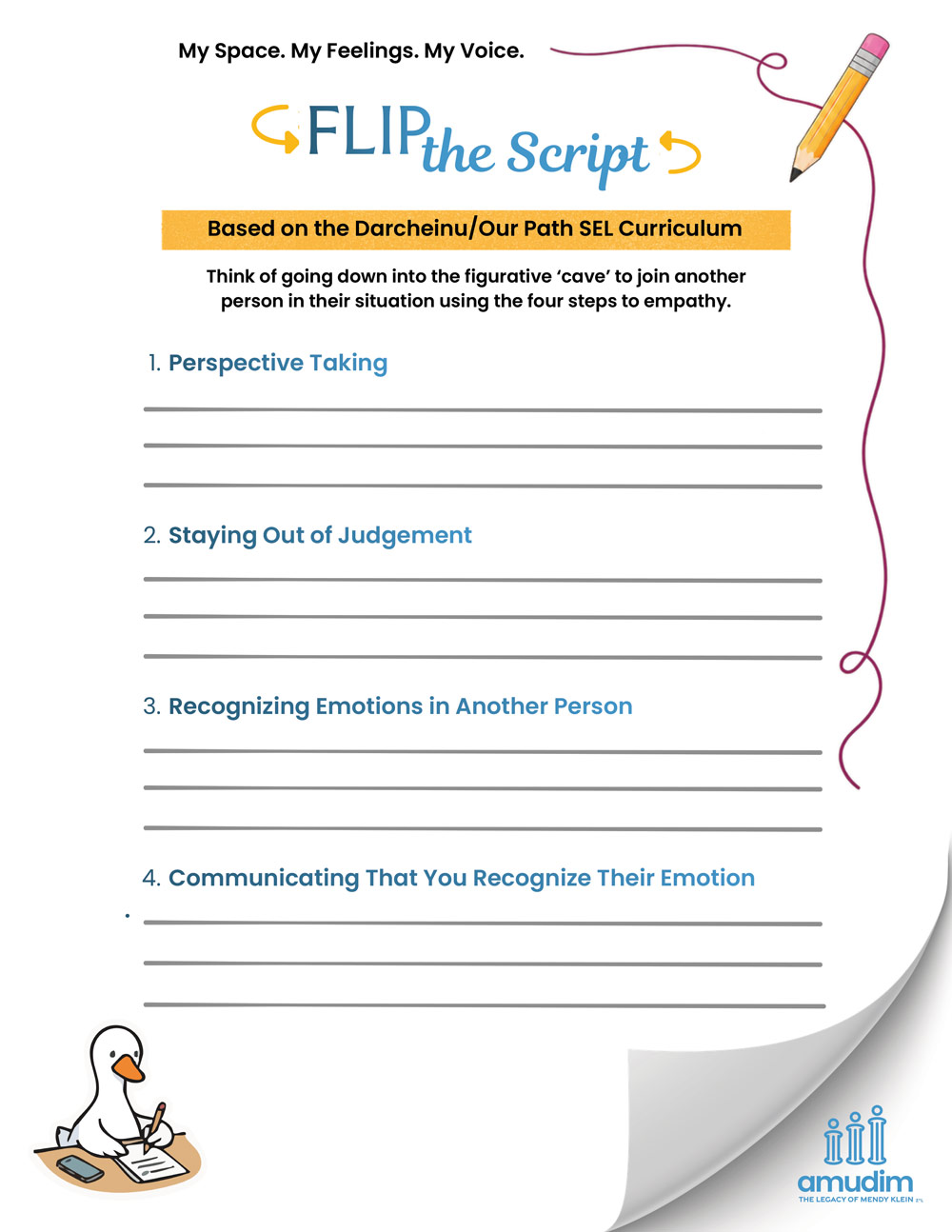
Before a child can respect someone else’s boundary, she has to feel how her actions land. Empathy, in four moves, with boundaries kept.
POST
Boundaries and Empathy
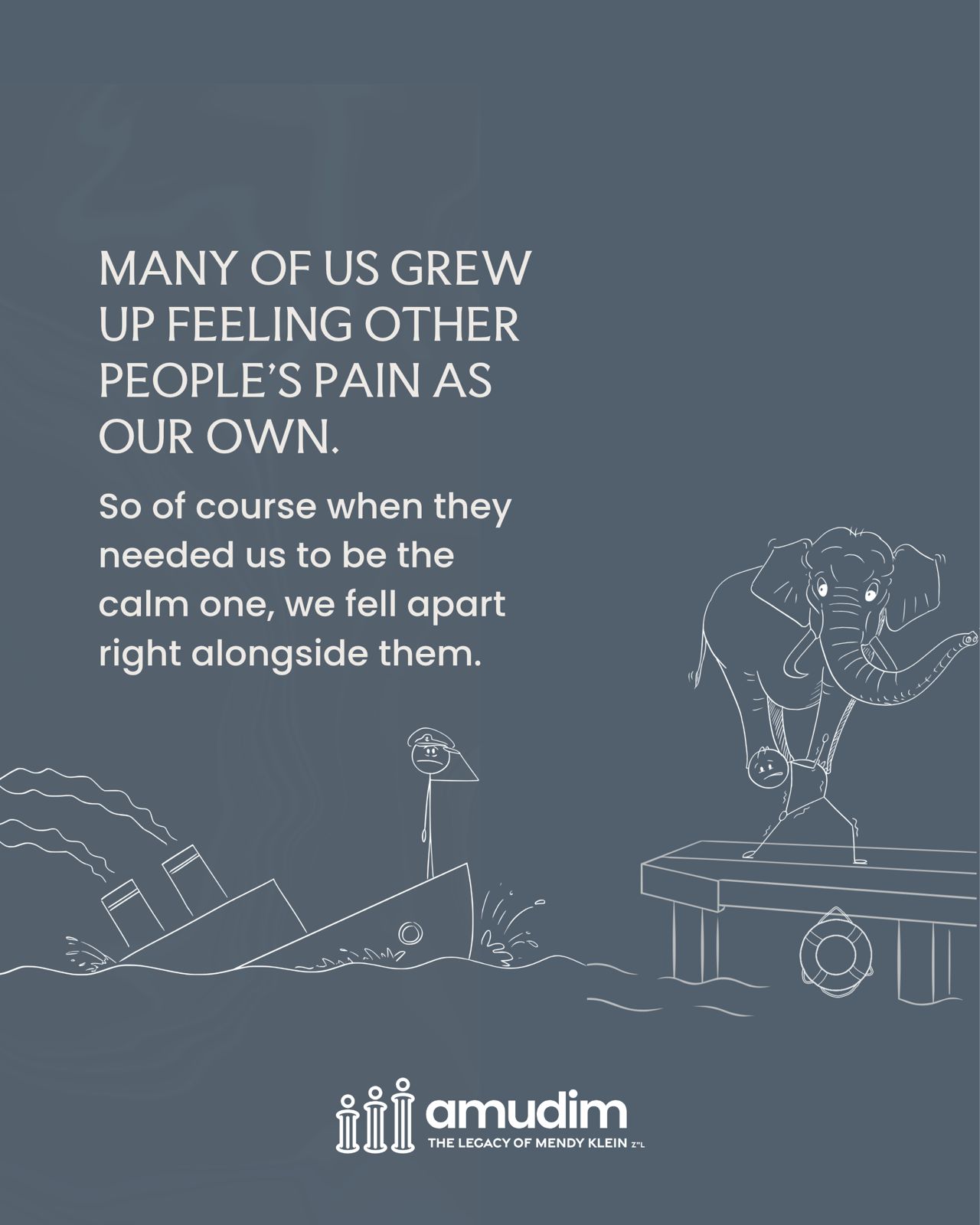
It can be hard to stay with someone else’s feelings when so much is coming up in us.
When our child comes home saying they had a terrible day, we can take a breath and set down what’s weighing on us before deciding what happens next.
Video
Boundaries Aren’t Division. They’re Respect.
Boundaries aren’t division. They’re respect. Here’s what’s okay for me, and here’s what’s not.
Mrs. Shira Berkowitz, LCSW, and Rabbi Yisroel Grossberg on why empathy without boundaries isn’t empathy, and how a child can be heard, understood, and still told no.
Article
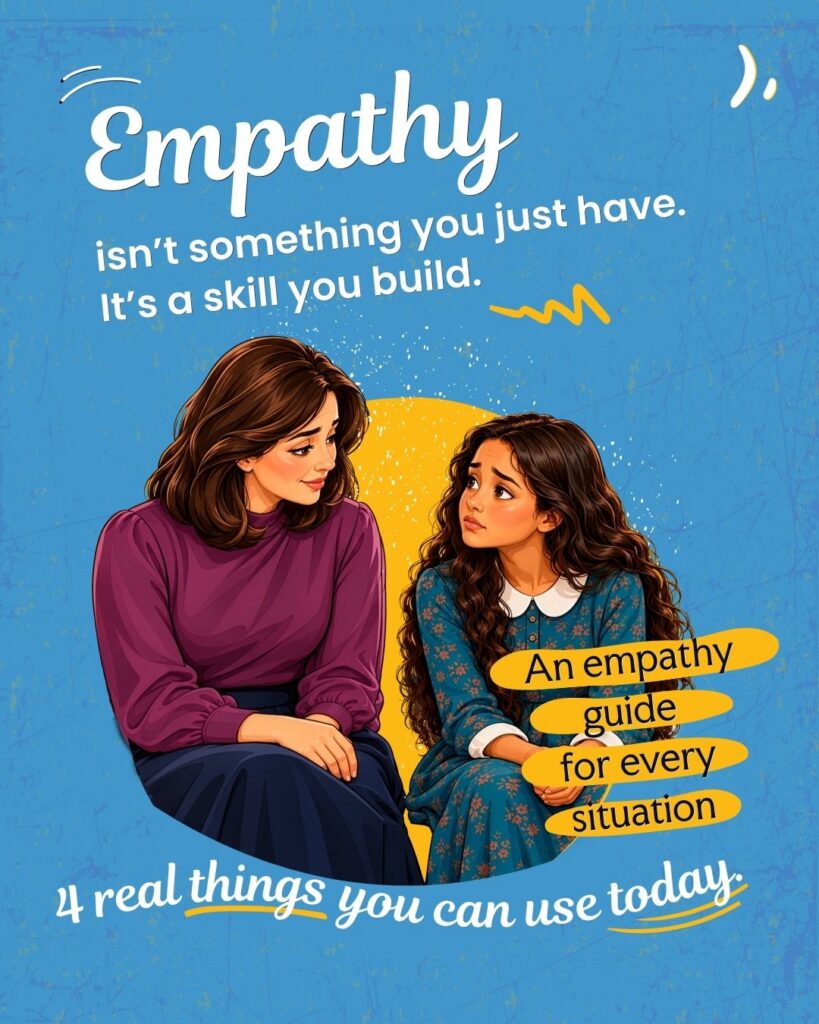
Empathy Is a Skill You Build
Before we can help a child respect someone else’s boundaries, we have to help her understand how her actions affect them.
Empathy isn’t something you have. It’s something you do, in four moves. This week’s article walks through them, with one scene from the family and one from the playground.
We’ve spent this week talking about empathy. How to teach it to our kids, how to hold it together with boundaries, how hard it actually is to do well.
It takes a lot of empathy to do this work. To pick up the phone and sit with someone on the worst day of their life and see a brother, a sister, a neighbor, not a case.
So today we would like to show our gratitude. To the Amudim staff and case managers, the ones who carry that empathy into every day. To every person who has followed this series and brought it home to their own family. And to every donor who makes it possible for us to keep showing up.
Week 1: Noticing
Where boundaries begin. What a boundary is, how children learn one, and what to say at the family simcha.
POST
Learning Boundaries
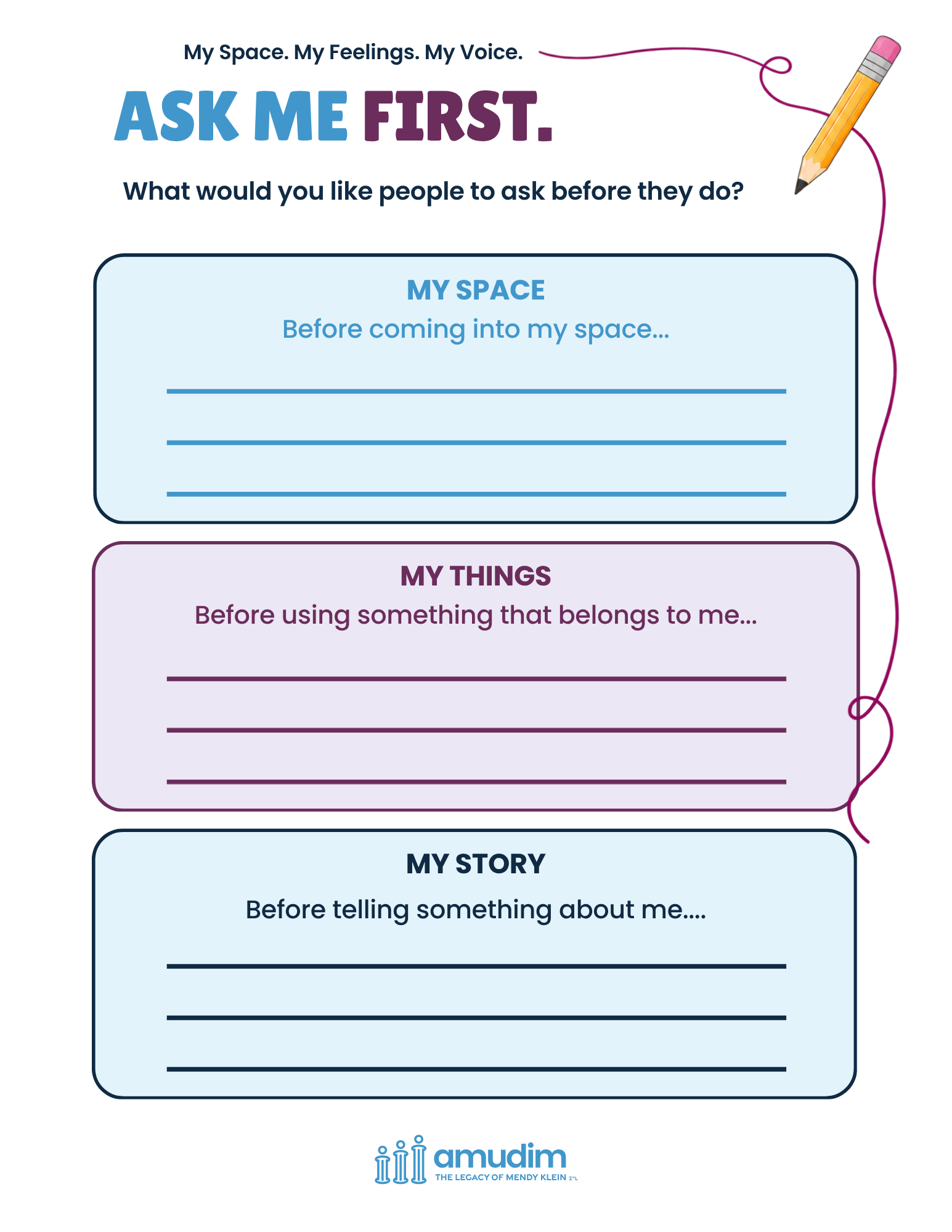
What if, from their very first steps, our children knew they could choose how they give and receive affection, even with the people they love?
Introducing My Space. My Feelings. My Voice., our new parenting series on helping our children feel comfortable having boundaries, and helping us grow alongside them. 💫
Video
What Is a Boundary, Anyway?
Our children begin learning about boundaries long before they even know the word.
And so much of that learning happens in the little moments we share with them every day.
In today’s video, Mrs. Shira Berkowitz, LCSW, and Rabbi Avi Landa, LCPC, walk us through age-appropriate ways to introduce boundaries as our children grow, helping them understand how to respect someone else’s space while learning that their own deserves respect, too.
Video
Family Touch and Our Children's Boundaries
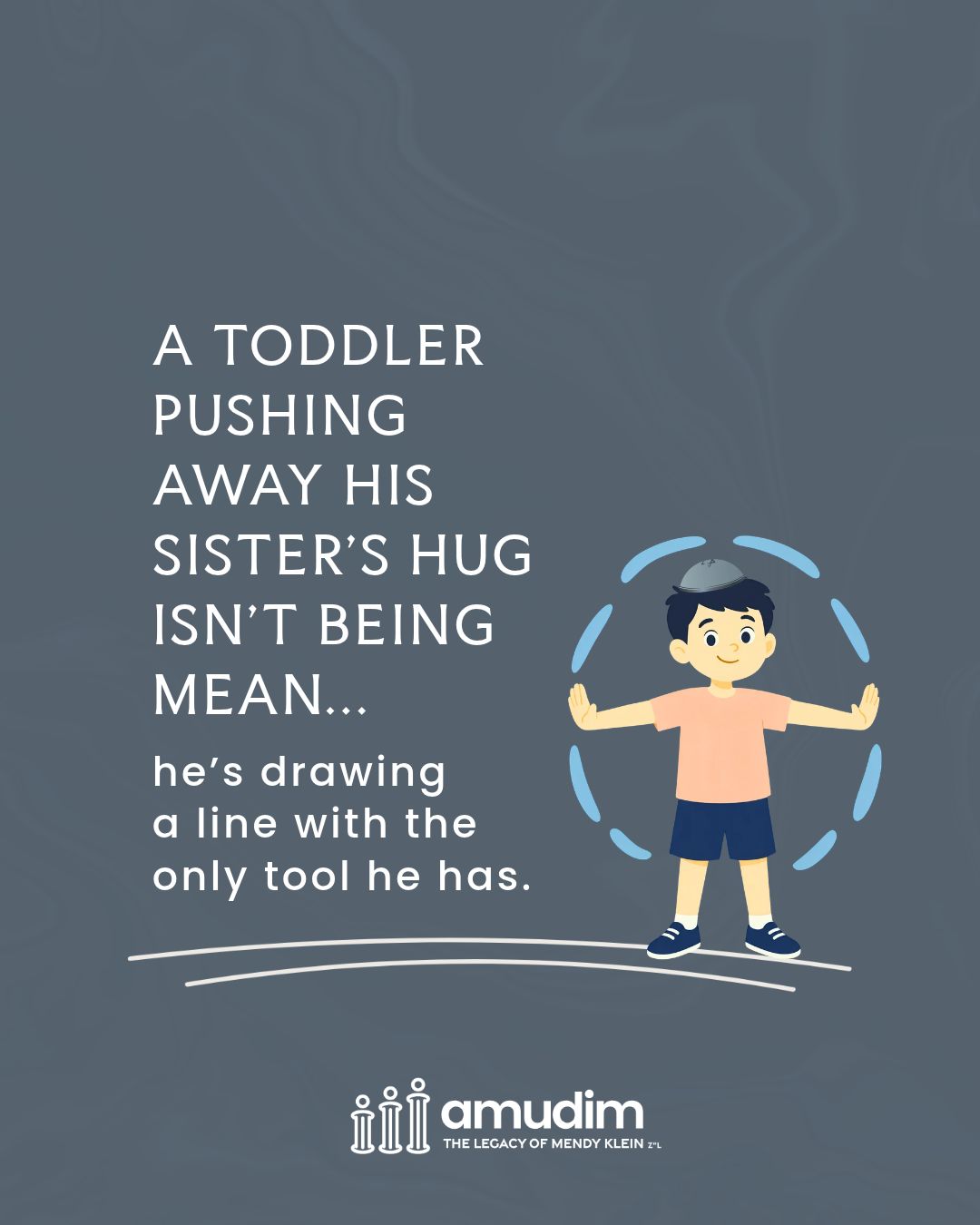
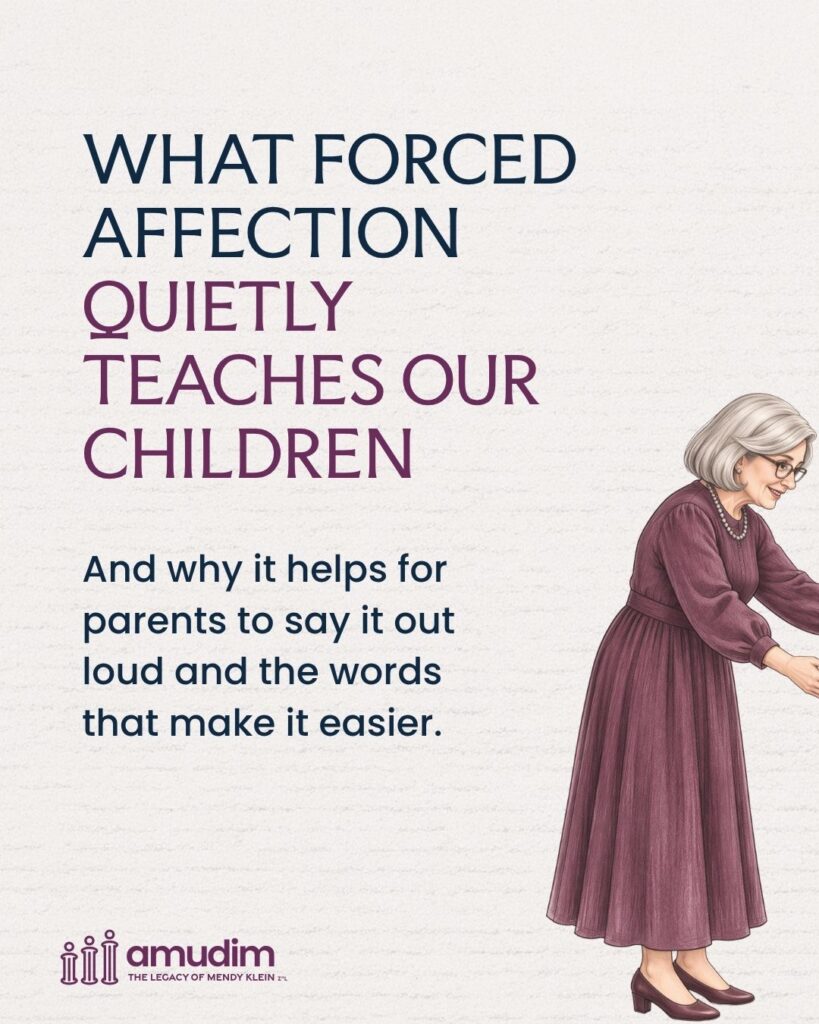
Some touch is clearly inappropriate. But what about a hug that comes from love, with no ill intent, that our child simply doesn’t want?
What does our response teach them about whether their boundaries matter?
Rabbi Avi Landa, LCPC, explores this in today’s video, part of My Space. My Feelings. My Voice.
Tomorrow, we’ll take this a step further: what we can say in those moments to help our children’s choices be heard.
Article
Where Boundaries Begin
Most of us don’t remember being taught what a boundary is. We learned from what happened around us.
Our children are learning through those everyday moments, too. Week 1 of My Space. My Feelings. My Voice. is about noticing where that learning begins.
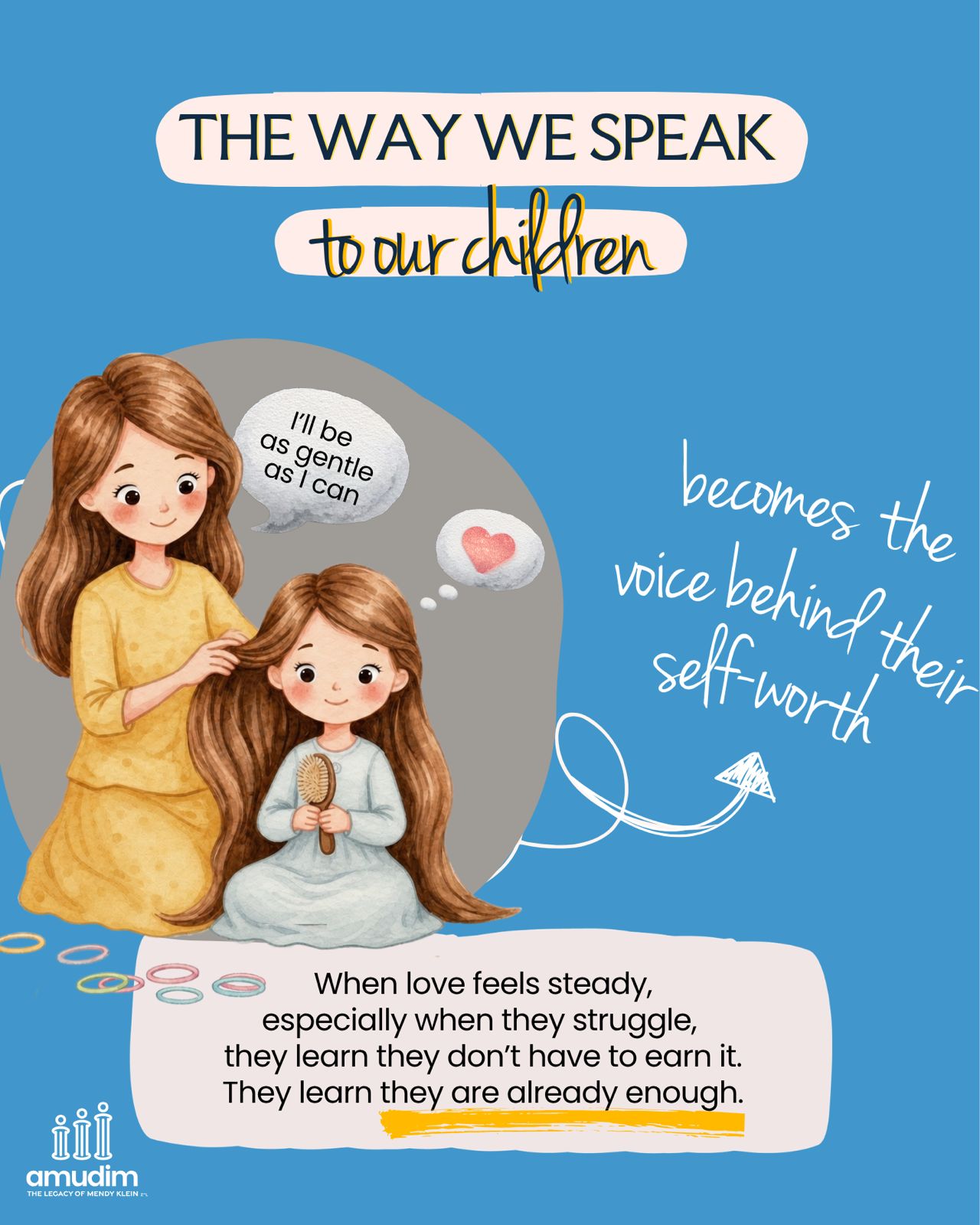
When we choose patience and gentleness with our kids – even when we are running late or having a rough morning – we are telling them, “You and your feelings are valuable to me.”
In those moments, we are leaving an imprint they can return to as they learn to believe in their own worth.
Article
When We Did It Right and It Was Still Hard
The messy middle of helping our children grow.
We have spent a lot of time this past month talking about building skills in our children, and about the importance of modeling those skills ourselves first. But today, we want to say the quiet part out loud:
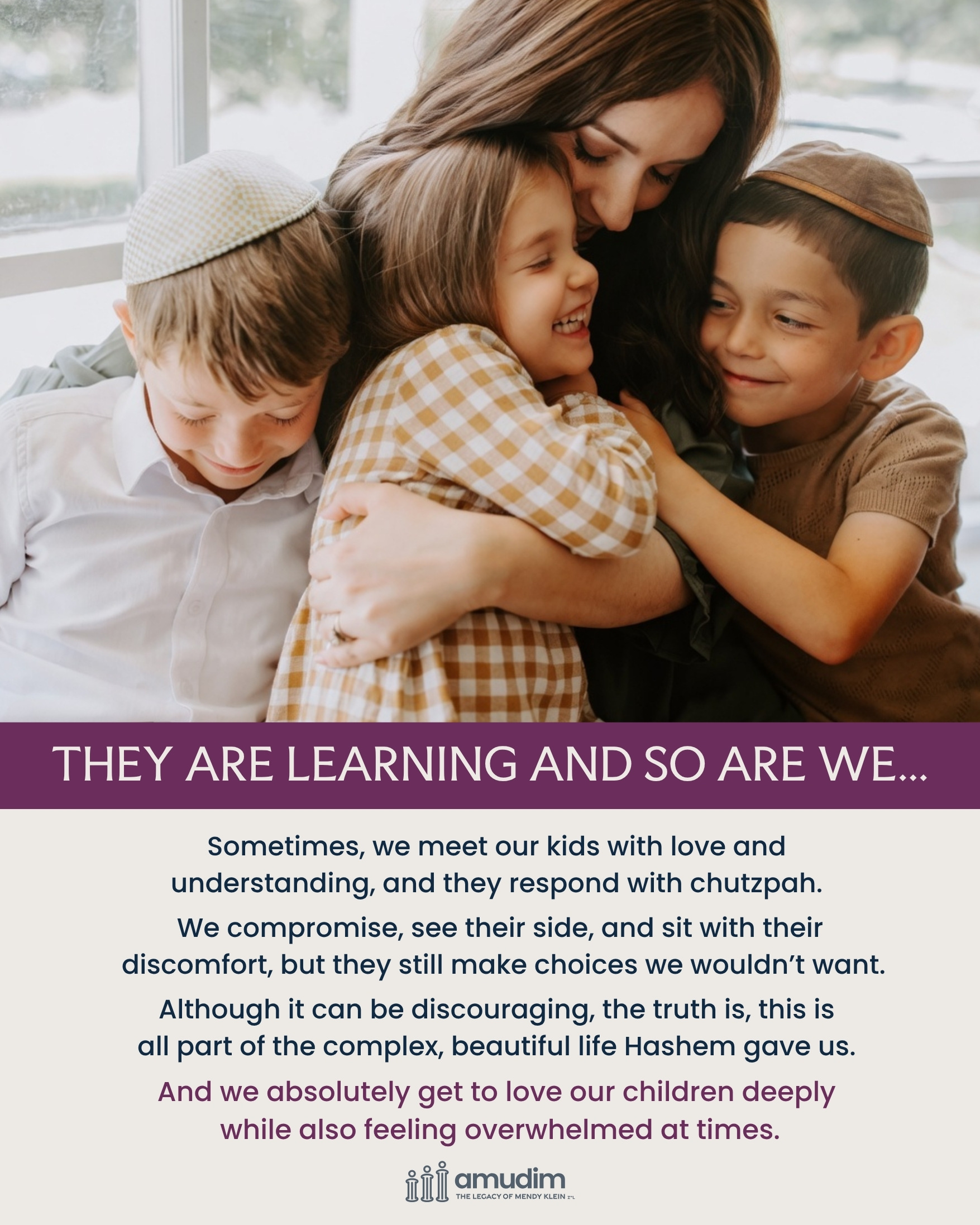
Sometimes, you can do everything “the right way,” and it still feels completely wrong.
More than lessons, practices, or busy calendars, our kids need quality time with us. That’s where confidence grows, memories are made, and love feels the loudest.
As we head into this beautiful Shabbos, let’s lean in and make those moments count.