



Connection Before Consequence
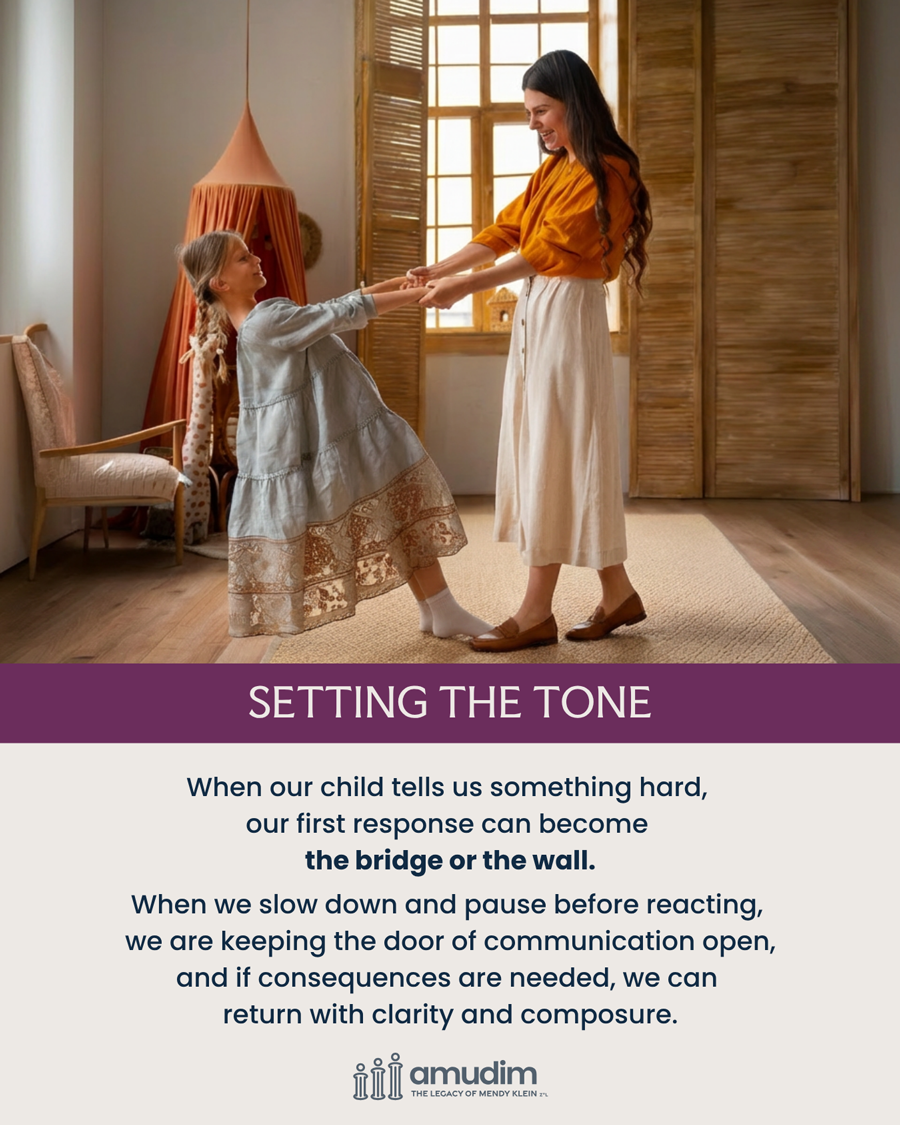
When our child tells us something hard, our first response can become the bridge – or the wall.
This week, we have been talking about accountability and repair.
We began with the way our children learn from how we respond when we are the ones who make mistakes. When we go back, take ownership, apologize, and repair, we show them that a mistake doesn’t have to be the end of the story.
But there is another side to this: Today we will look at what happens when our child is the one who made the mistake.
At Amudim, we believe education is prevention.
That’s why we’re in classrooms, at community events, and in shuls — building awareness, teaching skills, and helping create a safer world for all of us before a crisis ever begins.
And when someone is in crisis, our clinical case managers are there, too. A phone call, a plan, and someone walking alongside them through it — always 100% free.
That’s only possible because of our donors. If you want to help us keep showing up for Klal Yisroel, you can do that here.
Imagine this:
You get a call from your child’s school. Your teen was acting up in class and doing something they clearly knew they were not supposed to do.
Before you even have the full story, you feel that rush of emotion hit. Your mind quickly jumps to: What happened? How bad was it? Who knows? How long has this been going on? How could my child do this? Why would they do this?
Somehow, many of us already have that full-blown speech prepared in our head. We want to correct the behavior, explain our side to the school, stop it from ever happening again, and make sure our child understands how serious this is.
Many times, it is serious. Rules were broken, trust may have been damaged, and consequences may need to be put into place. But even then, the way we go about it matters. Our response can either help our child stay open enough to learn from what happened and take responsibility, or it can push them into defending, shutting down, or figuring out how to hide things better next time.
The space between finding out and responding.
Rabbi Avi Landa, LCSW, Director of Education at Amudim, reminds parents that time is our ally. Outside of rare moments where someone is in immediate danger, we don’t always need to react right away. We can take a breath, get more information, and have a more honest conversation with our child once we’re not responding from the first wave of emotion.
This doesn’t mean we’re ignoring what happened or allowing rules to be broken without consequences. It simply means we are slowing down enough to separate our child from the mistake that was made.
This can sound like “We’re going to need to talk about what happened and make a plan. But I want you to know this does not ruin our relationship. If anything, I want to talk to you about it and understand where your head was when this happened.”
By responding this way, we are keeping the door of communication open, which is so critical when they’re struggling.
Our reaction matters even more if our child came to us and told us the truth. We want to be careful not to punish honesty. Our first reaction can either make them feel safer coming to us again, or it can teach them that next time, the better move is to stay quiet.
We know how hard it can be to say, “I’m really proud of you for telling me,” when everything inside us wants to say, “How could you? Do you understand what you did?” We may want to lay down the law right away.
But staying calm in that first moment does not mean we are being careless or that we’re okay with what happened. It means we are choosing to lead the moment instead of letting the moment lead us.
Connection and accountability are not opposites.
They are strongest when they work together.
Rabbi Yisroel Grossberg, M.S.Ed., Educational Director of Darcheinu, describes this as a real balancing act. We need to be able to communicate both truths at once: “I love you. I believe in you. And I am still not okay with what you did.”
That middle place can be hard for children to understand – and just as hard for us as parents to hold.
We can sometimes feel that if we are too warm, we are being too soft. We may worry that if we validate anything, we are giving permission for everything. So we swing too far in the other direction and lead with punishment, because at least then our child will know we took it seriously.
But our child can need a consequence and still need to know they are loved. They can know they disappointed us and still feel safe enough to stay in the conversation.
Shlomo HaMelech teaches in Mishlei, “A soft answer turns away wrath” (Mishlei 15:1). The way we answer in that first moment can either lower the heat in the room or raise it. Our words can create enough calm for the real conversation to happen.
Rabbi Grossberg shared that his personal rule is to wait 24 hours before giving a consequence. Many of us know that when we are still in the heat of the moment, we can say things too strongly. We may give consequences that are too harsh and then have to walk them back later.
When we react out of fear, embarrassment, or hurt, the conversation becomes less about chinuch and more about our own overwhelm.
Returning as the Parent We Want to Be.
During that cooling-off period, we give ourselves space to ask the harder questions: Am I trying to teach my child, or am I trying to quiet my own panic? Am I responding to what happened, or to the embarrassment I feel because it happened? What does my child need right now so they can take responsibility and still stay connected?
That pause is regulation in action. It is how we come back to the conversation with more clarity and less reactivity.
Think about a teenager who tells you they tried vaping because their friends were doing it. They may not even know why they are telling you, and they may already be expecting you to lose it.
If the first thing out of our mouth is, “What were you thinking?” there is a good chance they’ll stop talking. But when our child no longer has to spend all their energy getting through our reaction, they have room to look honestly at their own choices.
And that is where repair can actually begin.
Real accountability does not end with our child knowing they made a mistake.
It continues with helping them understand what responsibility looks like from there.
When we give a consequence, our child needs to understand what the path forward looks like. How long does this last? What are we looking for? What needs to change? What would help rebuild trust?
Without that clarity, a consequence can start to feel less like a response to what they did and more like a label on who they are.
There is a big difference between saying, “You lied to me, so now I don’t trust you,” and saying, “This choice hurt the trust between us, and here is how we are going to work on rebuilding it.”
The specifics will depend on what happened. Sometimes repair is as simple as an apology. Sometimes it means taking responsibility with a teacher, sibling, or friend. Sometimes it means making a plan for next time, or showing over time that they can handle the responsibility or privilege they were given.
A consequence can show our child that the mistake mattered. The way back shows them that the relationship is still worth protecting. They can take ownership, make a plan, rebuild and try again.
When we stop trying to rush past the uncomfortable parts and instead help show a way back, we are teaching our children that they’re allowed to be human, and that they can come back from their mistakes with honesty, responsibility, and a real path forward.