




At Amudim, we believe education is prevention.
That’s why we’re in classrooms, at community events, and in shuls — building awareness, teaching skills, and helping create a safer world for all of us before a crisis ever begins.
And when someone is in crisis, our clinical case managers are there, too. A phone call, a plan, and someone walking alongside them through it — always 100% free.
That’s only possible because of our donors. If you want to help us keep showing up for Klal Yisroel, you can do that here.
Last week, our focus was on regulation: how to notice what’s happening in our body, how to steady ourselves before we respond, and how to show our children what it looks like to pause before we react.
This week, we’re diving into a very important part of our parenting series: accountability and repair. It can feel uncomfortable being transparent with our children and letting them see our mistakes. The truth is, at times, we all battle with the urge to raise our voice when we don’t need to and have moments when we find ourselves being reactive rather than pausing first. That’s not a failure in our parenting. That’s just being human.
What matters most is what comes next. How do we make it right? How do we recover after the fall?
Developmental psychologist Ed Tronick spent decades studying the earliest interactions between parents and babies. What he found is that even in healthy, securely attached relationships, parents and children are out of sync about 70% of the time.
While that number can feel unsettling at first, Tronick’s research also showed that it isn’t the mismatch that shapes a child’s emotional development. It’s the repair. When a parent comes back after a disconnect and re-establishes the connection, the child learns something fundamental: relationships can hold conflict and still be safe. That is a lesson that stays with them for life.
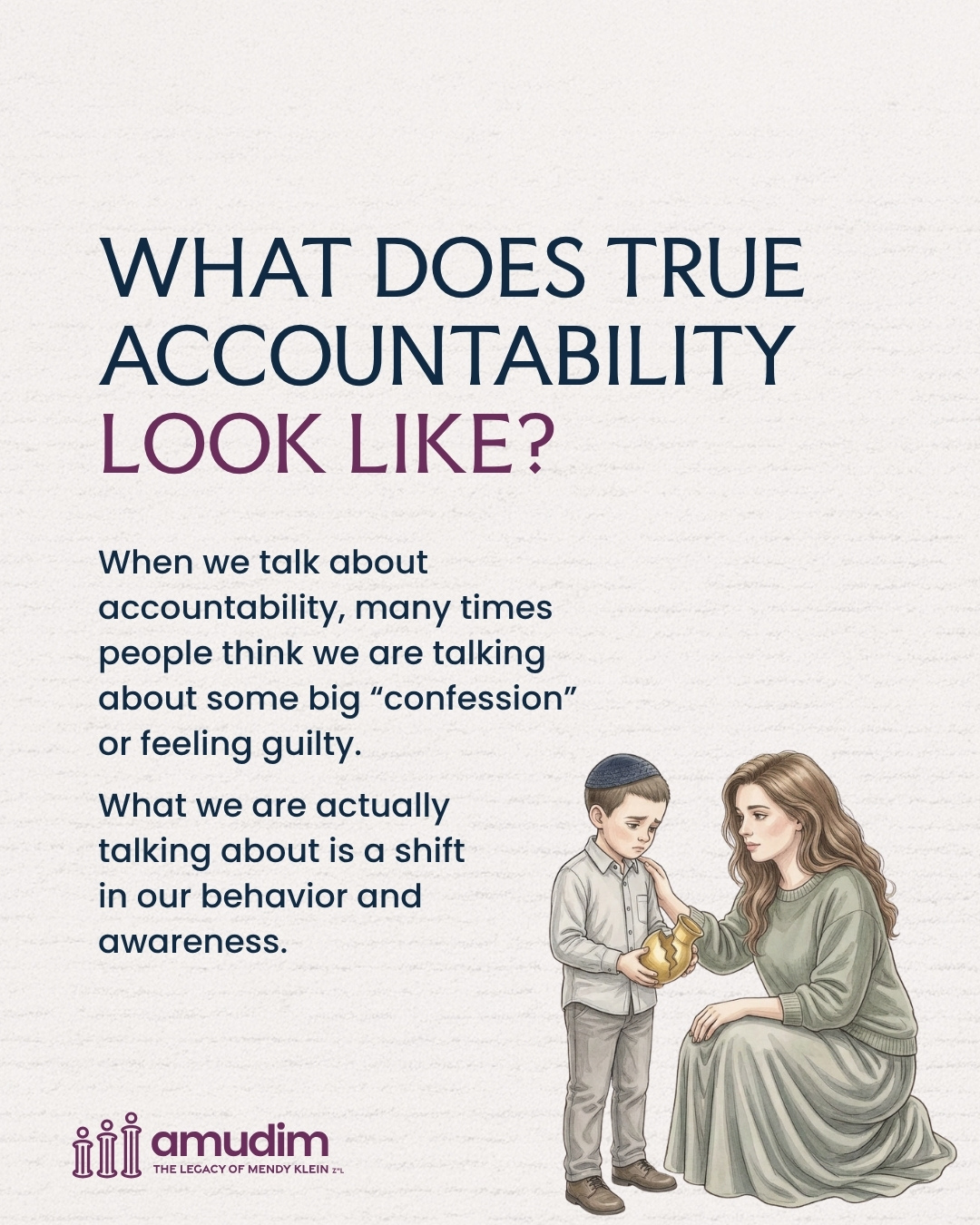
What does true accountability look like?
It begins with ownership.
It begins with a shift in our behavior and self-awareness. It’s taking ownership of our mistakes. It looks like growth.
The Rambam teaches that teshuvah is not simply about regretting what we did. It requires a change in behavior. He writes that the mark of complete teshuvah is when a person encounters the same situation and, this time, chooses differently. The emphasis isn’t on how bad we feel. It’s on what we do next.
That reframe matters because when we lose our patience and then feel terrible about it, the guilt itself isn’t the repair. The repair is going back to our child, admitting where we went wrong, and apologizing for how it affected them.
Shira Berkowitz, LCSW and Director of Darcheinu, shared something personal about this: “I’m not a perfect parent, none of us are. So when I’ve lost it or I’ve reacted in a way that I didn’t feel was the best way, I go back to that kid and say, I’m sorry, I was out of line. I love you so much, and I didn’t mean that.”
Walking back to our child and owning it is not a sign of being a ‘soft parent’. It’s one of the strongest things we can do. This is how we show our children that accountability isn’t shameful. If anything, it can be an opportunity to create connection.
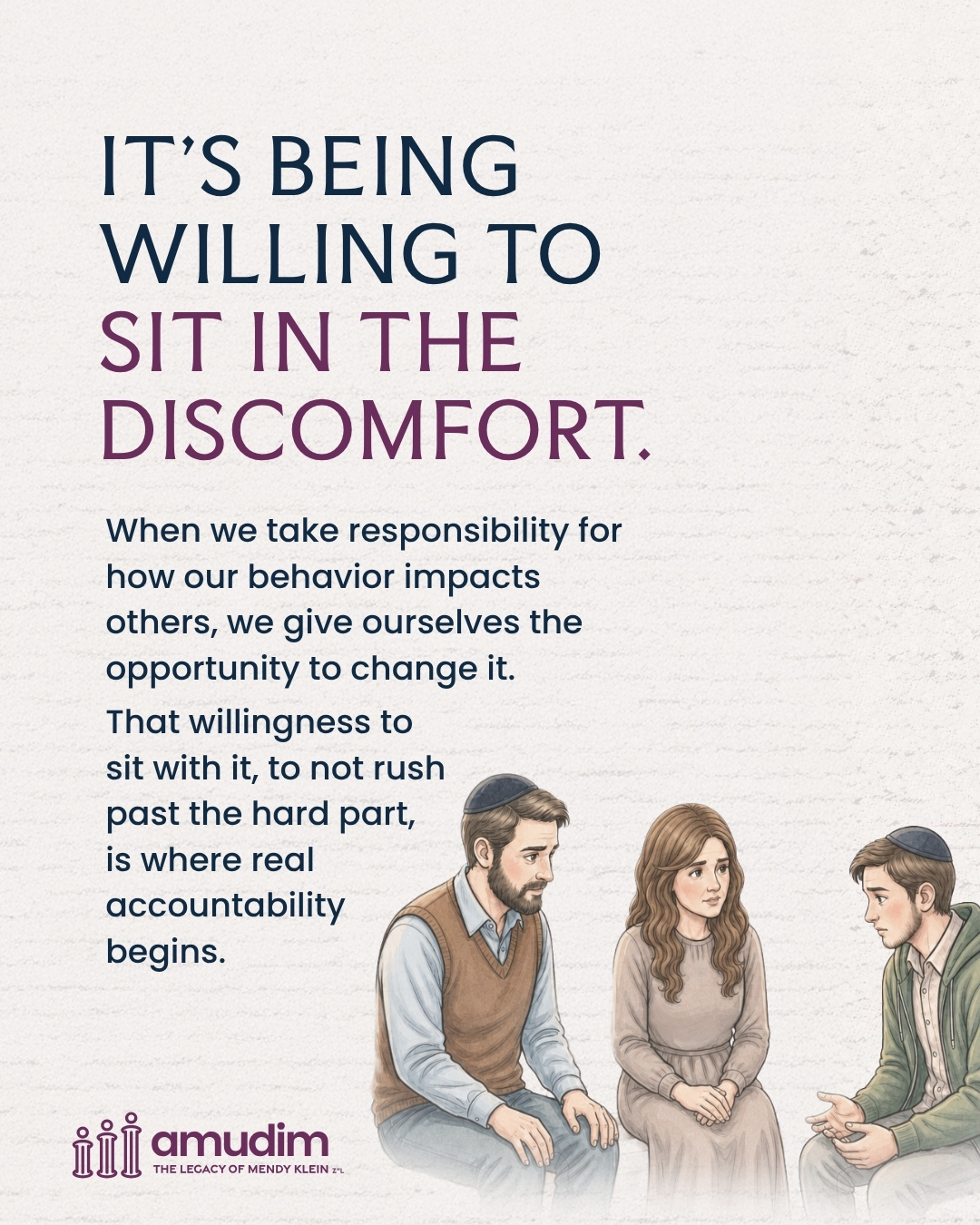
It’s being willing to sit in discomfort.
Taking responsibility for how our behavior impacts others is our only real opportunity to change it. That part can feel heavy and uncomfortable. Most of us would rather move past an awkward moment than sit in it. We want to smooth things over quickly and get back to normal.
Rabbi Yisroel Grossberg, M.S. Ed., Educational Director of Darcheinu, describes it this way: when a parent takes ownership rather than coming in with blame, it takes all the heat out of the kitchen. The child doesn’t feel attacked. The lines of communication open up. It doesn’t happen overnight, but the door is no longer closed.
He suggests approaching it by saying something like, “This is a conversation we should have had a long time ago. Maybe I was a little bit asleep at the wheel. I want to change that. I want us to really be comfortable talking to each other.” When we frame it that way, our child hears honesty. They hear humility. They hear that they matter enough for us to admit we got it wrong.
Research supports this. A 2025 study published in the Journal of Experimental Child Psychology found that the quality of a parental apology, not just whether one was offered, significantly impacted adolescents’ sense of autonomy, competence, and connection. In other words, a real apology, one that includes genuine acknowledgment and a commitment to do better, actually strengthens the relationship. A hollow or defensive one can do more harm than saying nothing at all.
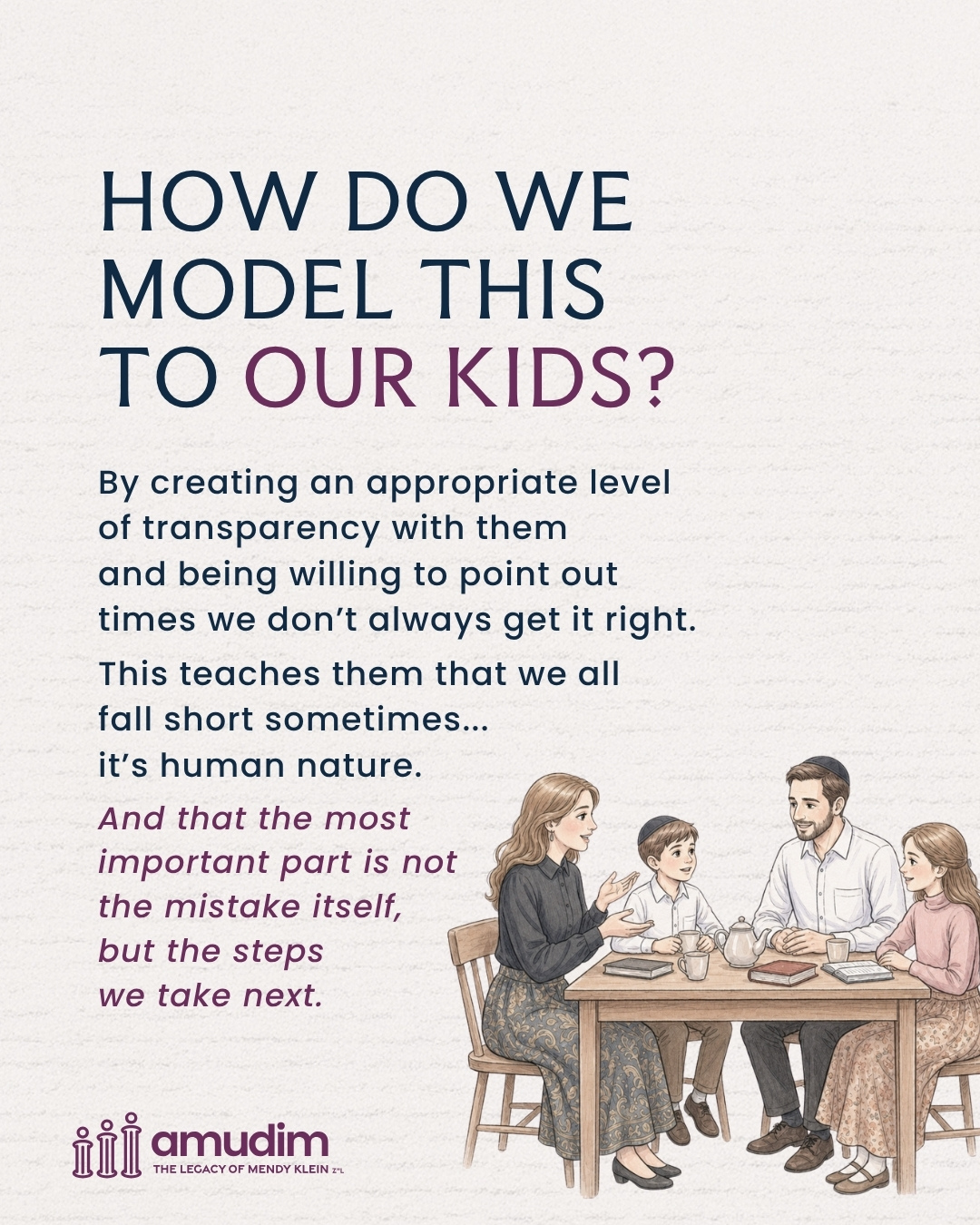
How do we model this to our kids?
By creating an appropriate level of transparency with our children, we show them that we don’t always handle things perfectly. We teach them that we all fall short sometimes. That is part of being human. The most important part is not the mistake itself, but where we go from there.
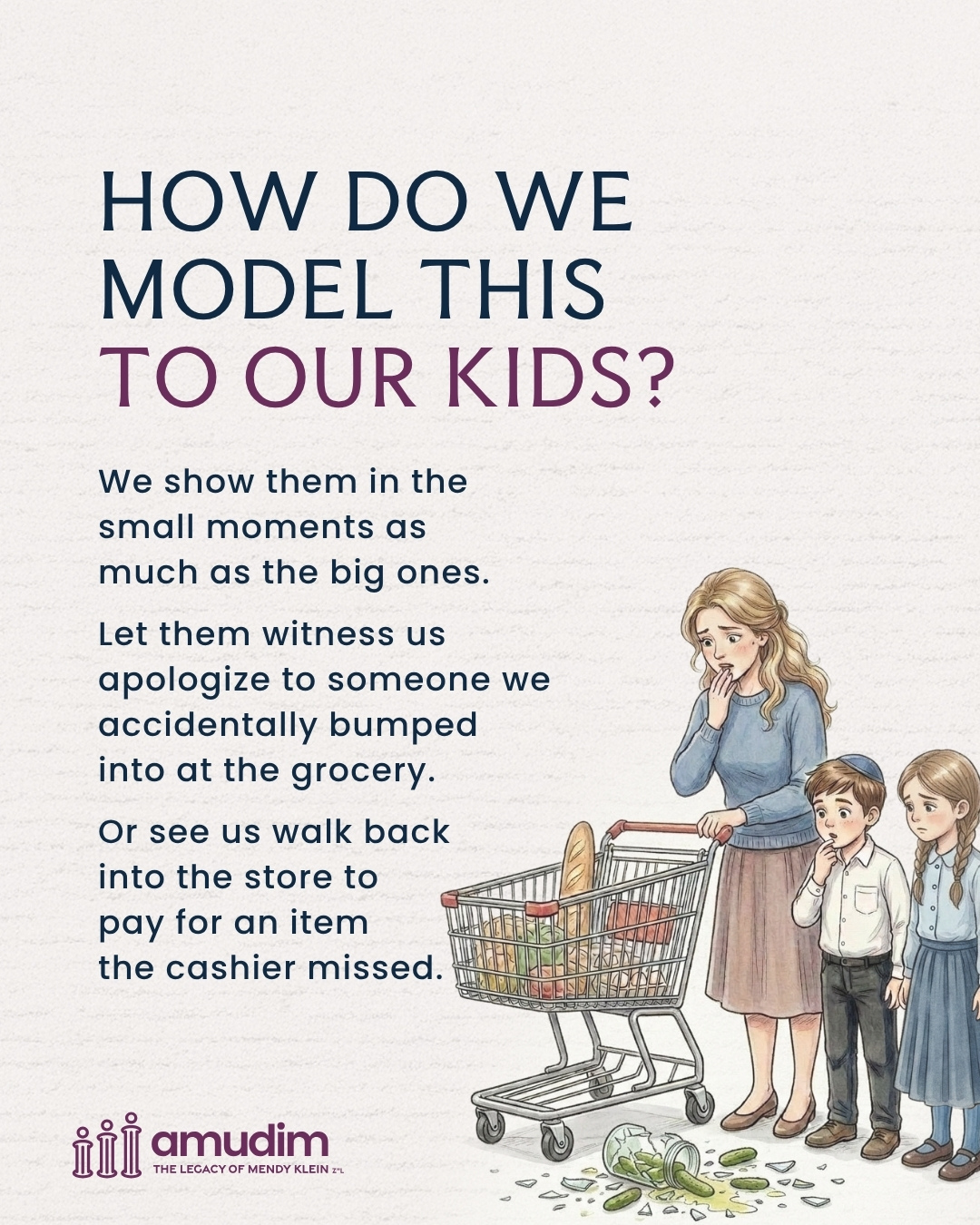
We show them in the small moments as much as we do the big ones.
An apology to someone for accidentally bumping into them in the grocery store. Walking back into the store with our child because we realized there was an item in our cart that wasn’t paid for, and letting them watch us correct our mistake.
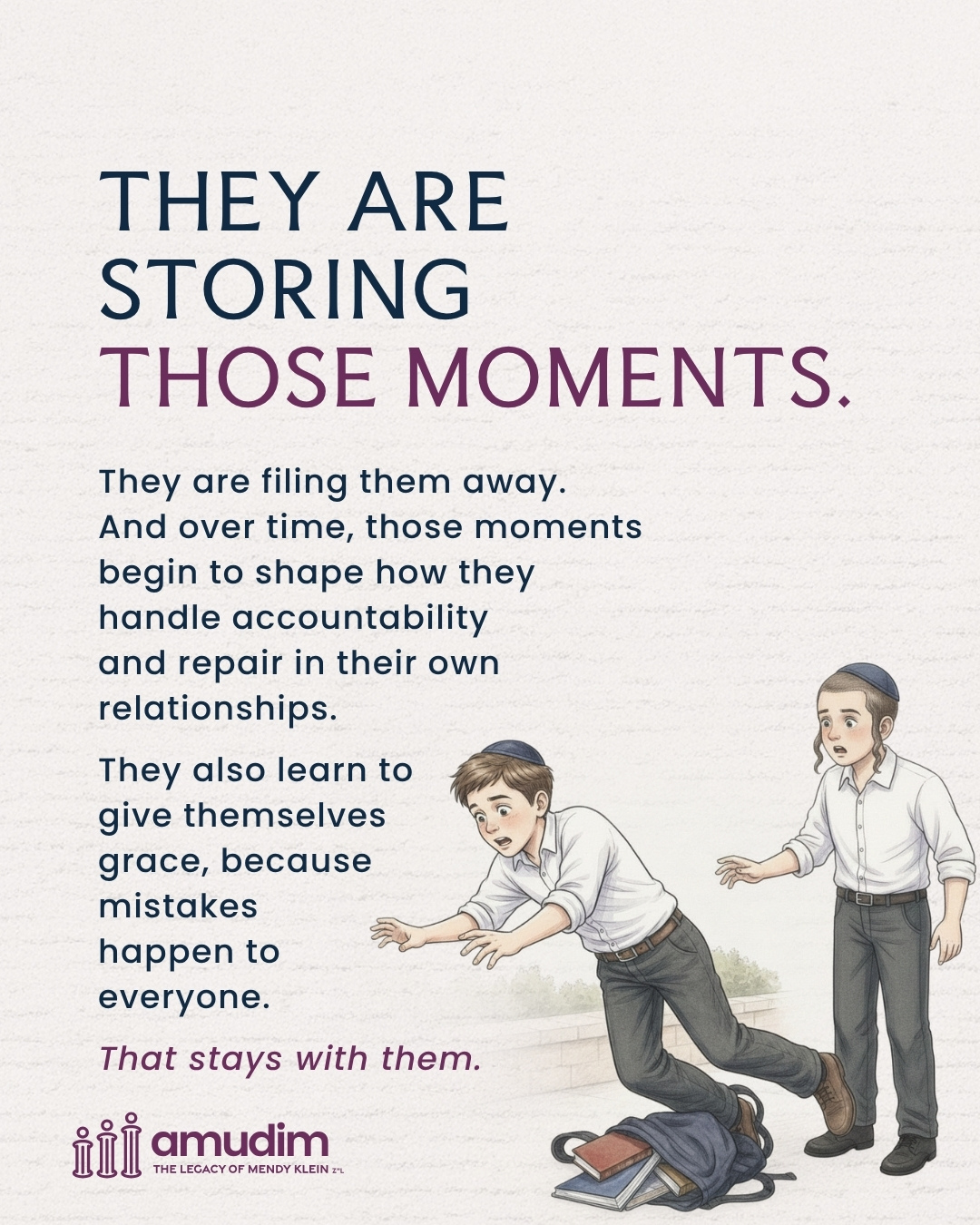
Our children are storing those moments. They are filing them away, and over time, those moments begin to shape how they handle accountability and repair in their own relationships.
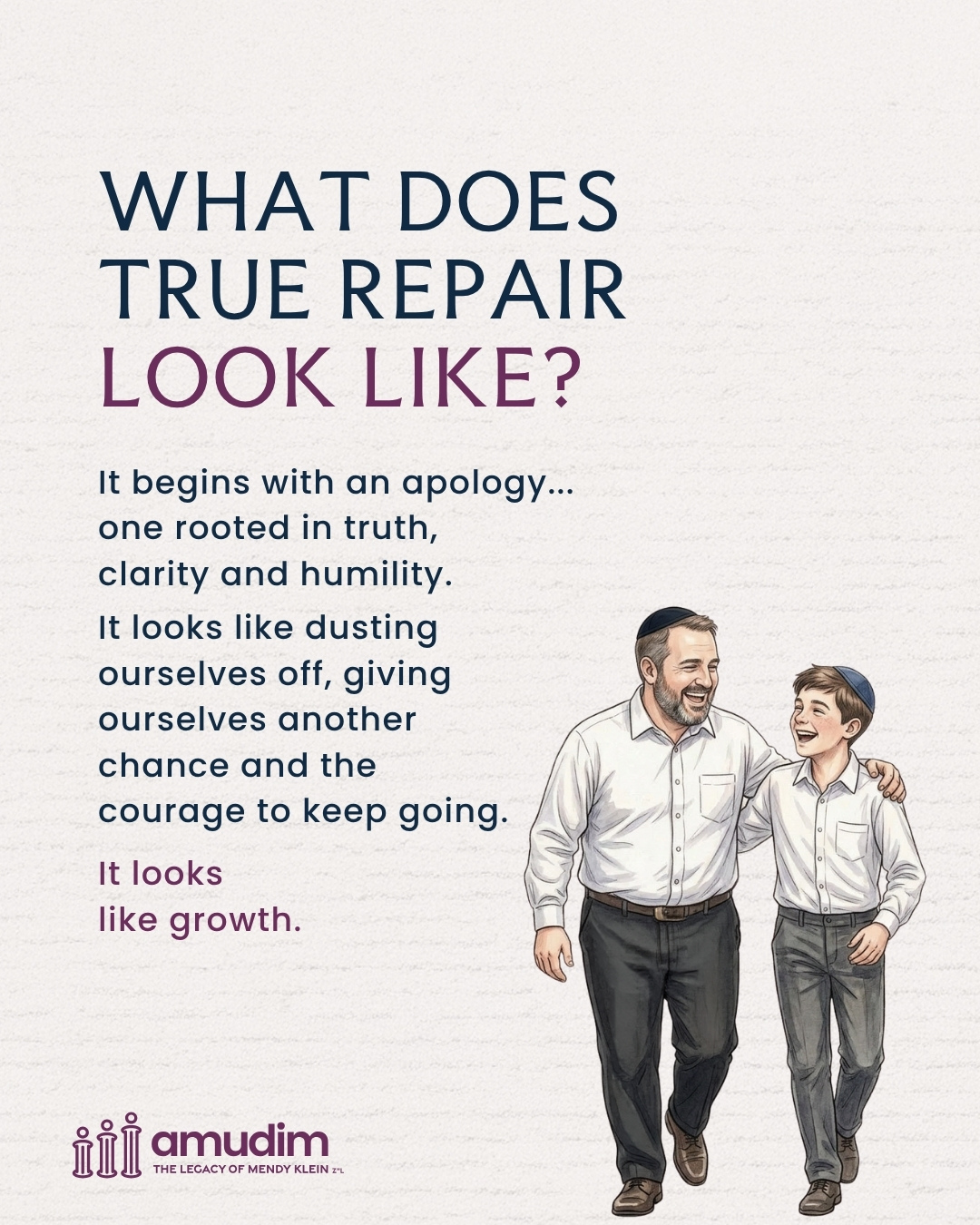
So what does true repair look like?
It begins with an apology that’s rooted in truth, clarity, and humility.
It looks like dusting ourselves off, giving ourselves another chance, and having the courage to keep going.
And it’s never too late to start. Mrs. Shira Berkowitz put it simply: “If you don’t have that relationship or the relationship’s not where you want it to be, start now. Take them out of school or out for lunch. You can play basketball with them. Do whatever. They need to see us take accountability too.”
The power of putting it in writing.
Writing a letter can be a powerful way in, especially when the words feel too hard to say face-to-face. Shira shared that she has written letters to her children, and her children have written letters to her. Some of them were about love and gratitude. Others were about the hurt. She gets both, sometimes from the same child. That willingness to receive both is part of repair too.
Rabbi Grossberg adds that there’s also a gift in writing a letter, even if we never send it. The act of getting it out and rethinking it can be therapeutic on its own, helping us process what we actually want to say before we say it.
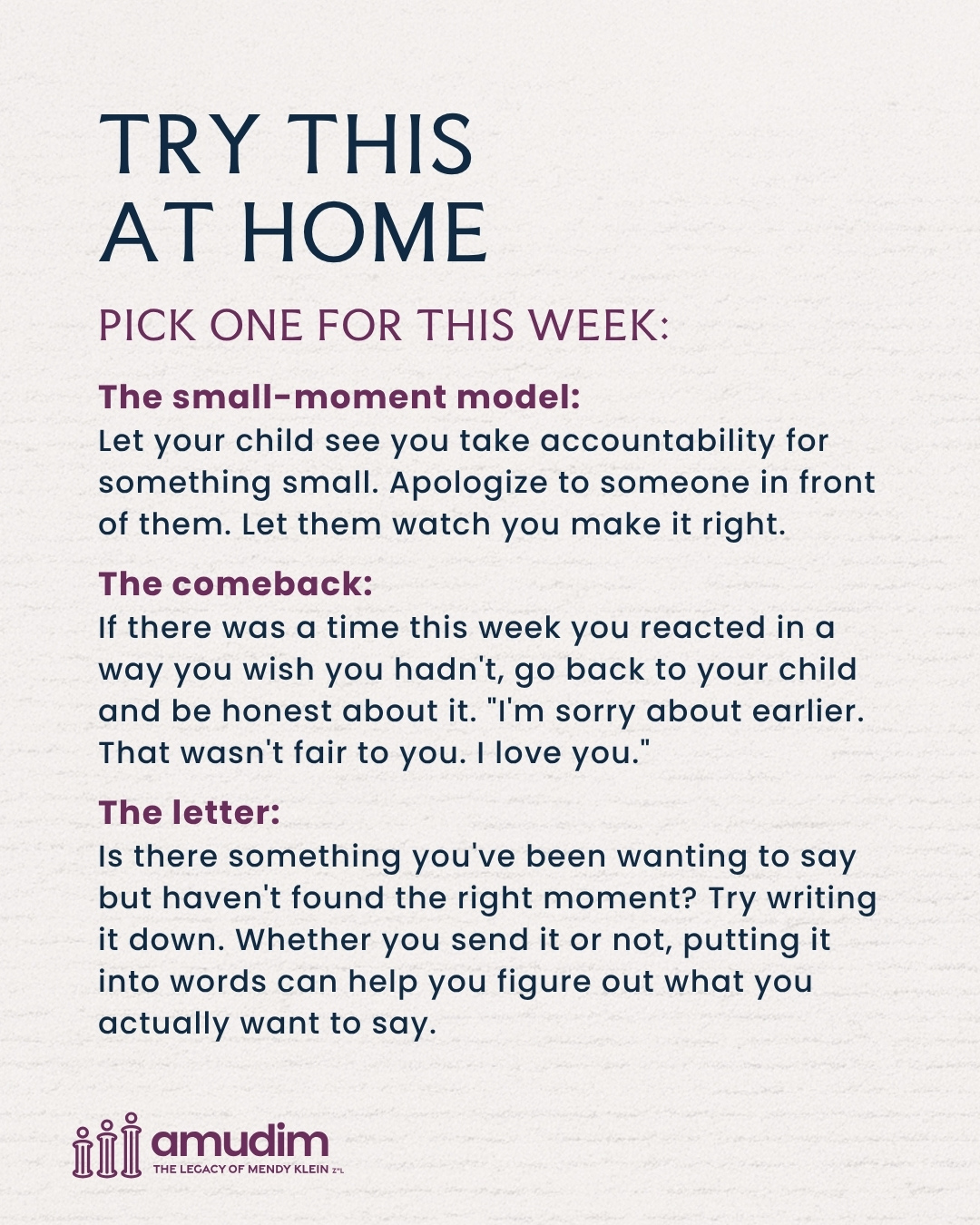
TRY THIS AT HOME:
Pick one of these to try this week:
The small-moment model. Look for one opportunity this week to let your child see you take accountability for something, even something tiny. Apologize to someone in front of your child. Let them see it and store it for when they need it.
The comeback. If you had a moment this week where you reacted in a way that didn’t sit right with you, go back to your child after you’ve had time to sit with it. Be honest and let them see your humanity. This sounds like: “I’m sorry about earlier. That wasn’t fair to you. I love you.”
The letter. If there’s something you’ve been wanting to say but haven’t found the right opportunity, try writing it down. You can send it or not. Either way, putting it into words can help you figure out what it is you actually want to say.
The goal is showing our children that when things break, we know how to come back and fix them. And that our relationship is strong enough to hold the hard stuff. That we all mess up, and there is always another chance for repair and restoration.
They’re watching. They’re listening. They’re storing it.
Every time we model accountability and repair, we are handing them a blueprint for how to find it for themselves when things arise in their lives. That’s huge!