



The Power of "Yet"
Between “I can’t do this” and “I got it” is a space that is supposed to feel uncomfortable. That space is where capability gets built.


At Amudim, we believe education is prevention.
That’s why we’re in classrooms, at community events, and in shuls — building awareness, teaching skills, and helping create a safer world for all of us before a crisis ever begins.
And when someone is in crisis, our clinical case managers are there, too. A phone call, a plan, and someone walking alongside them through it — always 100% free.
That’s only possible because of our donors. If you want to help us keep showing up for Klal Yisroel, you can do that here.
Last week, we talked about accountability and repair – how we come back after hard moments, how we take responsibility when we get it wrong, and how our children learn that relationships can hold mistakes and still be safe.
This week, we are moving into resilience and self-worth.
There is this thing many of us do, sometimes without even realizing it. We walk through life carrying an invisible scoreboard in our head.
Many of us move through the day keeping a quiet tally – measuring ourselves against where we think we should be, or against what we imagine everyone else has already figured out.
As adults, it can show up in all kinds of ways. Someone else gets the opportunity we were hoping for, and suddenly it is not just about the opportunity anymore. It becomes, “Maybe I’m not as good as I thought.” Or we talk to other parents who seem calm, organized, put together, and on schedule – and we stand there wondering if we somehow missed the class where everyone else learned how to do this.
Somewhere along the way, many of us absorbed the message that our worth is tied to what we accomplish. So when those feelings show up, even ordinary hard moments can start to feel much heavier.
And this can happen for our children, too.
They may look around and notice who was chosen, who got invited, who understood the lesson faster, who has a group of friends, who knows what they are doing, who seems confident, who seems comfortable, and who appears to be handling things better.
And just like us, they start making meaning from what they see.
Not being chosen feels like: maybe I’m not wanted.
Not understanding feels like: maybe I’m not smart.
Being nervous feels like: maybe I’m not capable.
That jump – from what happened to what it must mean about me – is where self-worth can start to crack.
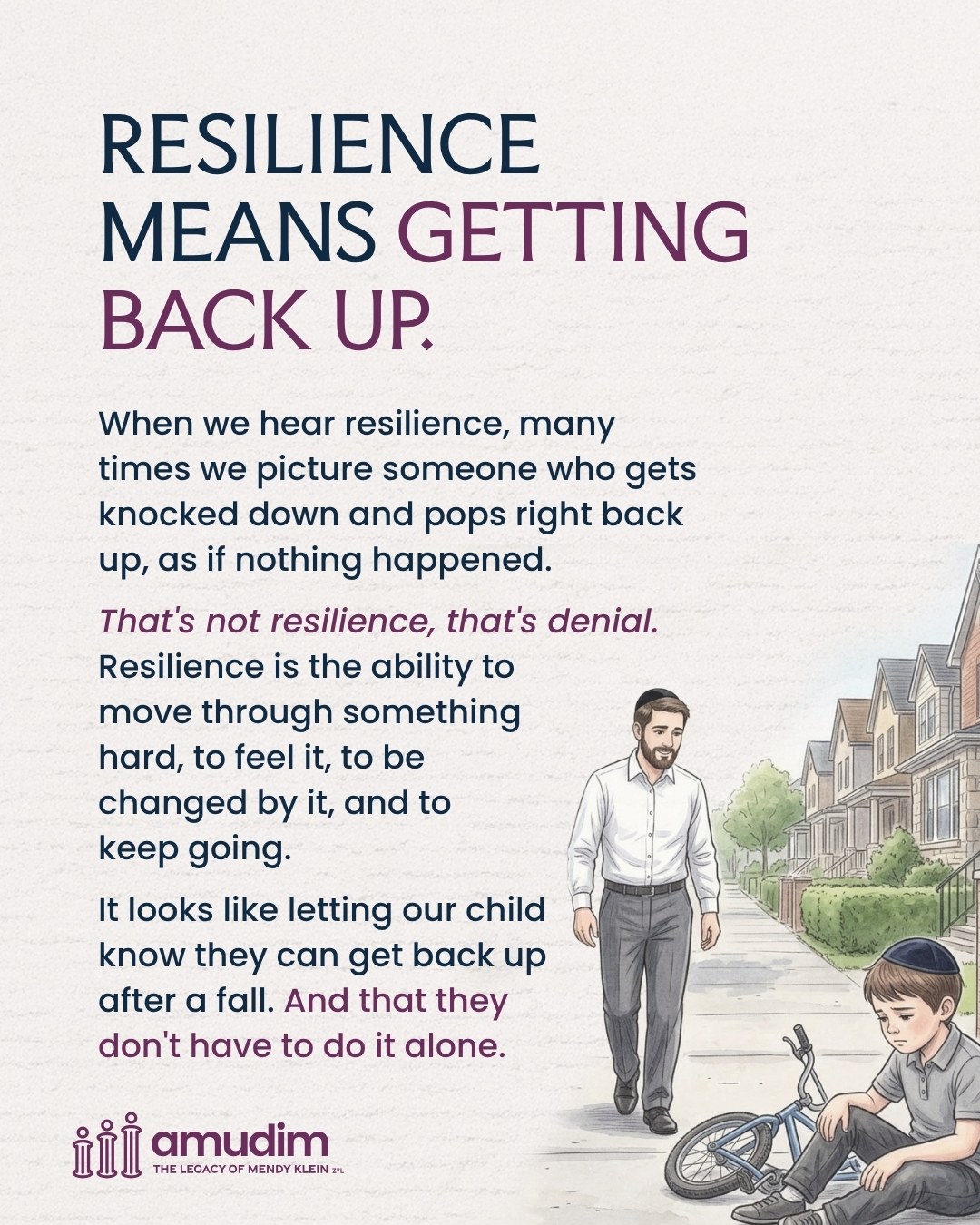
Self-worth and resilience build on each other.
When our children know their value is not up for debate, hard moments become easier to tackle. And every time they move through something difficult, they reinforce that voice inside that says: I can do this. My worth hasn’t changed. This moment does not define me.
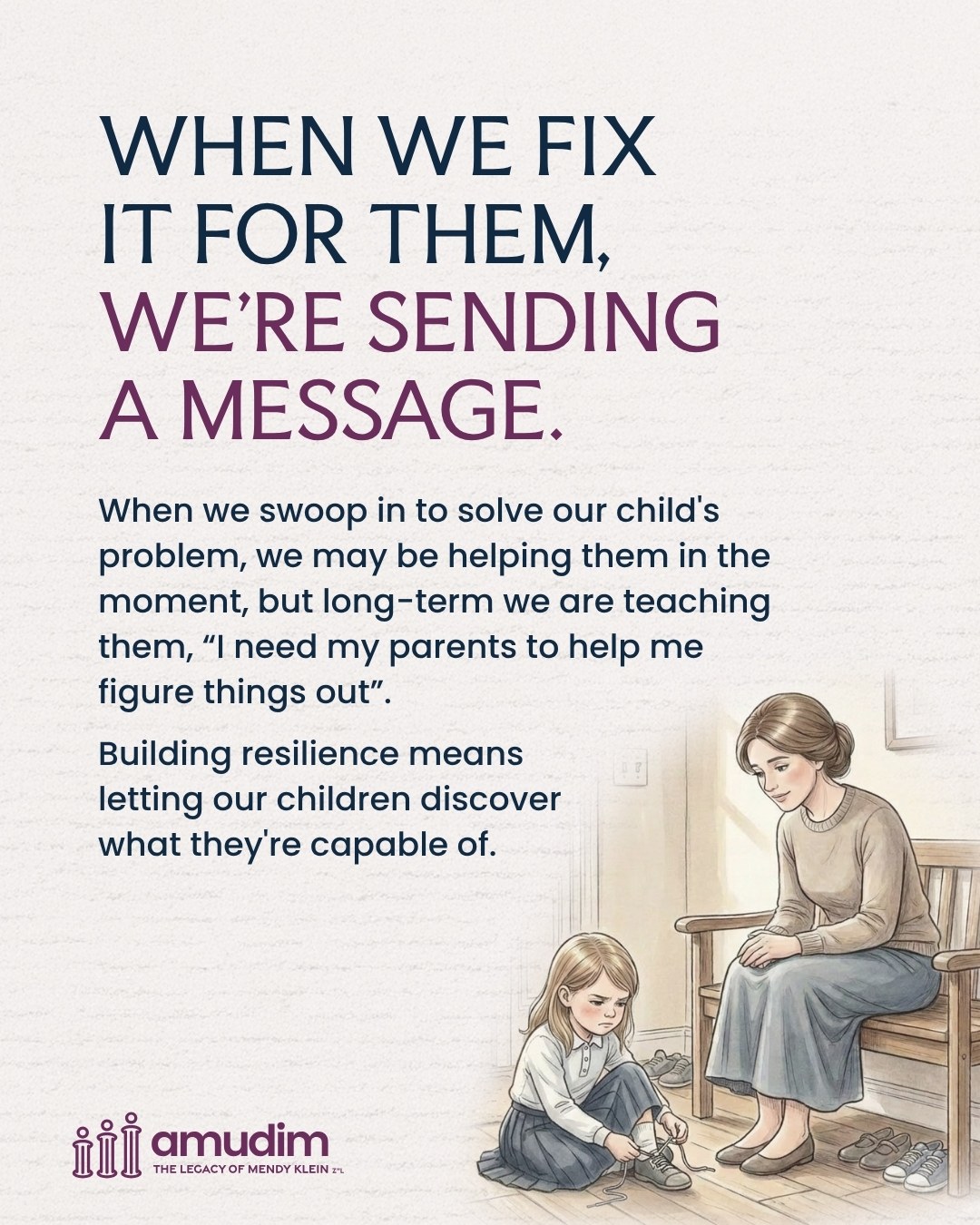
Rabbi Yisroel Grossberg, M.S.Ed., Educational Director of Darcheinu, shared a powerful point: when we step in to help our children through every difficult situation, we may be acting out of love, but we are not always helping them build what they will need outside our protection.
The world will not always make things easier for them. But when we allow our children to problem-solve, struggle, and work their way through challenges, they begin to discover just how capable they are.
As Rabbi Grossberg put it, “Self-worth comes from the fact that even if I failed, I’m still okay. The problem didn’t tear me apart. It made me stronger because now I figured out how to deal with it.”
This is what we want our children to know: they can struggle on a test and still be capable. They can feel left out and still be worthy of connection. They can feel nervous and still find the courage to try.
This is something that gets built slowly over time. Like the moment when our child is afraid to step out on stage and we say, “You don’t have to get up in front of everyone, but I know how hard you worked, and how ready you are. No matter how this goes, we are stopping off at the bakery on our way home.” We aren’t trying to force them into doing something they aren’t comfortable with, but we also aren’t trying to protect them from that uneasy feeling either. Those experiences of sitting in that feeling are where lasting resilience begins building.
In the Darcheinu and Our Path SEL curriculum, resilience is taught through the idea of being stretchy, not rigid. Something can look strong because it is firm and unbending, but under enough pressure, it can crack. Something with flexibility has more give. It can be pulled, stretched, and changed for a moment without being destroyed by the pressure.
That is the kind of strength we want to help our children build – not a strength that never feels the strain, but one that can bend, adjust, recover, and keep going.
The Power of “Yet”
The concept of the “Power of Yet” comes from the growth mindset, a concept popularized by psychologist Dr. Carol Dweck.
So often, we see things in black and white, and our children do too.
I can do this, or I can’t.
I got it, or I don’t.
I’m good at this, or I’m not.
But between “I can’t do this” and “I got it” is a space that is supposed to feel uncomfortable. That space is where capability gets built.
When we add the word “yet,” we help our children understand that this moment is not the end of the story. It is one step in the learning process.
It can be hard for us to watch our children struggle, just like it can be hard for them to sit through the struggle. But those uncomfortable moments are often where resilience begins to take shape.
Our children look to us for guidance. When we shift from “Let me tie your shoe for you” to “You were so close that time. Should we try again?” the message becomes: “You are capable of doing this, and we can take our time getting there.”
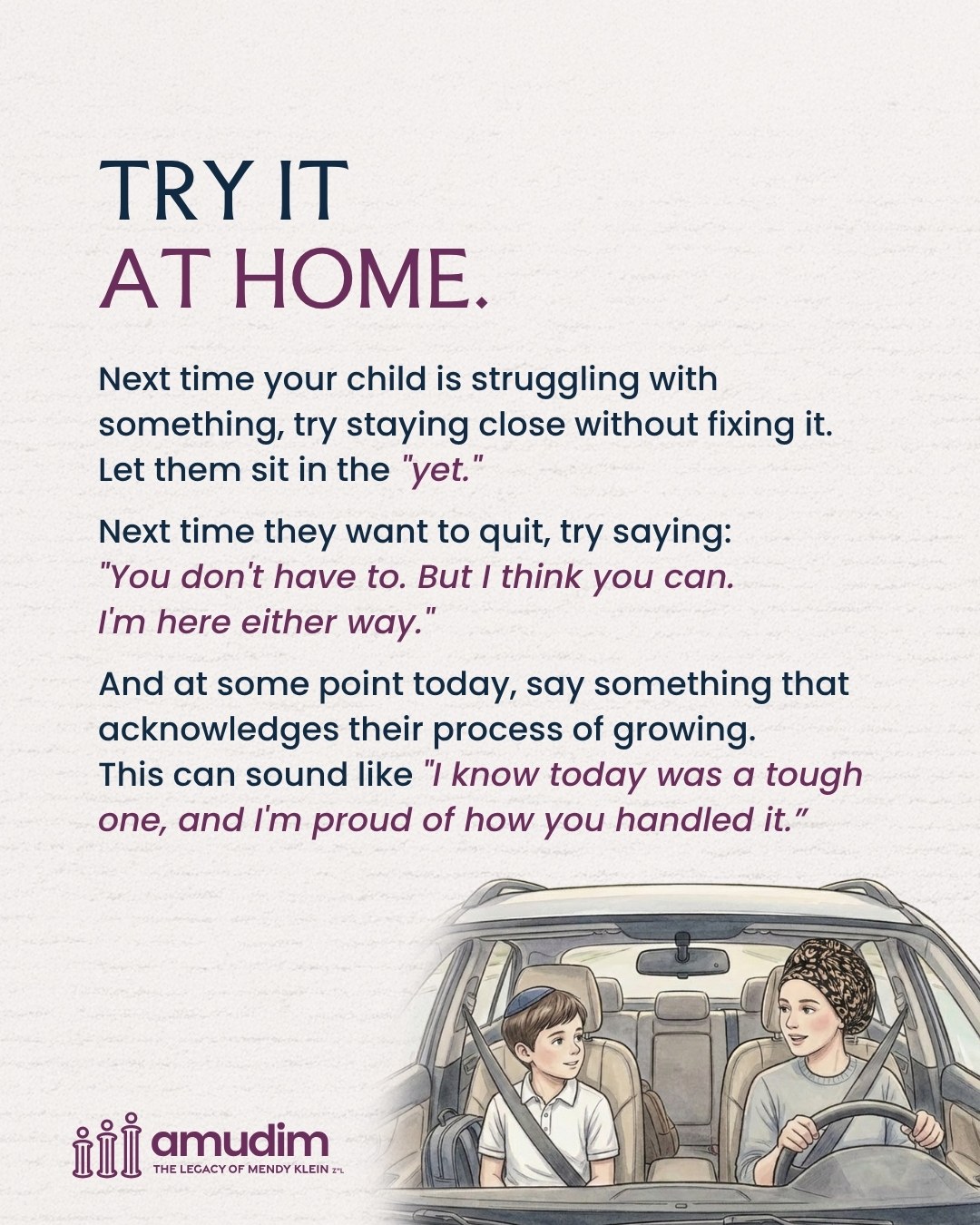
TRY THIS AT HOME:
Next time your child is struggling with something, try staying close without immediately fixing it. Let them sit in the “yet.”
Next time they want to quit, try saying, “You don’t have to. But I think you can. I’m here either way.”
And at some point today, say something that acknowledges the process of growing. It can sound like, “I know today was a tough one, and I’m proud of how you handled it.”
They might roll their eyes. They might not say anything back.
But… they are listening.