




At Amudim, we believe education is prevention.
That’s why we’re in classrooms, at community events, and in shuls — building awareness, teaching skills, and helping create a safer world for all of us before a crisis ever begins.
And when someone is in crisis, our clinical case managers are there, too. A phone call, a plan, and someone walking alongside them through it — always 100% free.
That’s only possible because of our donors. If you want to help us keep showing up for Klal Yisroel, you can do that here.
There’s a part of growing up that isn’t always taught directly – how to understand what we’re feeling, how to express it, and how to move through it.
So when our kids are overwhelmed or can’t quite find the words, it’s not because something’s wrong. They’re still learning the language for what’s happening inside. And when a feeling finally has a name, something begins to shift. Their mind starts to settle, and it becomes easier to think and respond instead of react.
Brain scans show that labeling an emotion quiets the brain’s alarm system and brings the thinking part back online. Dr. Dan Siegel refers to this as “name it to tame it.”
So when our child is in the middle of a big moment, instead of rushing to fix it, we can sit with them and gently help put words to what’s coming up –
“I’m feeling frustrated… that felt unfair.”
“I’m really upset… that hurt my feelings.”
That small shift helps them feel less flooded.
We’re helping their brain shift out of fight-or-flight mode so they can begin to regulate. And it goes further than that. Researcher Lisa Feldman Barrett found that people who can tell the difference between “disappointed” and “discouraged,” or between “nervous” and “overwhelmed,” are significantly better at managing how they respond to hard things. The wider the emotional vocabulary, the more tools a person has. She calls this emotional granularity.
Kids don’t start out with that vocabulary. Young children tend to sort everything into a few big buckets: happy, sad, mad. That’s totally normal. But as they grow, they’re ready for more. They just need us to help them build it.
So what does this actually look like at home?
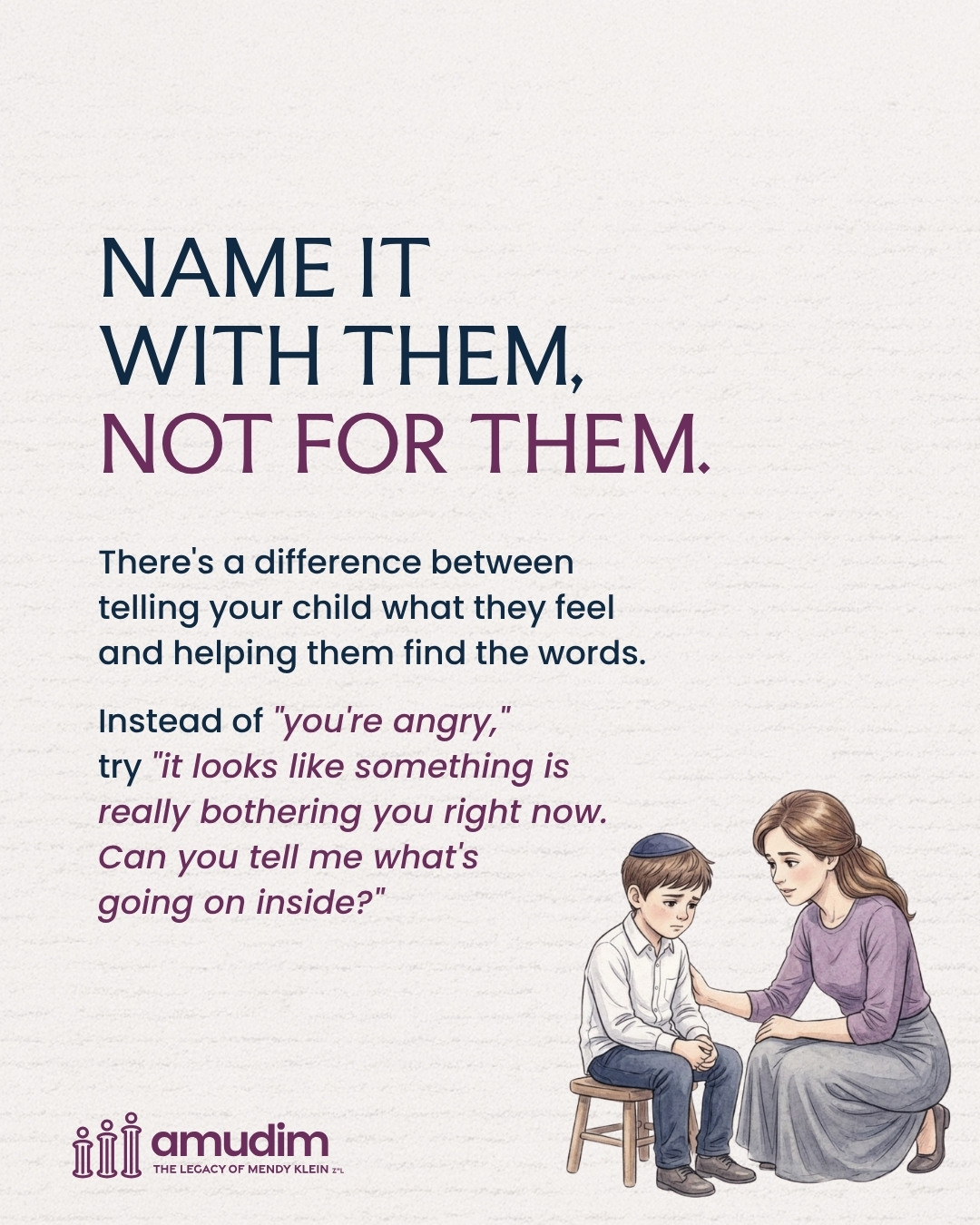
Name it with them, not for them.
There’s a difference between telling our child what we think they feel and helping them find the words for what they actually feel.
Instead of “you’re angry,” we can try saying: “It looks like something is really bothering you right now. Can you tell me what’s going on inside?”
This is us walking alongside them, not handing them an answer. Over time, they start doing it on their own.
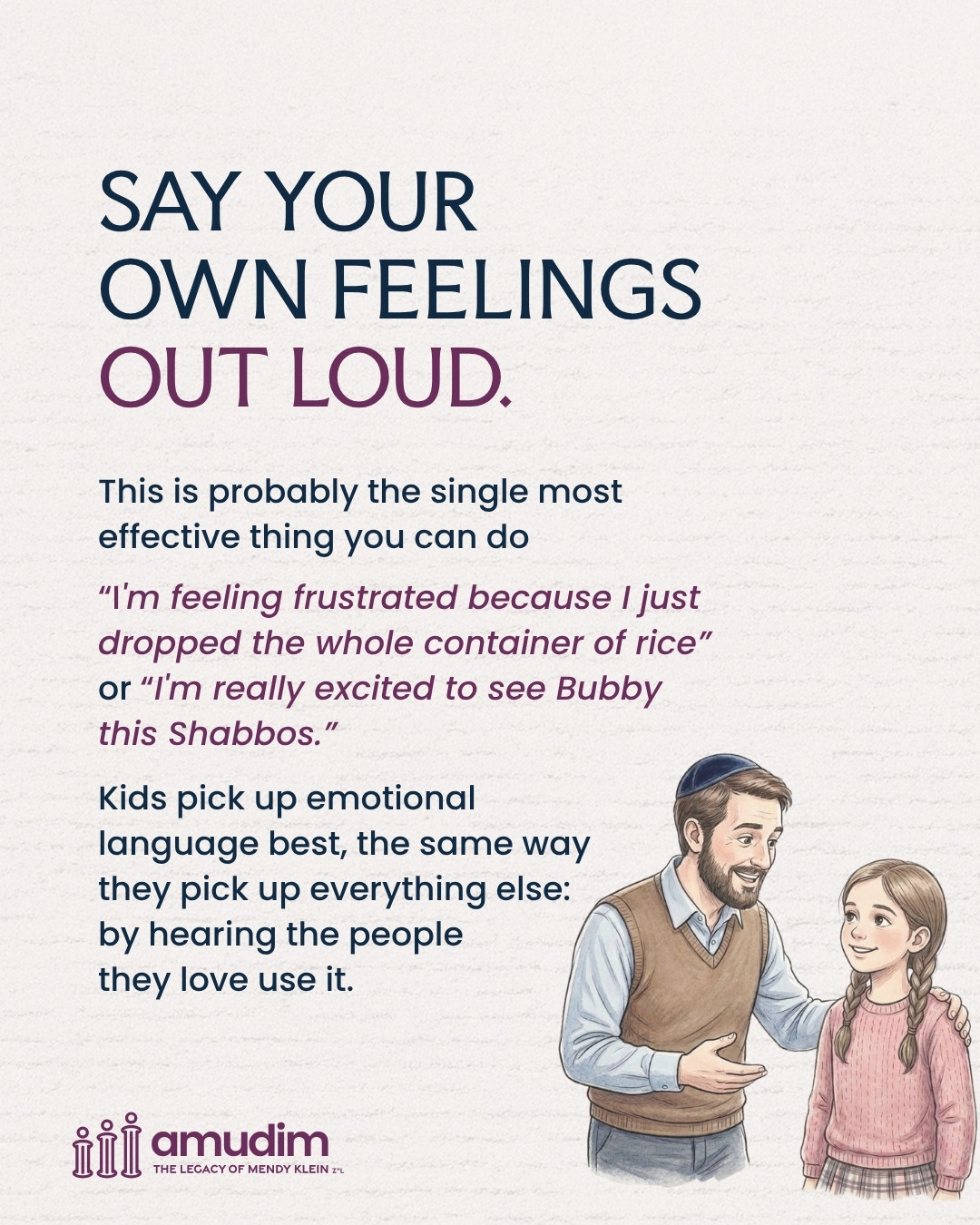
Say your own feelings out loud.
This is probably the single most effective thing you can do and it costs nothing. We could share what we are experiencing in real time with them by saying: “I’m feeling frustrated because I just dropped the whole container of rice.” or “I’m really excited to see Bubby this Shabbos!”
It is a teachable moment that happens in the middle of our regular, everyday life, without anyone realizing they’re learning.
That’s actually how kids pick up emotional language best, the same way they pick up everything else: by hearing the people they love use it.
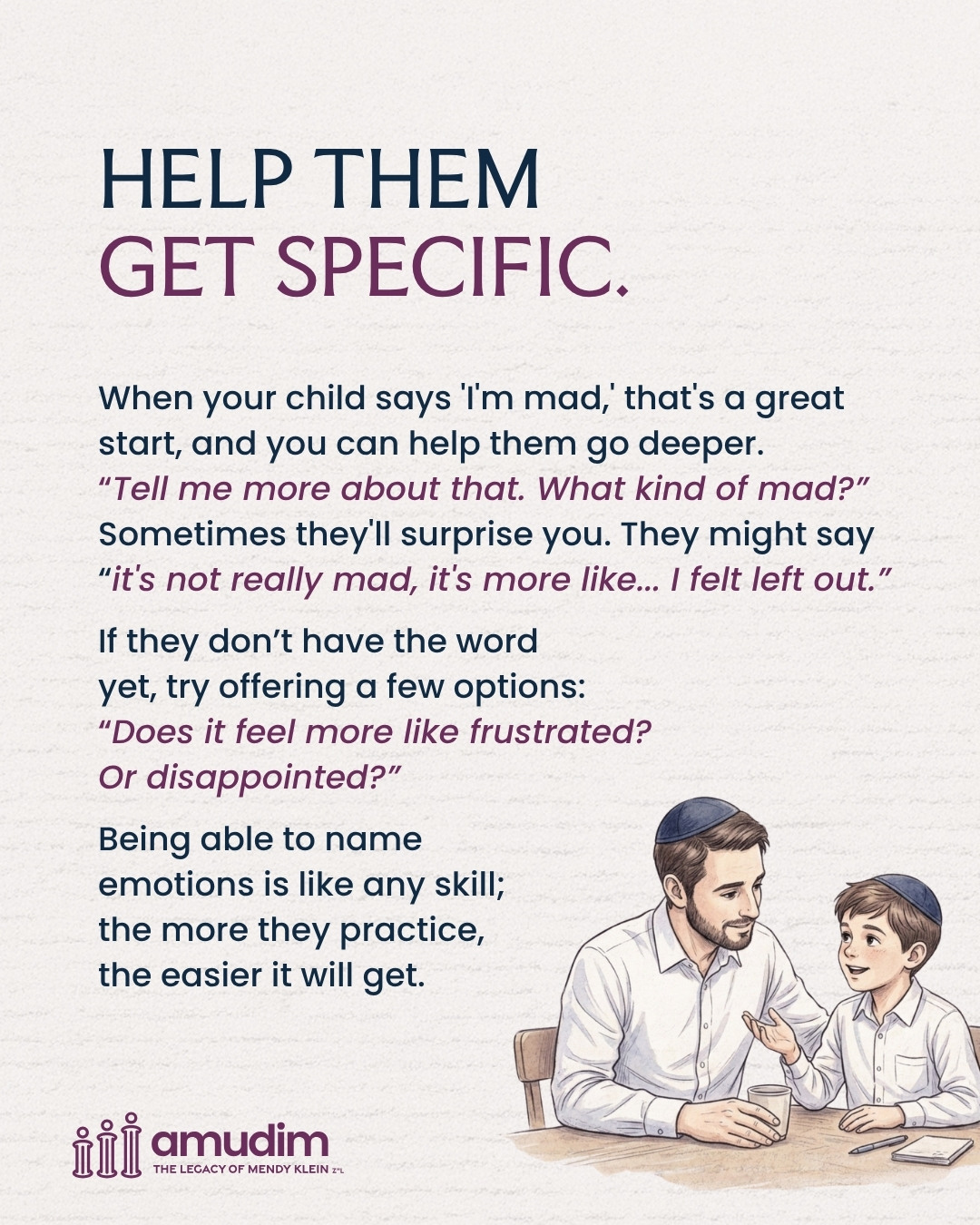
Help them get more specific.
When our child says: “I’m mad.” that’s a great start, and we can help them go deeper. We could say: “Something about that felt big… what was it?”
Sometimes they’ll surprise us. They might say “It’s not really mad, it’s more like… I felt left out.”
If they don’t have the words yet, try offering a few options: “Does it feel more like frustration? Or disappointment?”
Being able to name emotions is like any skill; the more they practice, the easier it will get.
Use comfortable and uncomfortable, not good and bad.
The Darcheinu and Our Path SEL curricula frame emotions as “comfortable” and “uncomfortable” rather than “positive” and “negative.”
There are no bad emotions. Sadness, fear, frustration, even anger, they are all welcome because they are a part of how Hashem created us. They’re signals, not problems.
The Tzlach on Pesachim 50a makes this point beautifully: Hashem created us with all of our emotions, including the uncomfortable ones, and we are meant to feel them and recognize them.
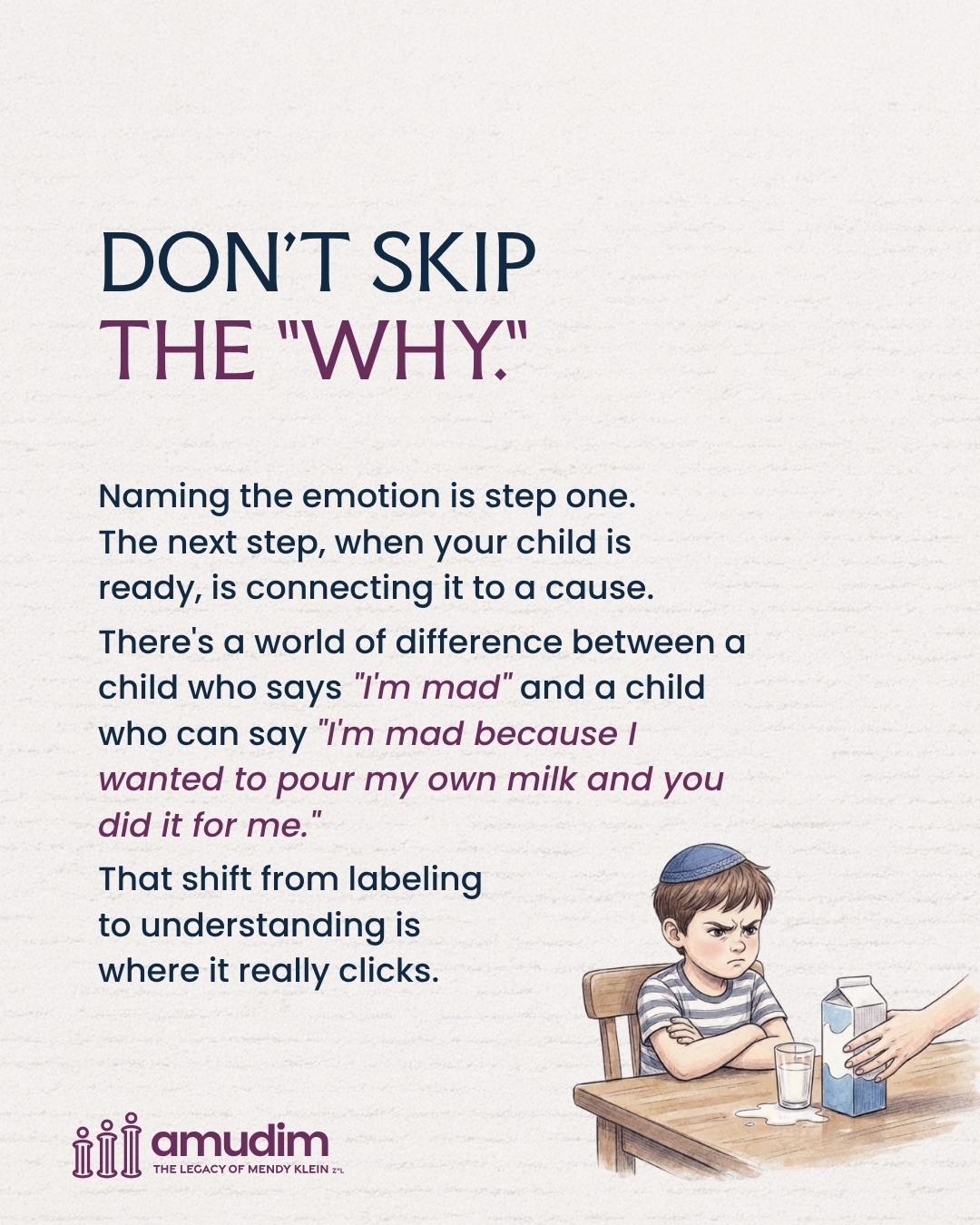
Don’t skip the “why.”
Naming the emotion is the first step. The next step, when your child is ready, is connecting it to a cause.
There’s a world of difference between a child who says “I’m mad” and a child who can say “I’m mad because I wanted to pour my own milk and you did it for me.”
That shift from labeling to understanding is where it really clicks.
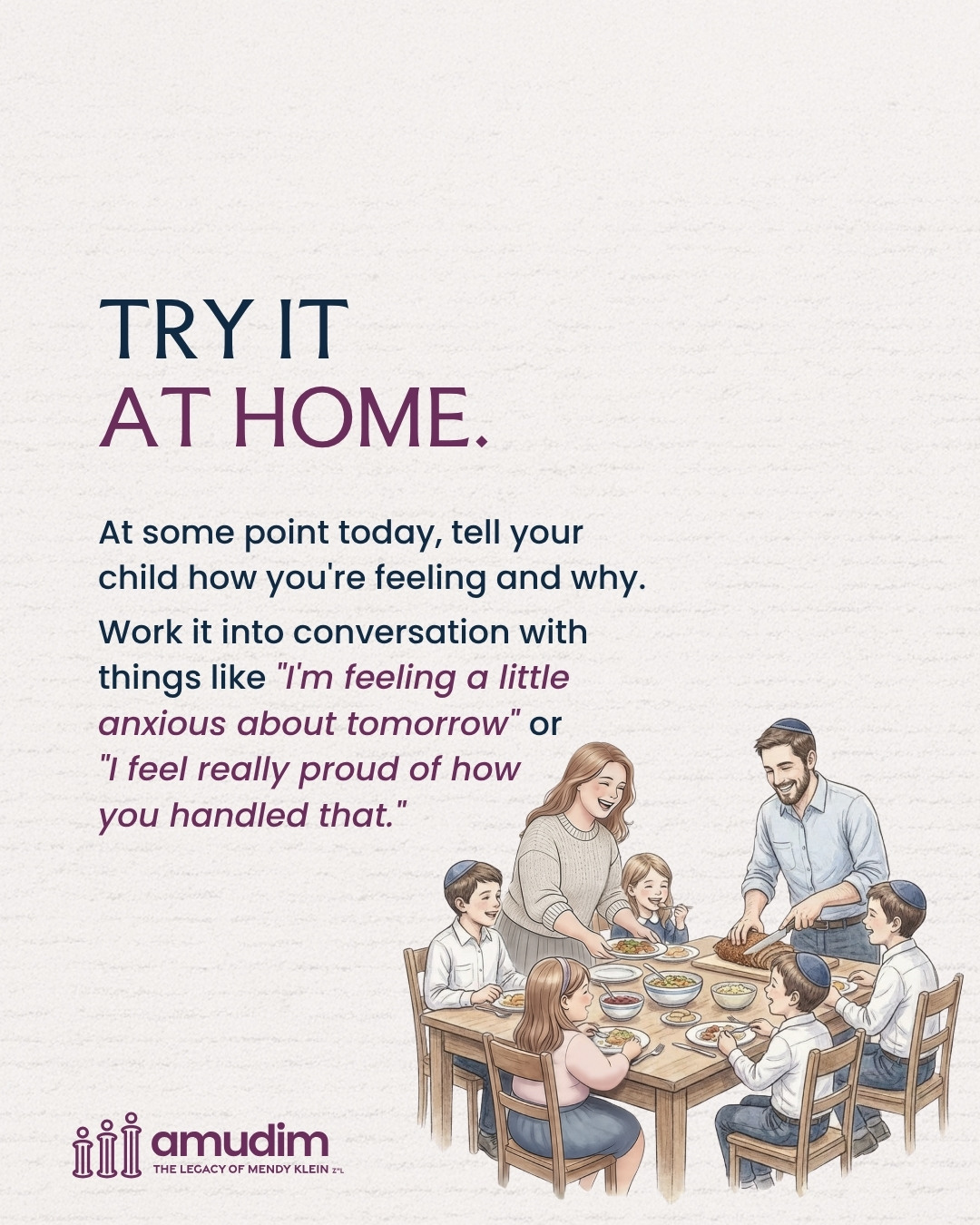
TRY THIS AT HOME:
At some point today, in a calm moment, tell your child how you’re feeling and why. That’s it. Not as a lesson. Just as part of how you talk. “I’m feeling a little anxious about tomorrow” or “I feel really proud of how you handled that.”
If you want to take it a step further, try a quick emotions check-in at the end of the day. Around the dinner table or at bedtime, each person names one feeling they had that day and what caused it.
You can keep it light and short. Our goal is not perfection. It’s just making it normal to talk about the inside stuff.