






At Amudim, we believe education is prevention.
That’s why we’re in classrooms, at community events, and in shuls, building awareness, teaching skills, and helping create a safer world for all of us before a crisis ever begins.
And when someone is in crisis, our clinical case managers are there, too. A phone call, a plan, and someone walking alongside them through it, always 100% free.
That’s only possible because of our donors. If you want to help us keep showing up for Klal Yisroel, you can do that here.
Dear Parents,
This week, we’re taking a closer look at how our children learn about boundaries under our own roof. They grow up sharing so much with each other, from a bedroom and the back seat to the last cookie. It’s how they learn to love people up close. It’s also how they learn that something can feel okay for them and not okay for another family member.
We started the week with a familiar moment at the Shabbos table. Someone tells a favorite family story, and it gets a laugh like it always does. This time, though, we notice that the child the story is about isn’t laughing. Maybe later, when it’s just the two of us, they say, “I wish you wouldn’t tell that story anymore.” We can say, “I’m glad you told me.” And the next time we’re all around the table, we let it stay their story to tell.
That same care shows up in the everyday choices we make at home. The rest of the week, we looked at how the rules we set and the way we follow through can help each child feel that there’s room under our roof for what matters to them.
What do our children learn from what happens in our house the moment someone says stop?
Under One Roof: A Conversation with Our SEL Team
Mrs. Shira Berkowitz, LCSW, Director of Darcheinu/Our Path SEL, starts with some basic safeguards. Where everyone sleeps when guests come. Whether doors are open or closed. Who’s around during playdates and sleepovers. None of it needs an announcement. It’s just how the house runs, and it gives our kids room to play and grow with their privacy and their space protected.
Video
Under One Roof
Mrs. Shira Berkowitz, LCSW, on the safeguards that are simply how the house runs, and Rabbi Avi Landa, LCPC, on making sure our children know they can tell us anything.
Room by Room: What Boundaries Look Like at Home
Regular check-ins and reminding the kids to leave the door open while they play can be an ordinary part of family life. These small routines help our children know what to expect in our home. And when we follow through, whether that means backing up a child who asked a sibling to stop or listening when something is hard to say, they learn they can come to us.
Let’s talk about what that could look like from room to room.
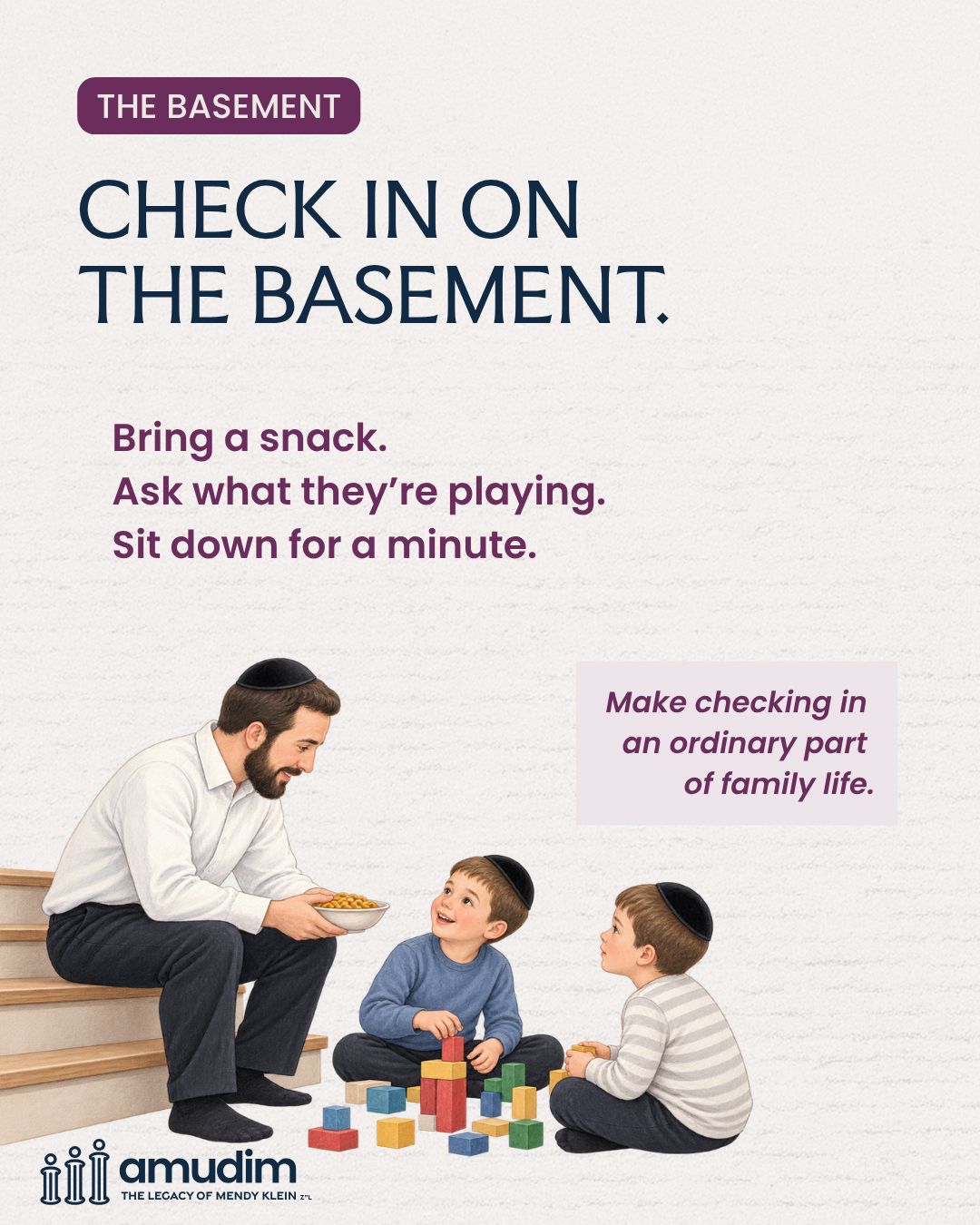
The basement. Check in on the kids when they are playing out of earshot. Bring a snack. Ask what they’re playing. Sit down for a minute. We can make checking in something they come to expect.
The bedroom door. Make open doors a house rule. “When you’re playing together, the door stays open.” Say it calmly and consistently, with siblings, cousins, and friends.
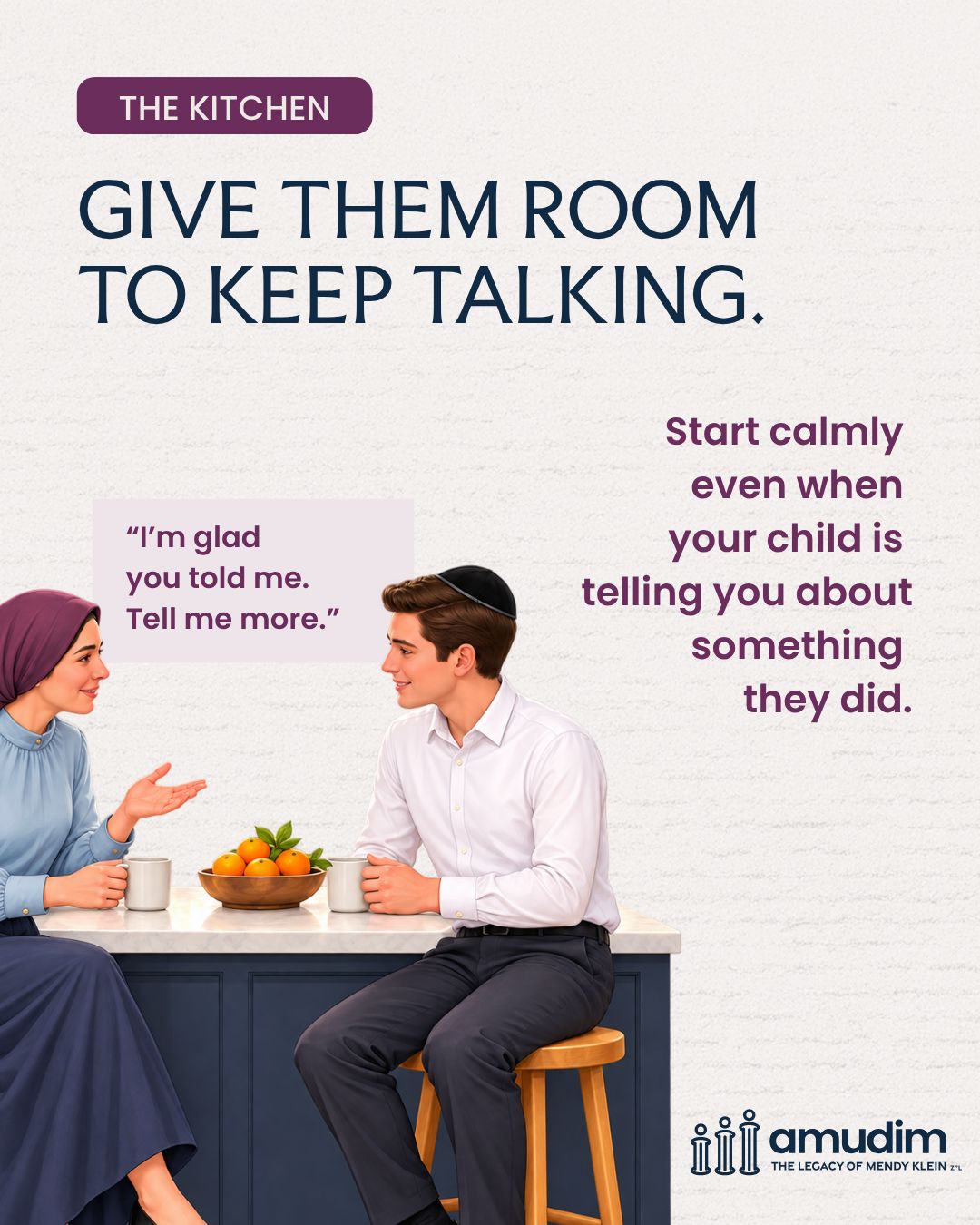
The kitchen. Give them room to keep talking. “I’m glad you told me. Tell me more.” Start calmly, even when your child is telling you about something they did.
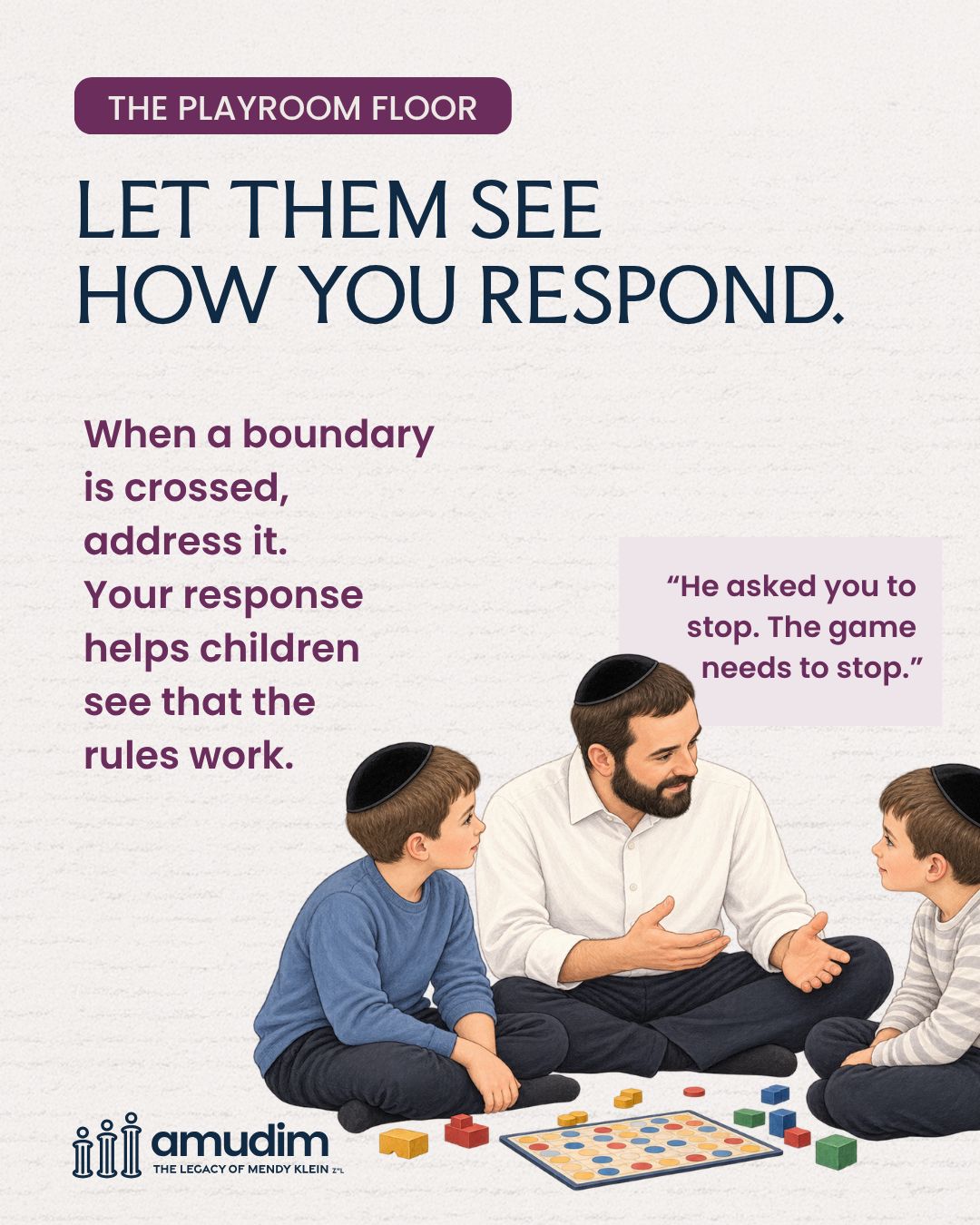
The playroom floor. Let them see how you respond. “He asked you to stop. The game needs to stop.” When a boundary is crossed, address it. Your response shows children that the rules work.
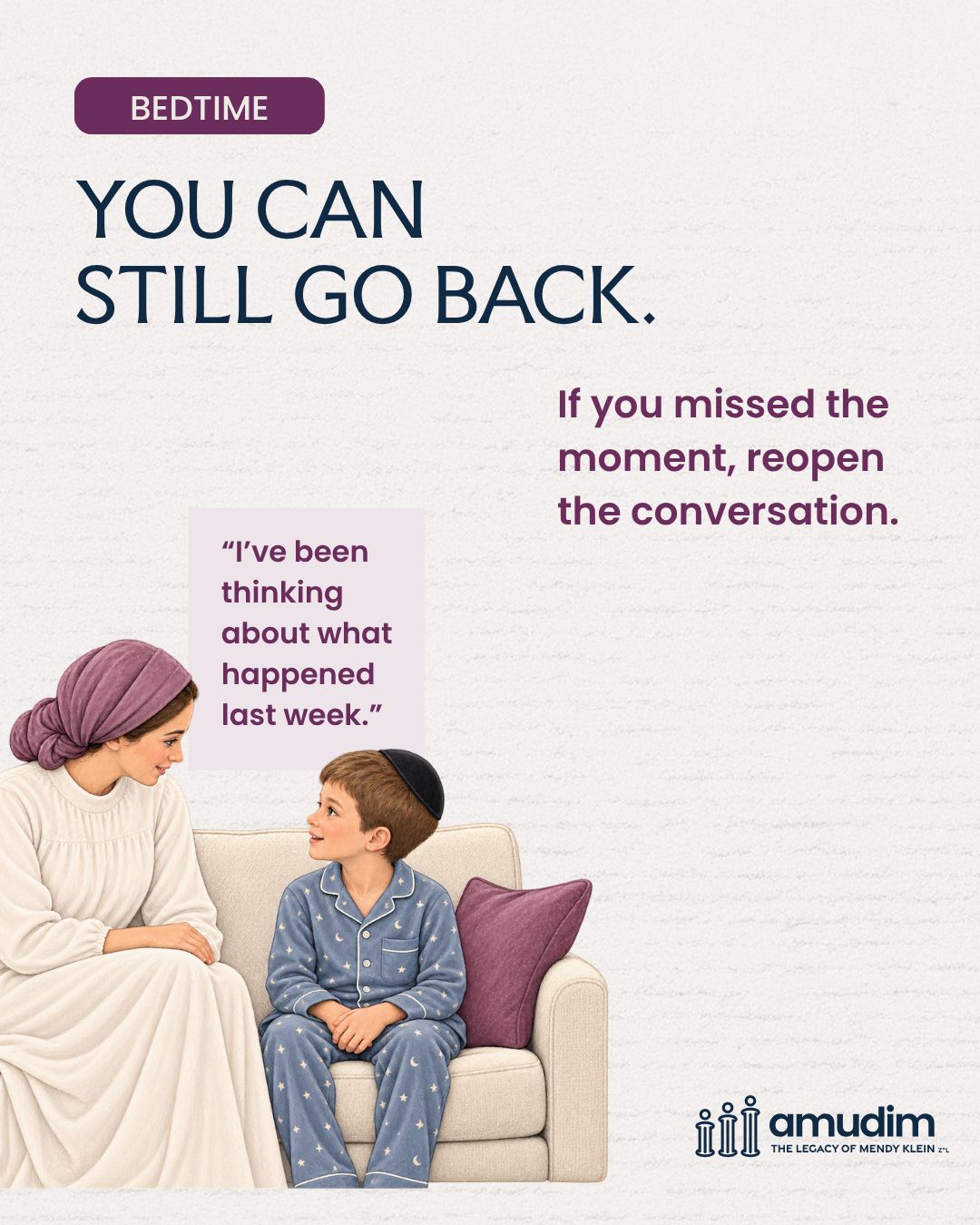
Bedtime. You can still go back. “I’ve been thinking about what happened last week.” If you missed the moment, reopen the conversation. It isn’t too late.
None of these is a punishment or based on suspicion. They actually work best when everything feels fine. Over time, our children come to know these routines as part of everyday life at home. A child who has watched the game stop a hundred times over small things knows we’ll listen when something is harder to talk about.
I’m Proud of You for Telling Me
Rabbi Avi Landa, LCPC, Director of Education at Amudim, adds the piece that holds all of it together. Our children need to know they can tell us anything. Even something a sibling did, something that happened to them, or something they did themselves. And the first response isn’t a punishment. It can sound like “What happened, and how do we make sure it never happens again?” with the right help for every child involved.
He reminds us that when a child comes to you with something hard, even something between siblings, even something they did, the first sentence is “I’m proud of you that you told me.”
Those words can feel almost impossible to say when we’re worried about the child who was hurt. Rabbi Landa’s answer is that as parents we can hold two things at once. We can be proud our child trusted us enough to tell the truth, and still be clear, chas v’shalom, that we are not proud of what was done. That part gets addressed, seriously, and that child gets help too.
If we are honest with ourselves, we would all rather our children feel safe coming to us after the first time something happens, and not after the tenth, or the hundredth. If telling us something hard leads straight to a consequence, the next thing doesn’t get told.
The door that matters most in our house is the one between our kids and us. We can keep that one open.
Free Downloadable Worksheets: Under One Roof

Three pages for your child, based on the Darcheinu/Our Path SEL curriculum: Under One Roof, Words I Can Use, and More of What Matters.
Some of you may remember the Uncovering My Values game from our earlier series on peer pressure. If your family played along, this is a chance to revisit the values your children chose and explore what those values look like at home and how they relate to their own boundaries and other people’s.
If you’re discovering the game for the first time, this week’s printable includes cut-out cards to help you get started at amudim.org/values.
A Moment of Understanding
Next week, we will talk about how to recognize when a child is uncomfortable, even if they haven’t said “no.” We’ll look at how to spot those cues and how we can help every child practice telling someone what they want or need, in words that feel like their own.
Thank you for continuing to follow along with us!
Wishing you a wonderful Shabbos,
The Amudim Team
You can revisit our SEL Parenting resources here. New resources are being added daily: