



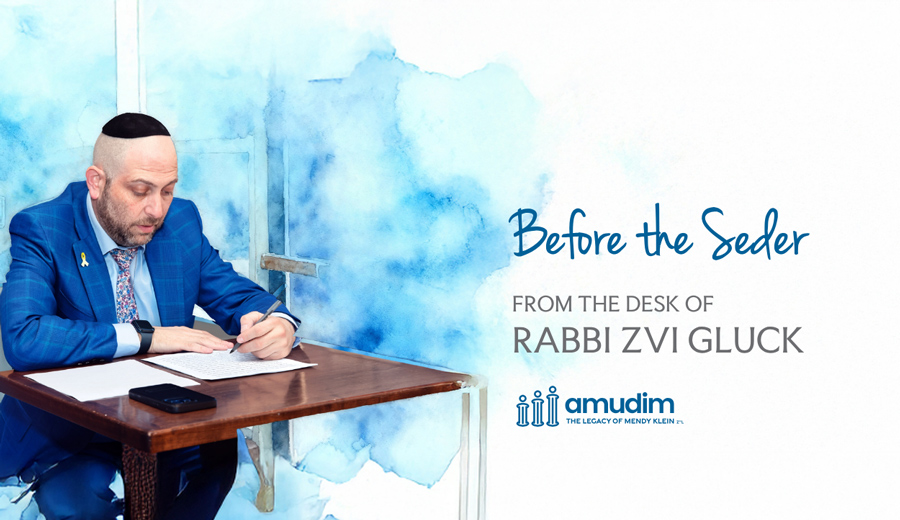
I'm writing this from Yerushalayim, hours before Pesach.
I've been hearing from rabbanim and gedolim that we are living in the times of ikvesa d'Meshicha, in times the Navi'im spoke about thousands of years ago. I am not here to argue with that. I am not a navi. I am not a gadol.
But here is something I've noticed. Most of us never really learned Navi properly. We learned Chumash. We learned gemara. But Nevi'im? For a lot of us, it just wasn't where we spent our time. So when our rabbanim say we are living inside a nevuah, we nod and feel the weight of it, but we don't always know what the words actually say.
When I went back and opened the sefer, I found something I wasn't expecting. The exact language Yechezkel uses speaks directly to the people we work with every single day. People struggling with addiction. Survivors of abuse. People carrying mental health challenges in silence. The message isn't fear. It is achrayus. It is hope. It is a direct call to show up for the people around us who are suffering.
Yechezkel 37. Hashem takes the navi to a valley full of bones and asks him: Ben adam, can these bones live?
The pasuk doesn't say the bones were dead. They were very dry. No moisture. No reserve. Completely spent. That is exactly how our people come to us. Not wounded. Dried out.
And what does Hashem tell Yechezkel to do? Not to fix them. Not to diagnose them. He says: speak to them. Tell them there is still a word meant for them.
The Haggadah does not begin with miracles. It begins with degradation. Avadim hayinu. A people so ground down they could not even hear Moshe Rabbeinu - kotzer ruach, a spirit too compressed to receive good news. And yet that is precisely the people Hashem chose to redeem. Not after they healed. In the middle of it. The Seder table is not a celebration for people who already have it together. It is a reenactment of what happens when Hashem says to a valley of dry bones: get up.
Before the war prophecies, before the dry bones, Yechezkel delivers a rebuke not to the enemies of Israel - to us: The weak you have not strengthened, the sick you have not healed, the injured you have not bound up, the strayed you have not brought back, the lost you have not sought. Five categories of people who were right there, visible, and were overlooked.
Walk through any community and those five categories map perfectly onto the people sitting in our shuls right now who are invisible to us.
Hashem says: I will seek the lost. I will bring back the strayed. I will bind up the injured. He does it through us. That is the bris. He gave us the mandate. He gave us the instruction manual, right here in this sefer.
The last word of the nevuah: I will no longer hide My face from them.
The Torah was true when Yechezkel wrote these words and it is just as true today. The navi saw our valley. He saw our people. He left us a roadmap. All we have to do is follow it. So let's take these words to heart. Let's show up for the people around us who are suffering. Let's be the shepherds we are supposed to be, because that is exactly what Hashem is asking of us.
Wishing you and your families a chag kasher v'sameach. May we all be zoche to the geula sheleima, and may this Pesach be the one where we go from the valley to the mountain, together, as one.
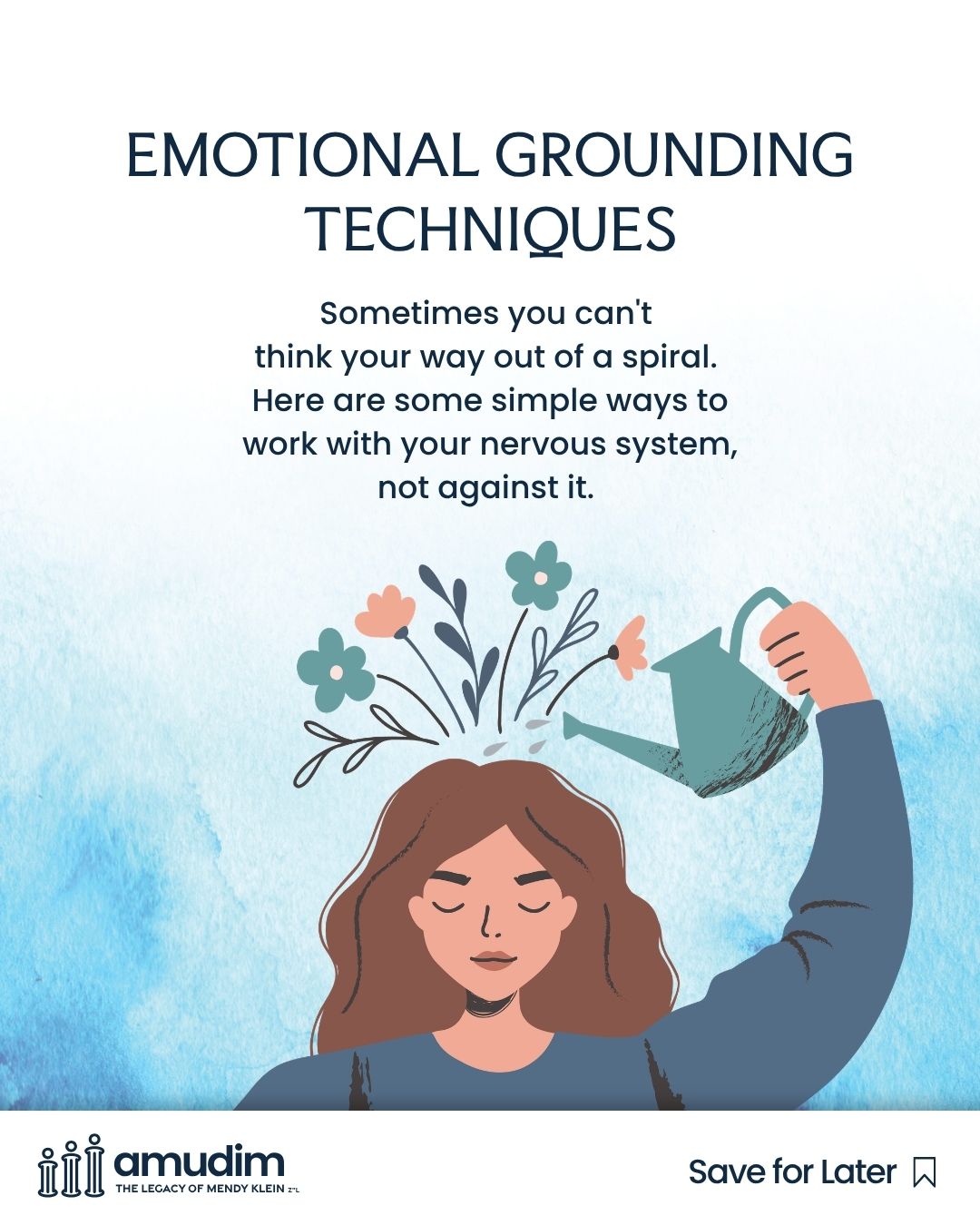
Planning for the moments that are hard...
For some, it's an overstimulated child. For others, it's family stress, loneliness, or simply hitting a limit.
Think ahead now: What usually feels tough? What can help before it becomes too much?
Check out our simple emotional grounding techniques. Taking a few minutes to step away and reset can help make all the difference.
Need a quick reset?
Try our Plan Your Pause tool - it takes less than 60 seconds:
When our capacity has hit its max.
In a moment of crisis, your safety always comes first. Harav Dovid Cohen, shlit"a, made it extremely clear that even on Shabbos and Yom Tov, if you are in a mental health crisis, you are allowed to use your phone. As Reb Chaim Soloveitchik said, "I'm not meikil on Shabbos - I'm machmir on pikuach nefesh."
HaRav Dovid Cohen and HaRav Shmuel Meir Katz, shlit"a, each issued a public p'sak halakha allowing those experiencing mental health emergencies to use phones, computers, and cars to obtain help on Shabbos. HaRav Shmuel Meir Katz, shlit"a, said clearly, "Anyone with mental health issues, behavioral problems, addictions, working on the 12 steps... has to make sure that his recovery is rock solid. If he or she thinks that there is a chashash that he must speak to a sponsor, join a Zoom meeting, whatever it is - whenever. Shabbos, Yom Tov - it doesn't make a difference."
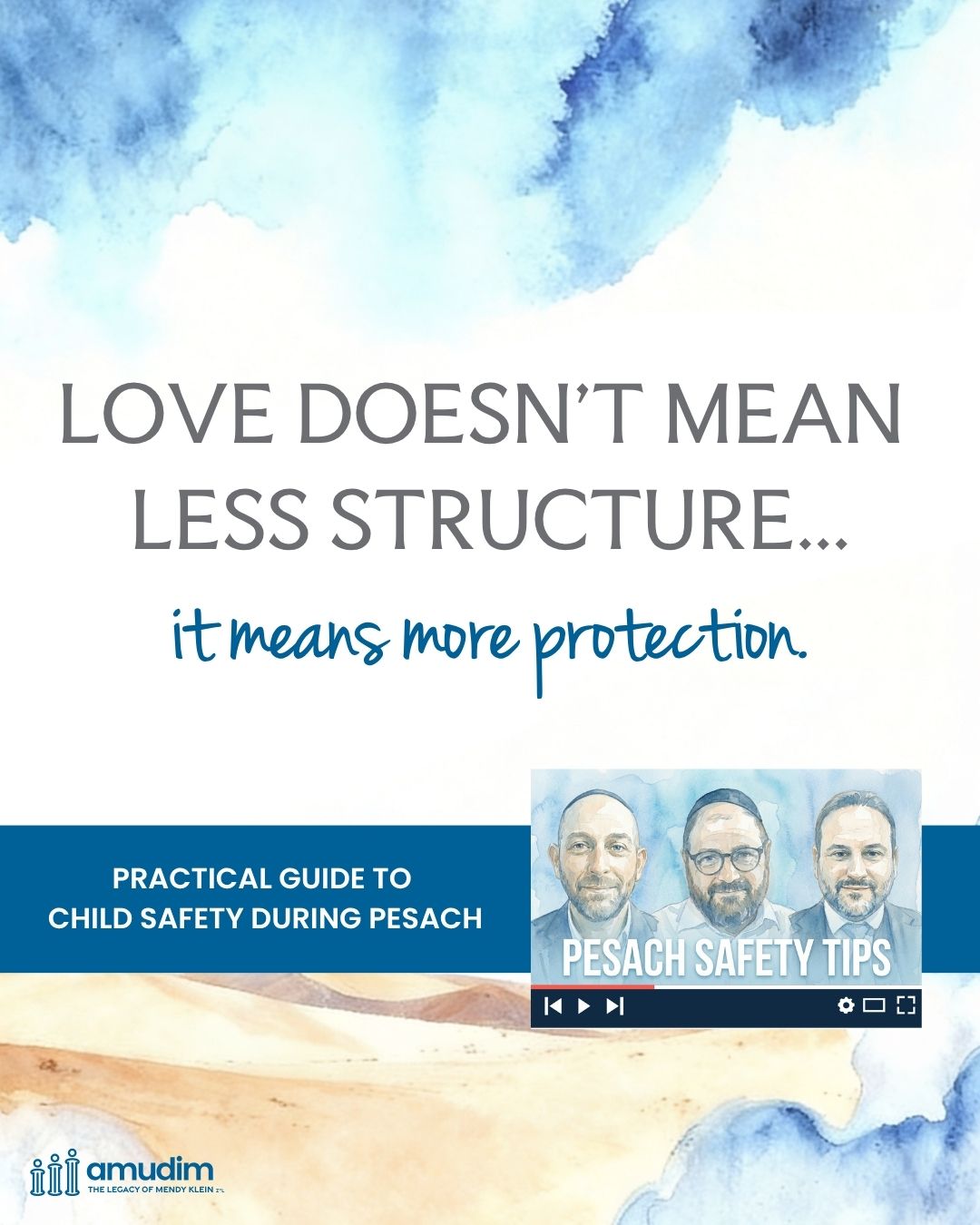
Yom Tov is not protection by itself.
Even during the holiest of times, Hashem gives us structure to keep us safe. If we took out the Yom Tov framing and simply described the setup, many of us would hear the concerns right away:
- Children in a house or hotel with lots of people
- Long stretches of unsupervised time
- A false sense of security because everyone is "like us"
- Late nights
- Adults assuming someone else is watching
We sat down with Amudim's CEO, Zvi Gluck; Rabbi Yakov Horowitz of Bright Beginnings; and Rabbi Avi Landa, Director of Education at Amudim, for an honest and practical discussion about how to approach Pesach with greater safety, sensitivity, and preparation.
Pesach can be lonely. For people who are single, estranged from family, in recovery, or carrying something invisible - sitting at someone else's full table can feel harder than sitting alone.
An invitation is not just logistical. It's a statement: I see you. There is room for you here.
Tips on hosting with care, and showing up with grace as a guest.

Hotels, extended family, shared spaces. Pesach brings together people who don't usually spend this much time together - and that can create risk we don't always see coming.
The people most likely to cause harm to children are often the ones we trust most. That's not meant to frighten - it's meant to prepare.