




At Amudim, we believe education is prevention.
That’s why we’re in classrooms, at community events, and in shuls, building awareness, teaching skills, and helping create a safer world for all of us before a crisis ever begins.
And when someone is in crisis, our clinical case managers are there, too. A phone call, a plan, and someone walking alongside them through it, always 100% free.
That’s only possible because of our donors. If you want to help us keep showing up for Klal Yisroel, you can do that here.
Dear Parents,
Most of us don’t remember being taught what a boundary is. We learned from what happened around us, from the choices we were given and how the people around us responded when we wanted some space.
Our children are learning through those everyday moments, too. When one sibling wants to play and another wants to be alone. When someone reaches for a belonging without asking. When a relative is happy to see them, and they aren’t quite ready for a hug.
There is a lot to navigate in these small exchanges, for our children and for us.
This week, we introduced My Space. My Feelings. My Voice., our four-week parenting series on boundaries. We’re beginning with the earliest ways children learn about boundaries and building from there, with empathy woven throughout.
This week is about noticing where that learning begins.
How do we explain boundaries in a way our children can understand?
What Is a Boundary, Anyway?
Before our children can respect a boundary, they need a picture of one. In our video “What Is a Boundary, Anyway?” Rabbi Avi Landa introduces different levels and types of boundaries through a familiar scenario:
Your ball rolls into the neighbor's yard. There's no fence. Can you take two steps onto the grass and get it? Most people would say yes. There is a property line there, but the homeowner generally wouldn't expect you to knock for that.
Now there's a fence. That changes things. The fence communicates that the homeowner doesn't want us coming into the yard. We need to respect that boundary.
Now the ball goes through an open window on the second floor. The front door is open. Can you walk in and go upstairs? Of course not. Entering the house crosses a much greater boundary and requires permission.
We can bring these questions to our own tables and give our children time to think and answer. In the fuller conversation, Rabbi Landa also explains an important limit to the comparison: when it comes to our bodies, permission alone does not make every kind of touch appropriate. Our children need clear, age-appropriate guidance about private parts and what is and isn’t okay.
Mrs. Shira Berkowitz also points out that this teaching starts much earlier than a formal conversation does. She describes it as sowing seeds from birth: explaining that a diaper change is private and moving to a private space, the way we handle bath time, and explaining what happens at a doctor’s visit while reassuring our child that Mommy is right there. These everyday moments are part of how our children begin learning about privacy and boundaries.
Video
What Is a Boundary, Anyway?
Our children begin learning about boundaries long before they even know the word.
And so much of that learning happens in the little moments we share with them every day.
In today’s video, Mrs. Shira Berkowitz, LCSW, and Rabbi Avi Landa, LCPC, walk us through age-appropriate ways to introduce boundaries as our children grow, helping them understand how to respect someone else’s space while learning that their own deserves respect, too.
Where it gets tested first
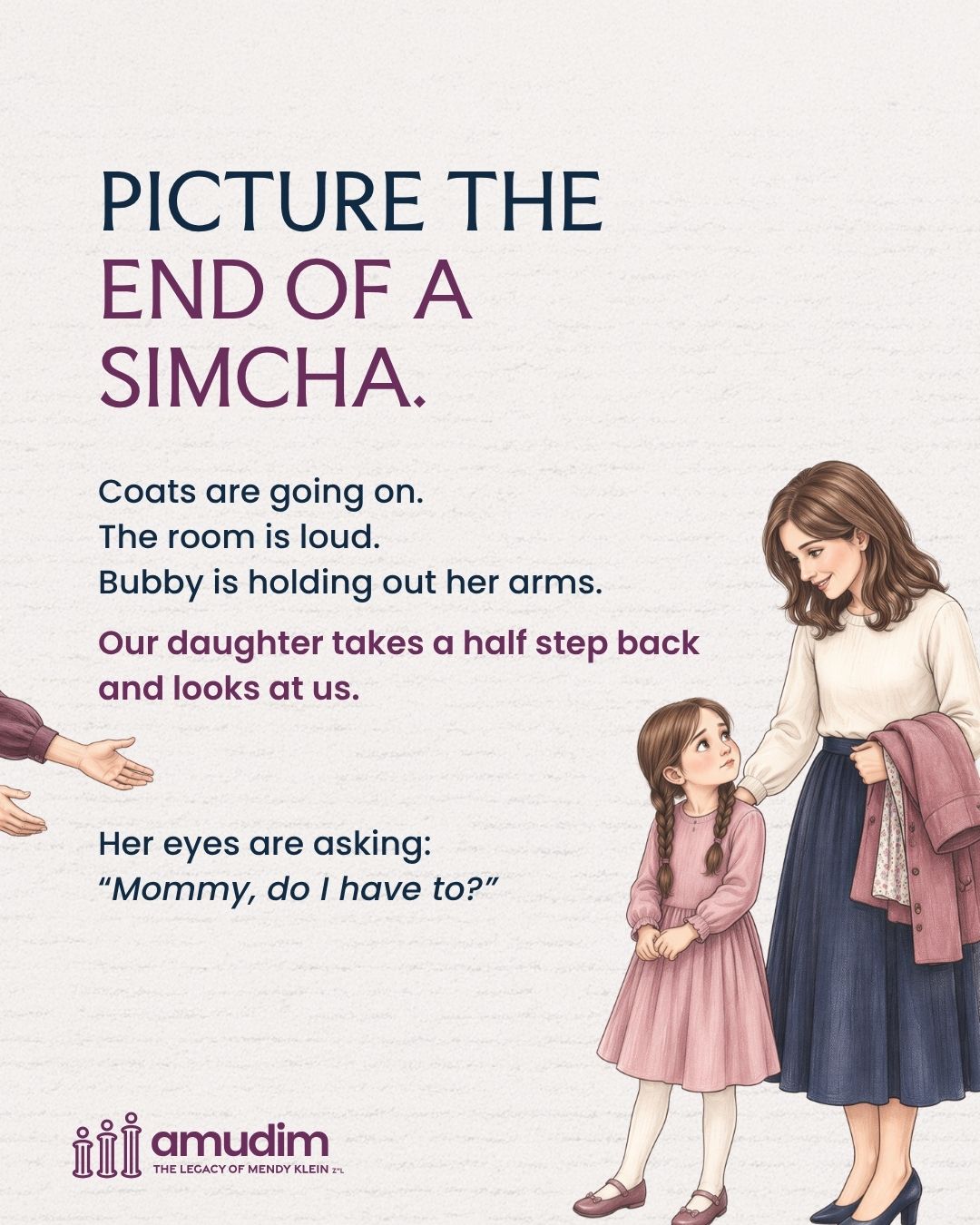
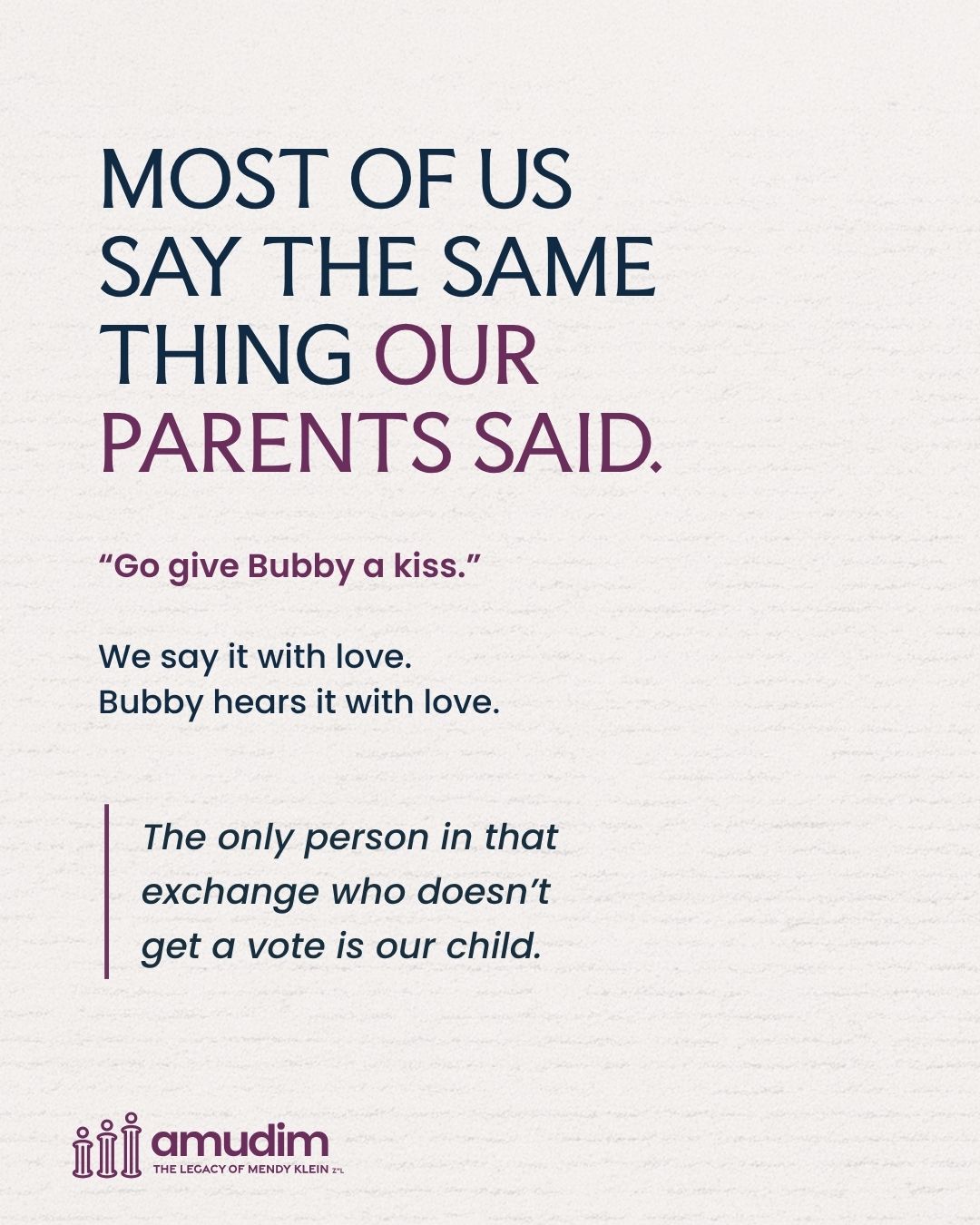
A family simcha is one place this learning gets tested. Bubby holds out her arms. Our child hesitates and looks at us. And we may find ourselves saying what our parents said: “Go give Bubby a kiss.”
We say it with love, and Bubby hears it with love. The only person in the exchange who doesn't get a vote is the child.
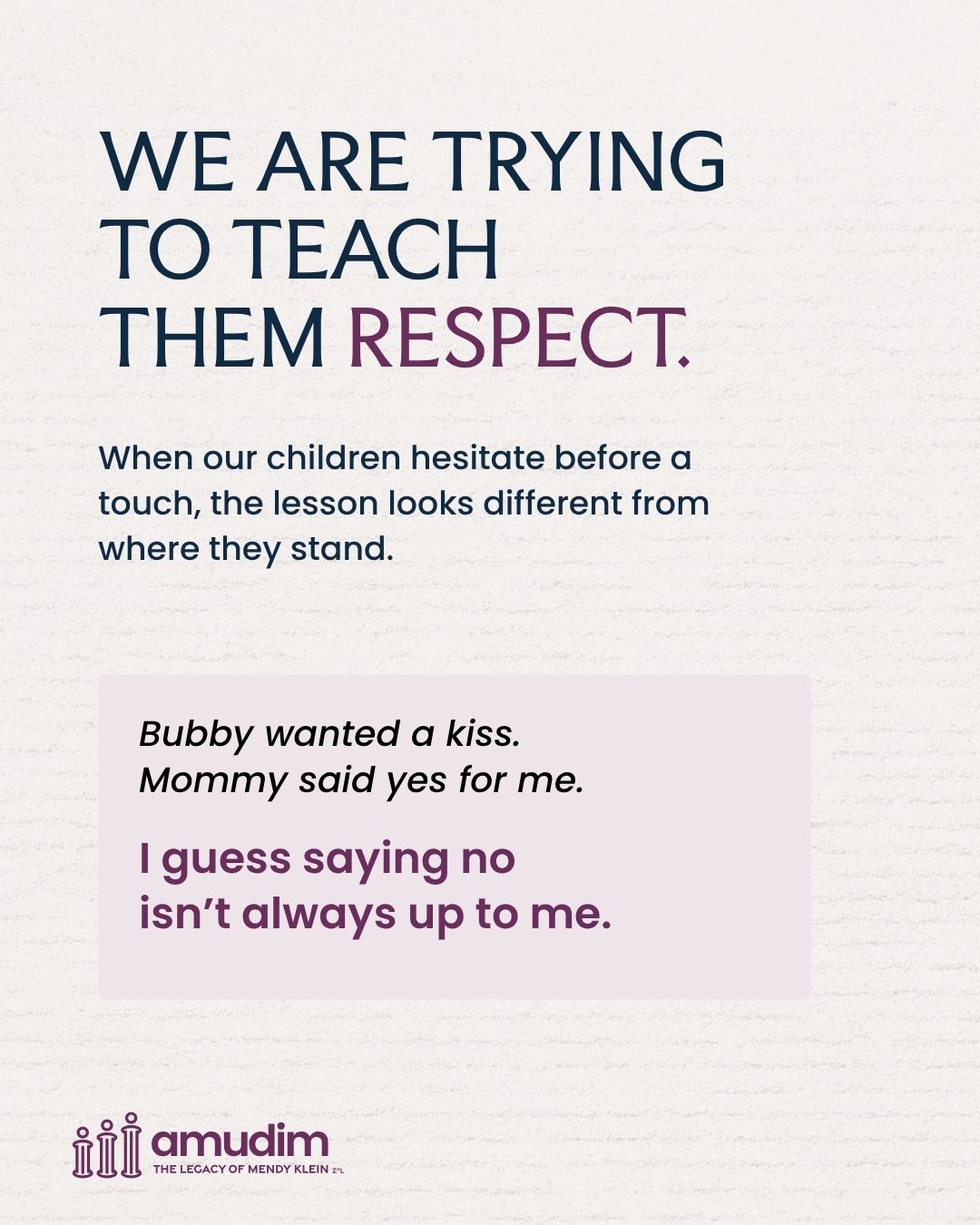
We mean to teach respect. From where the child stands, the lesson can be a different one. Bubby wanted a kiss. Mommy said yes for me. So saying no isn't always up to me. Children may not think that in words. They take it in, a little at a time.
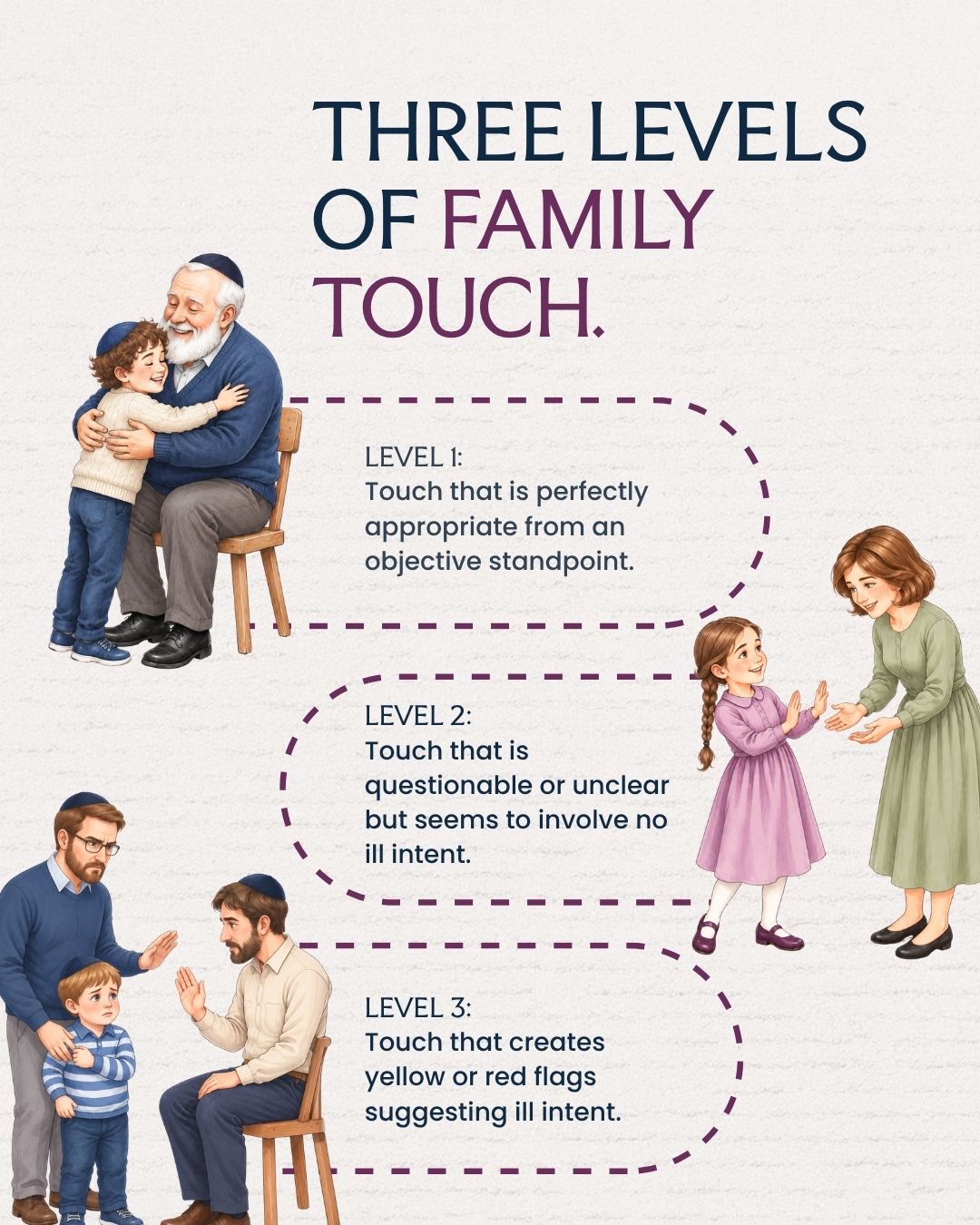
Three levels of family touch
In another video this week, Rabbi Landa discusses three levels of family touch. The distinctions help us think about what we’re seeing and how to respond.
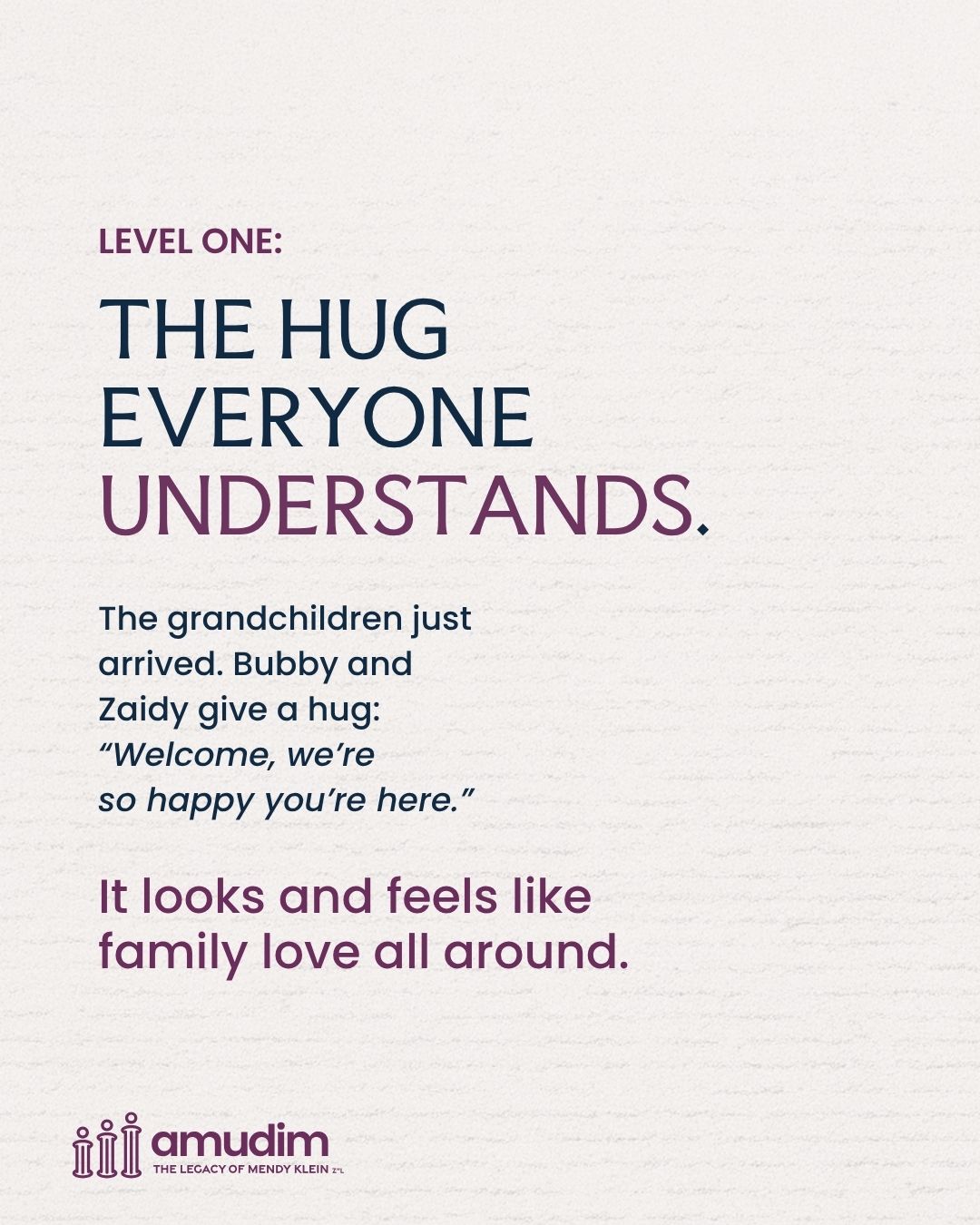
Level one: Touch that is appropriate from an objective standpoint. The grandchildren arrive, and Bubby and Zaidy give a quick welcoming hug. There’s nothing concerning about the touch itself. If our child says they don’t like it, or we can see that they’re uncomfortable, we respect that.
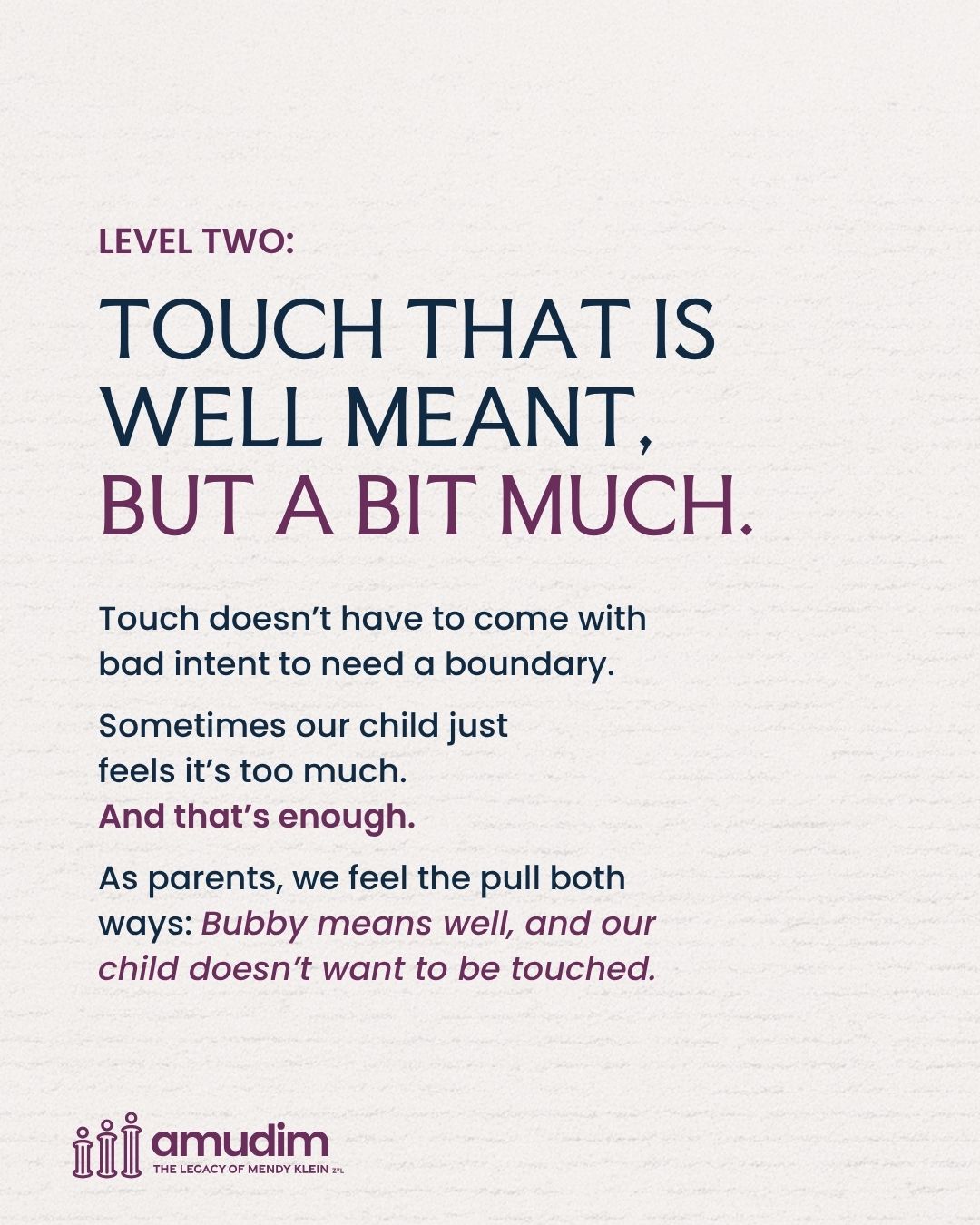
Level two: Touch that is questionable or unclear but does not seem to involve ill intent. Bubby already gave a hug, and now she’s asking for another five minutes later, or each time she sees the child. It feels overdone. If our child doesn’t want it, we respect that. Even if our child seems okay with it, Rabbi Landa explains that it can still be worth speaking kindly with the adult about keeping the affection within more ordinary limits.
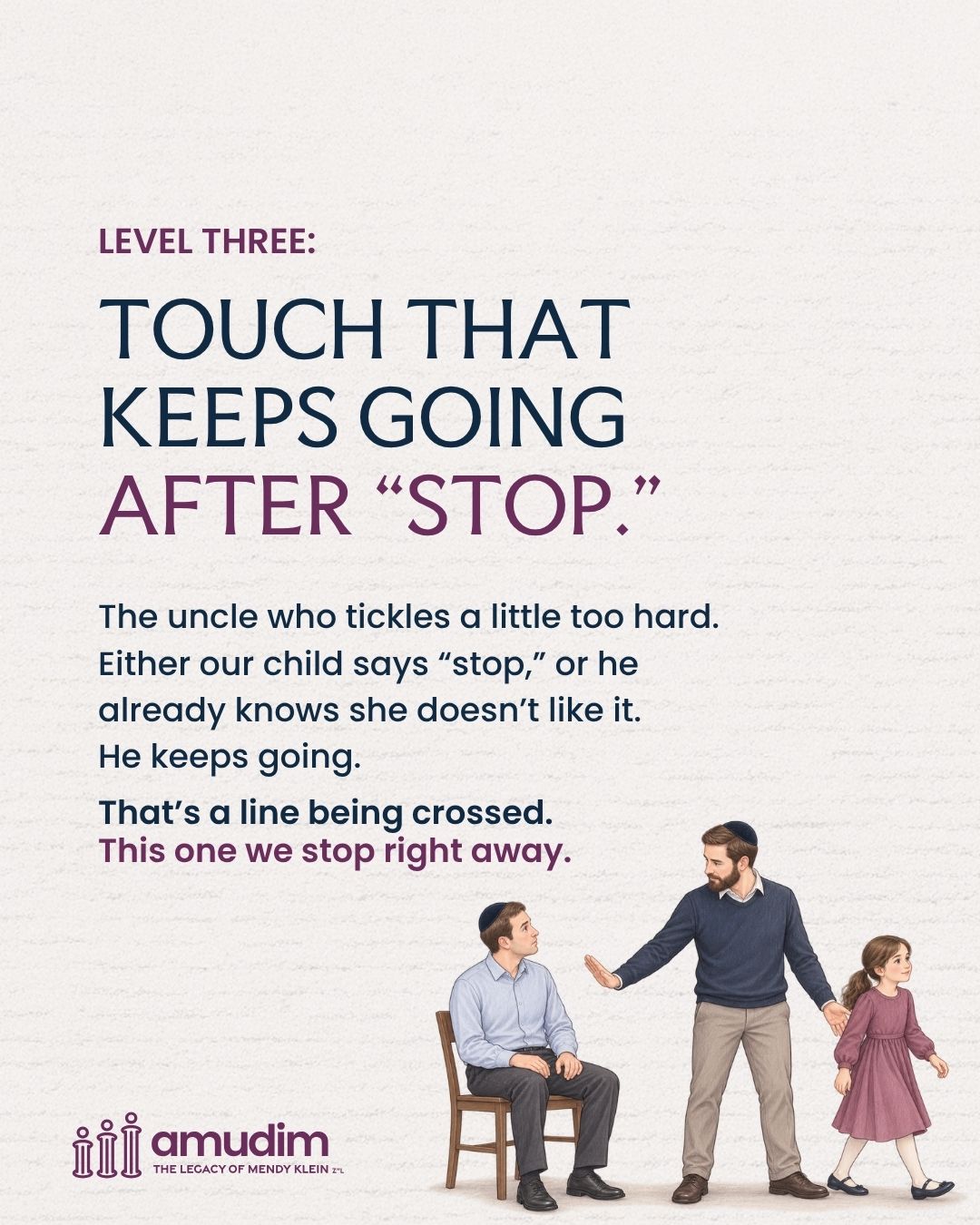
Level three: Touch that raises yellow or red flags, where there may be ill intent. Rabbi Landa gives the example of an uncle tickling a child aggressively when she says “stop,” or when he already knows she doesn’t like it. At this level, we step in even if our child says nothing or seems to enjoy it. We don’t wait for our child to object before we act.
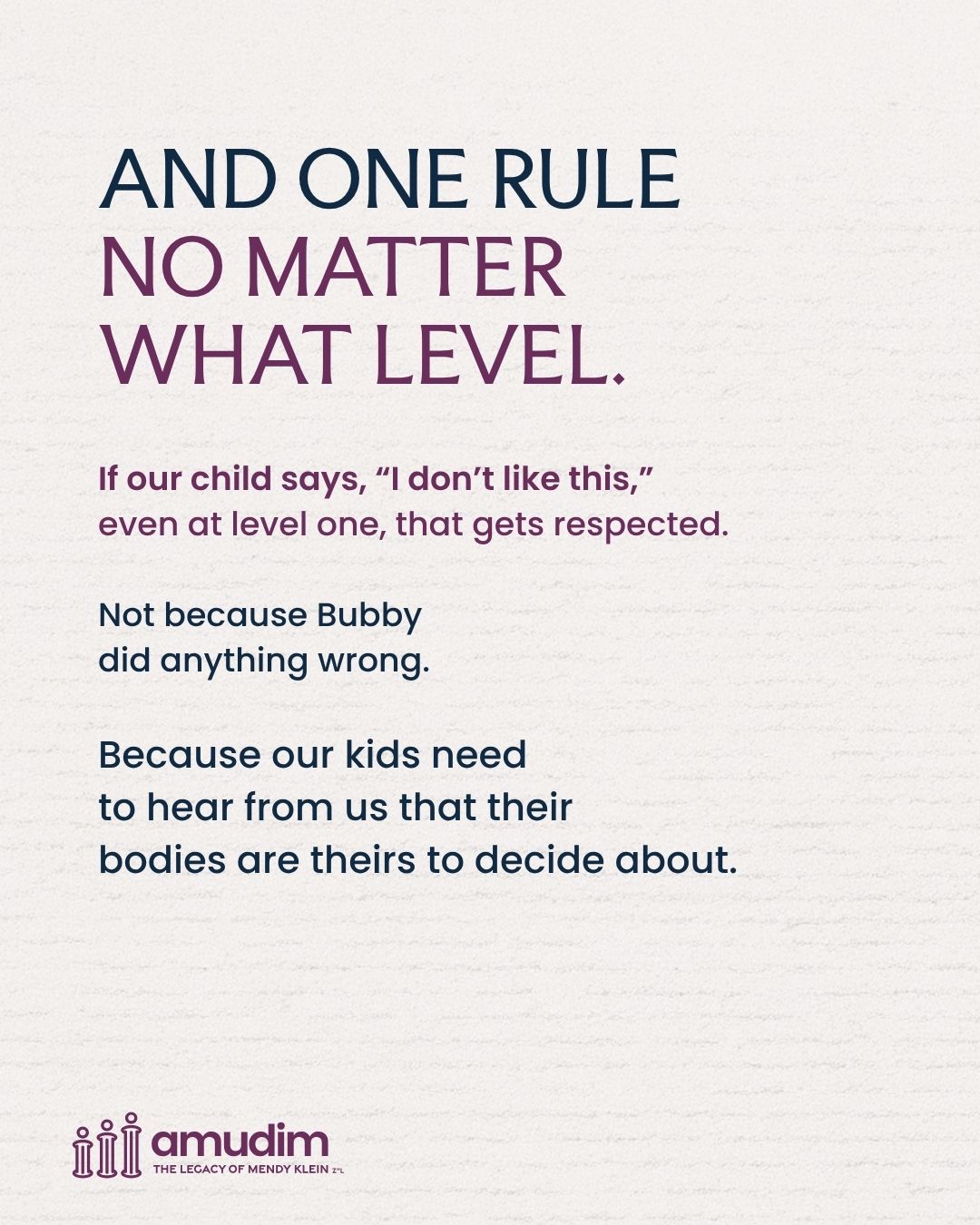
Across all three, if our child says, “I don’t like this,” or we can see that they’re uncomfortable, that gets respected. A hug can be perfectly well meant and still be something our child doesn’t want.
We can talk with our child about what feels uncomfortable and think together about another way to greet the relative. Our child gets to know that we’ll listen and help them find words for what they need.
Why it has to be us
Our child may need our help to speak up, especially with an adult they love and want to please. Rabbi Landa encourages us to prepare ahead of time and speak with the people involved kindly and respectfully. We can help our child’s choice be understood while caring for the relationship, too.
The words
None of this needs a speech. It needs one warm sentence that gives the child a way out and gives the relative something else to say yes to.
Offer a menu. "Would you like to give Bubby a hug, a kiss, or a wave?" Every option is a greeting, and the child chooses how they’d like to say hello.
Find a greeting that works for them. Rabbi Landa suggests making up a special handshake together with Zaidy. It gives them their own way to connect, with affection our child is comfortable sharing.
Decide before you walk in. In the car: “You can say hi however feels good to you. I’ll help you let Bubby know.” Knowing we’ll support their choice can make it easier for our child to speak up.
This week's printable: Ask Me First
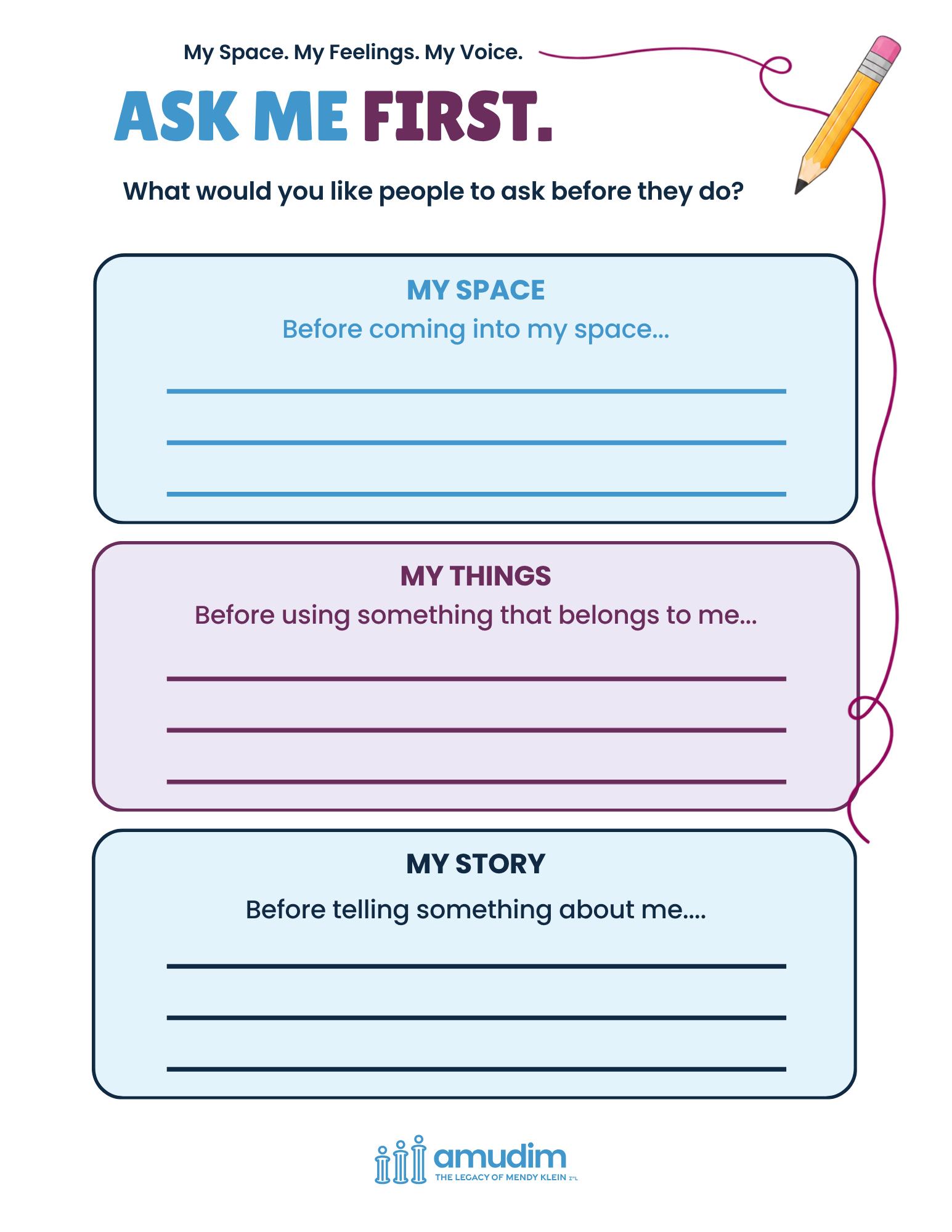
This week’s printable, Ask Me First, gives us another way to bring the conversation home.
Next week, we’ll explore empathy, helping our children understand that their feelings matter, and so do other people’s.
TRY THIS AT HOME:
The yard, the fence, and the window. Do it at the table. Ask each question and let your children answer before you do. Talk together about what changes in each situation and why permission matters.
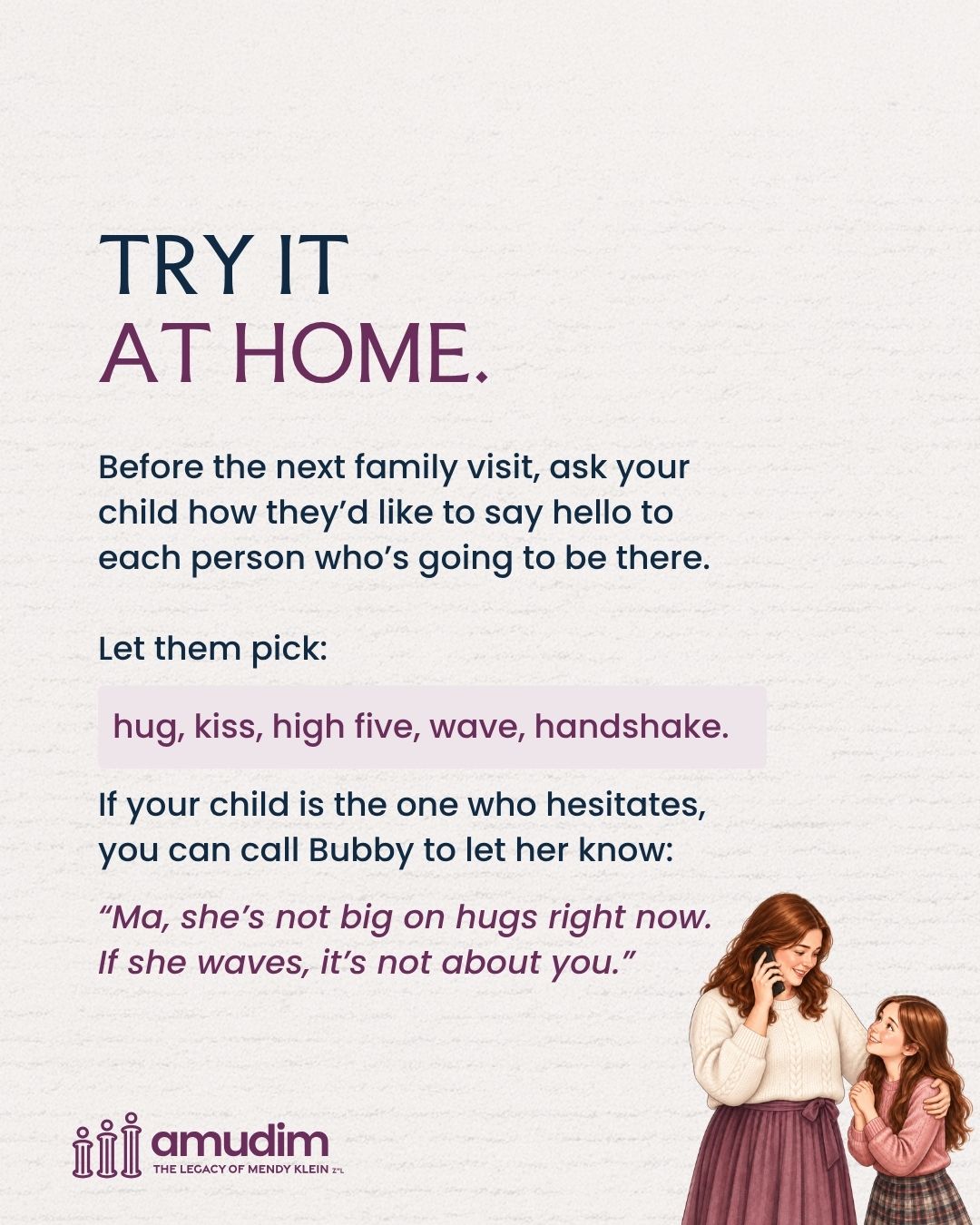
Before the next visit. Ask your child how they'd like to say hello to each person who'll be there: hug, kiss, high five, wave, handshake. If your child is the one who hesitates, call Bubby ahead of time, not in the doorway: "Ma, she's not big on hugs right now. If she waves, it's not about you."
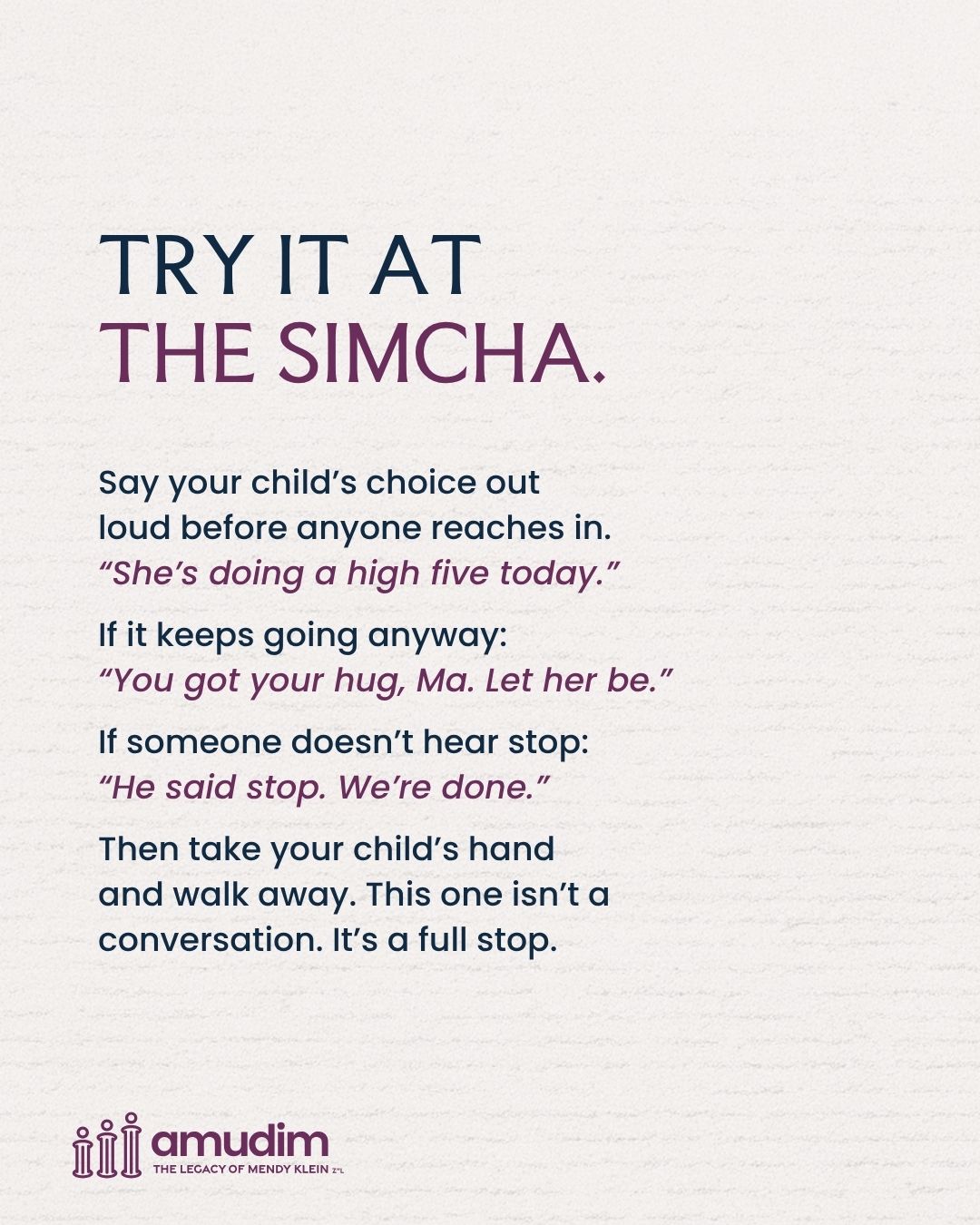
At the simcha. Say your child’s choice out loud before anyone reaches in: “She’s doing a high five today.” If the relative keeps asking: “Ma, she’s said she doesn’t want another hug. Let’s give her some space.” If someone keeps touching after the child says stop: “He said stop. We’re done.” Then take your child’s hand and walk away.
Thank you for continuing to follow along with us!
Wishing you a wonderful Shabbos,
The Amudim Team
You can revisit our SEL Parenting resources here. New resources are being added daily: