




At Amudim, we believe education is prevention.
That’s why we’re in classrooms, at community events, and in shuls, building awareness, teaching skills, and helping create a safer world for all of us before a crisis ever begins.
And when someone is in crisis, our clinical case managers are there, too. A phone call, a plan, and someone walking alongside them through it, always 100% free.
That’s only possible because of our donors. If you want to help us keep showing up for Klal Yisroel, you can do that here.
Dear Parents,
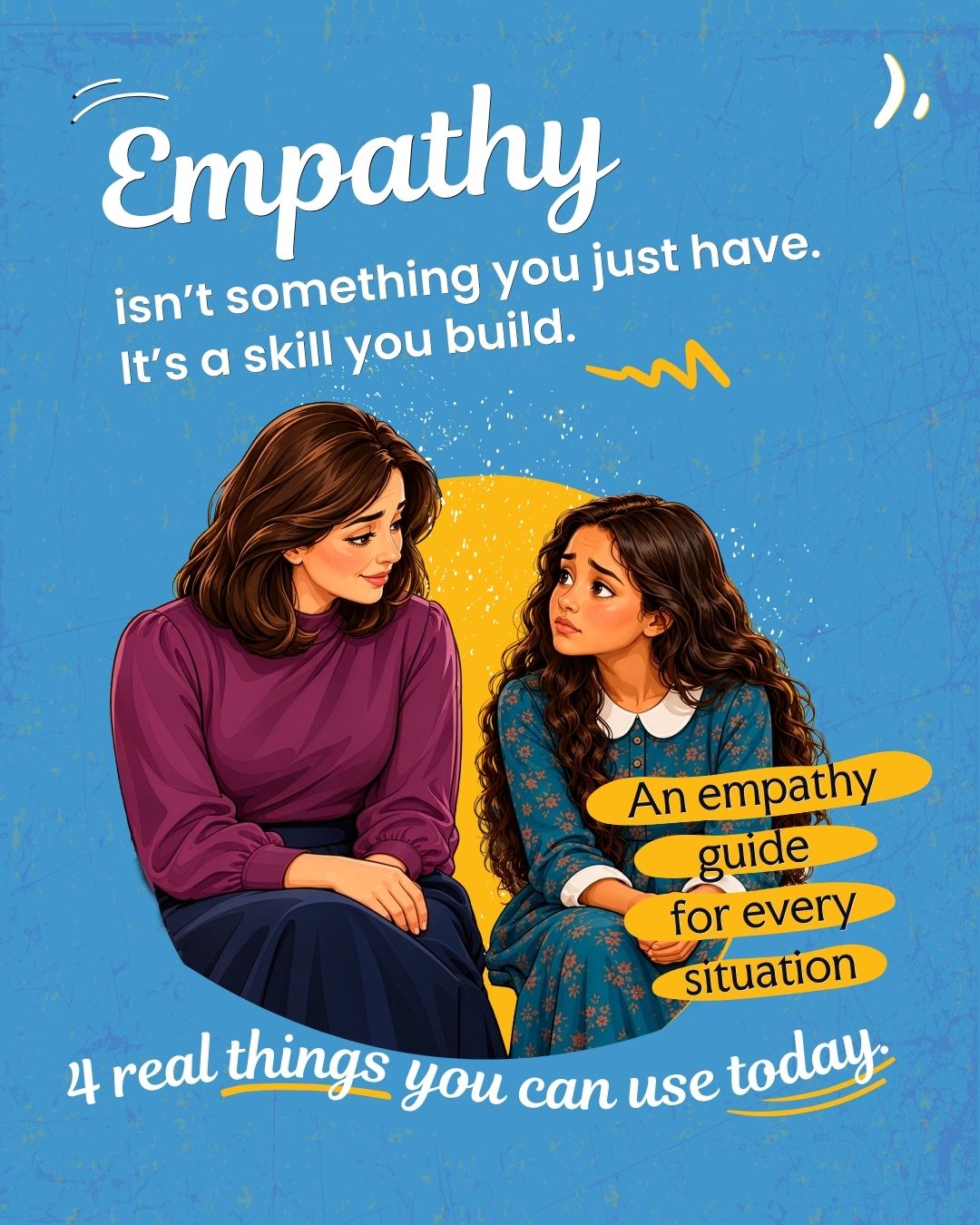
This week, our boundaries series took a step that might seem backward: we spent the whole week on empathy. Because before we can help a child respect someone else’s boundaries, we have to help her understand how her actions affect them. And sometimes, we have to recognize where we’ve crossed a line ourselves.
Before we get to “don’t do that,” we start with “that hurt her.”
How do we help our children feel someone else’s hurt, and still hold their own?
Where empathy stops being yours
We opened the week with a memory many of us know. You came home with something hard. Your mother felt it so deeply that somehow, you ended up comforting her. So you learned to bring her less. We called it being considerate. But it meant keeping the hard things to ourselves.
Feeling it with your child is empathy. When your feelings become hers to manage, that’s a job she didn’t ask for. A child can’t lean on you if she’s busy holding you up.
That’s the idea behind everything we shared this week: empathy isn’t about how much you feel. It’s about being able to feel it with her and still be someone she can lean on.
Empathy with boundaries
Mrs. Shira Berkowitz of Darcheinu/Our Path SEL opened Tuesday’s video with a reminder from Brené Brown: empathy minus boundaries is not empathy. The curriculum has a word for what it becomes instead. Enmeshment. Your child’s bad day becomes your bad day, her mistake becomes your fault, her problem becomes your project. Mrs. Berkowitz’s point is that this looks like love from the outside, and from the inside it leaves your child with nobody to come home to, because you went under with her.
Rabbi Yisroel Grossberg closed the video with the sentence we want every parent to keep. A child can be heard, understood, and still told no. Those three things are not in competition. The first two are what make the third survivable.
Video
Boundaries Aren’t Division. They’re Respect.
Boundaries aren’t division. They’re respect. Here’s what’s okay for me, and here’s what’s not.
Mrs. Shira Berkowitz, LCSW, and Rabbi Yisroel Grossberg on why empathy without boundaries isn’t empathy, and how a child can be heard, understood, and still told no.
What empathy looks like in practice
Here’s the part of the week that changes what you do, not just what you think. Empathy isn’t something you have. It’s something you do, in four moves. We walked through them with one scene, because sometimes it’s easier to see what empathy asks of us before we try it with our children.
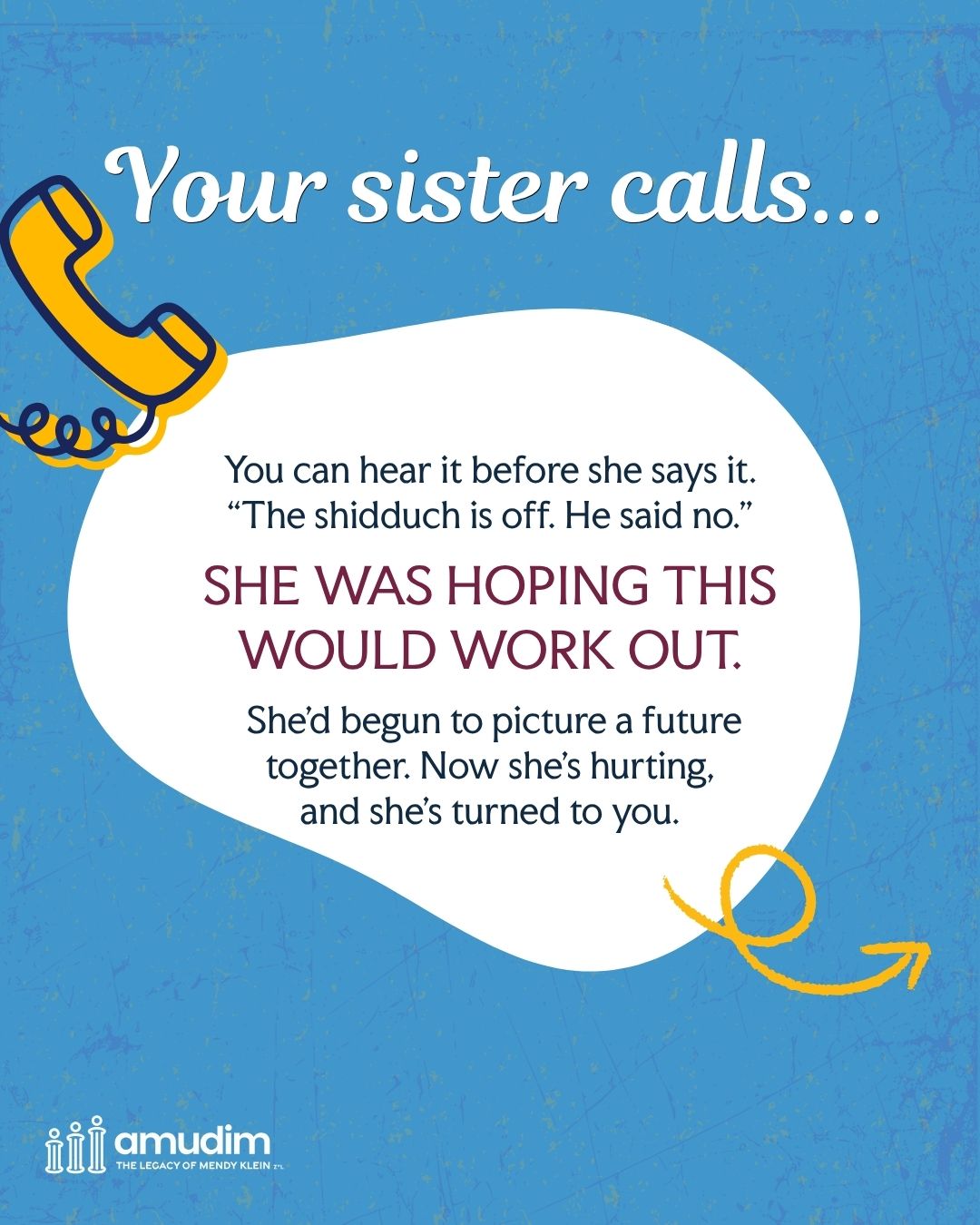
Your sister calls. You can hear it before she says it. “The shidduch is off. He said no.” She was hoping this would work out. She’d begun to picture a future together. Now she’s hurting, and she’s turned to you.
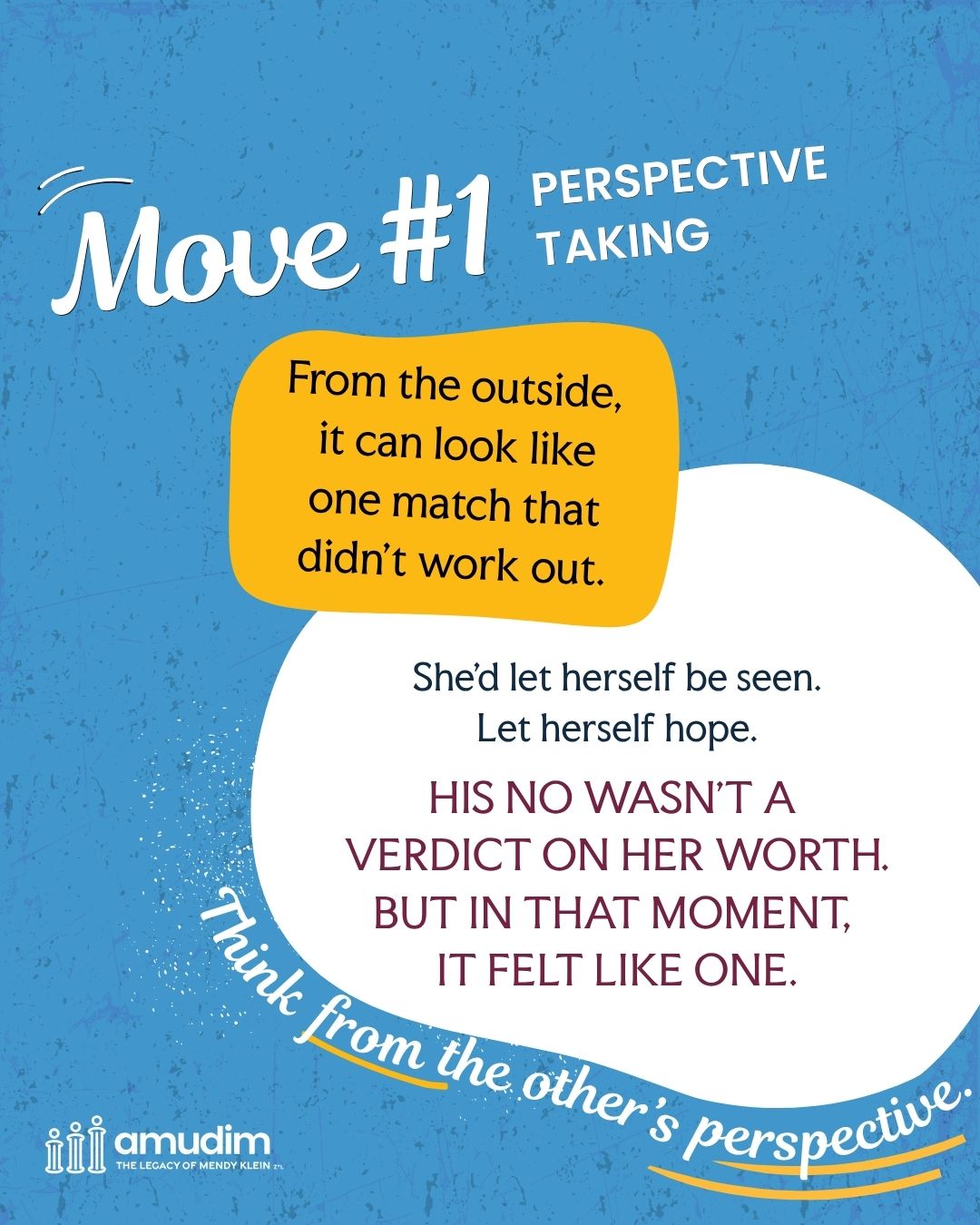
Move 1: Perspective taking. From the outside, it can look like one match that didn’t work out. From inside, she’d let herself be seen. Let herself hope. His no wasn’t a verdict on her worth, but in that moment it felt like one. Think from the other’s perspective, not from yours.
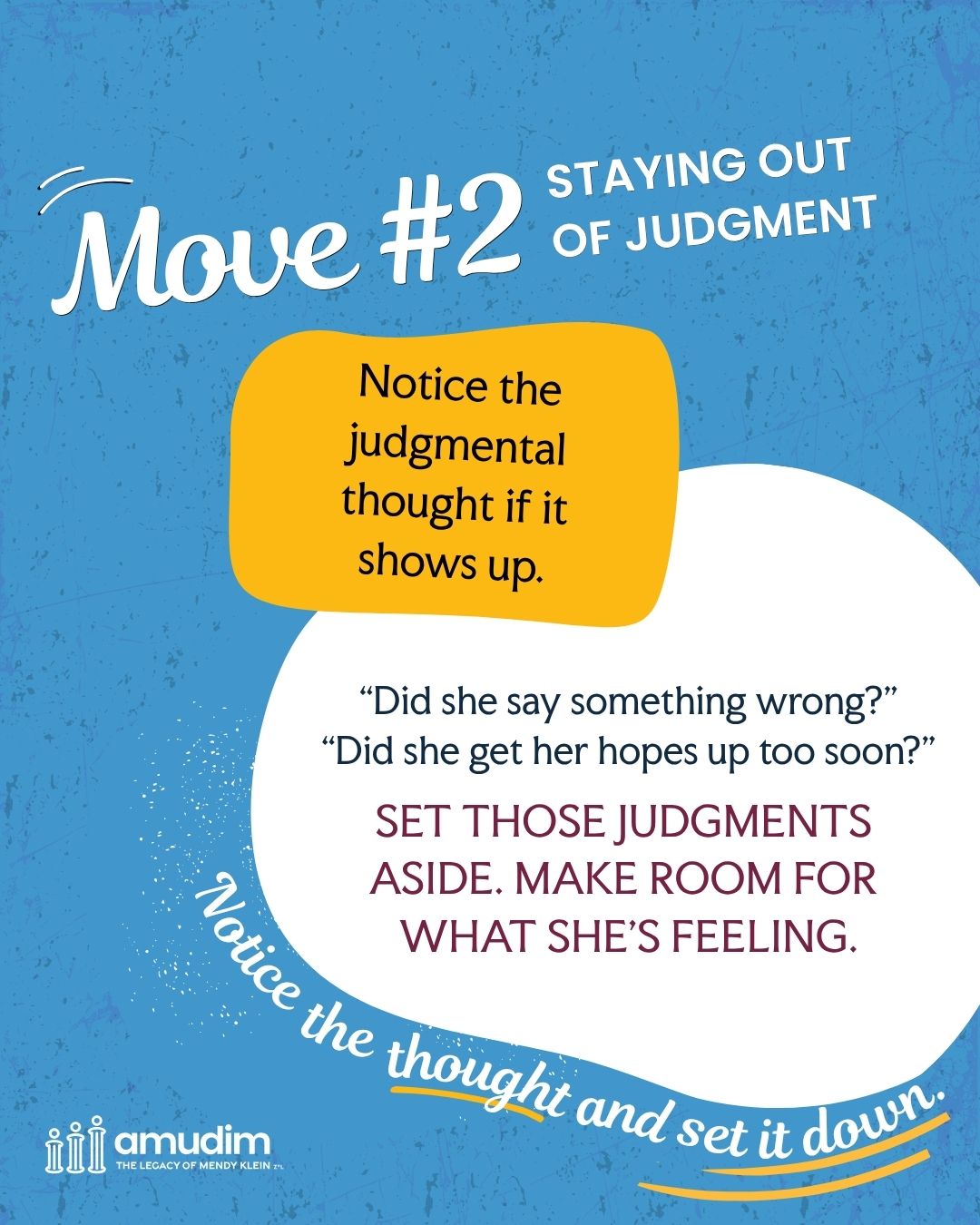
Move 2: Staying out of judgment. Notice the judgmental thought if it shows up. Did she say something wrong? Did she get her hopes up too soon? If it shows up, that’s not a failing, it’s a thought. Set it down and make room for what she’s feeling.
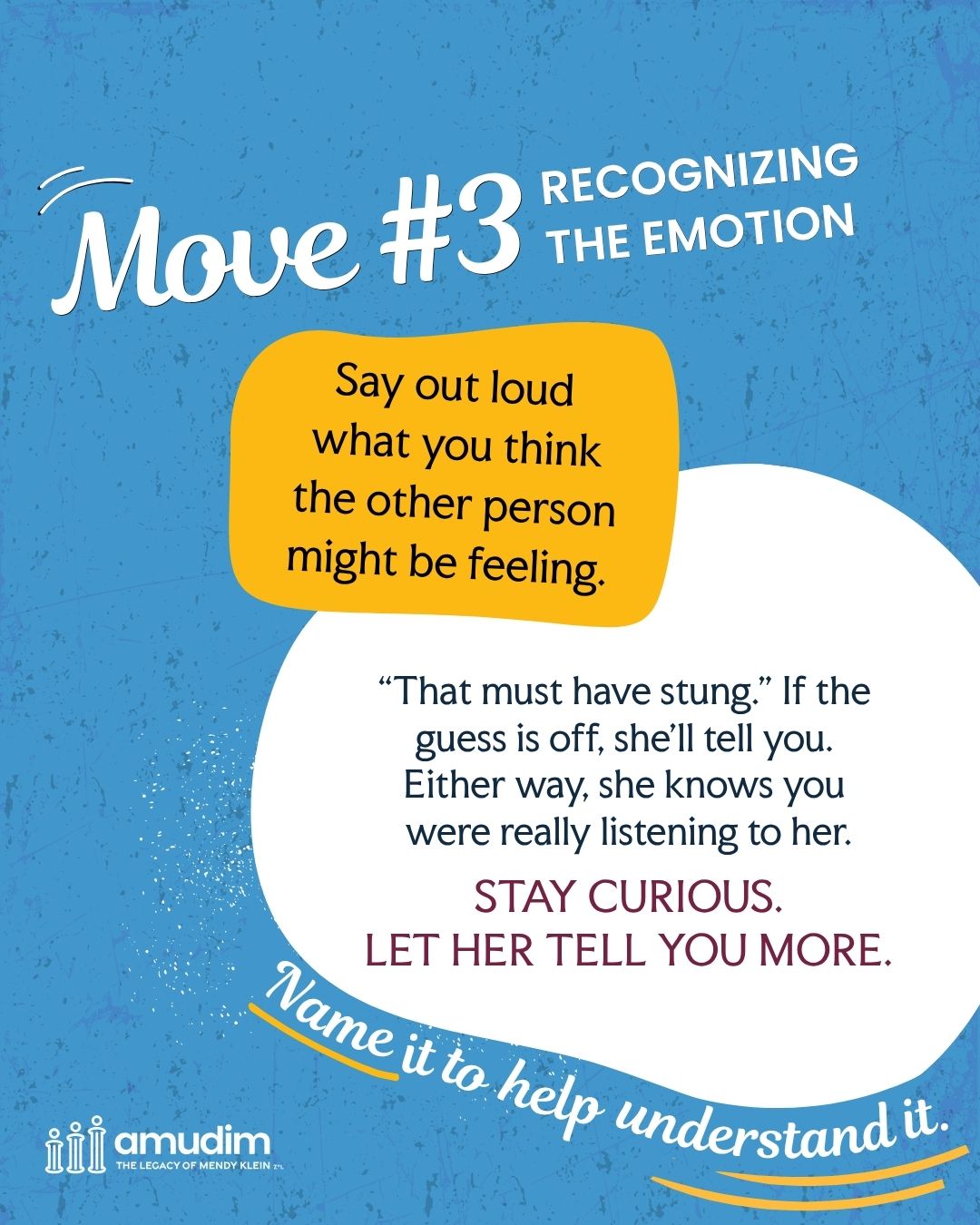
Move 3: Recognizing the emotion. Say out loud what you think she might be feeling. “That must have stung.” If the guess is off, she’ll tell you, and that’s still connection. Either way she knows you were really listening. Stay curious. Ask a question and let her tell you more.
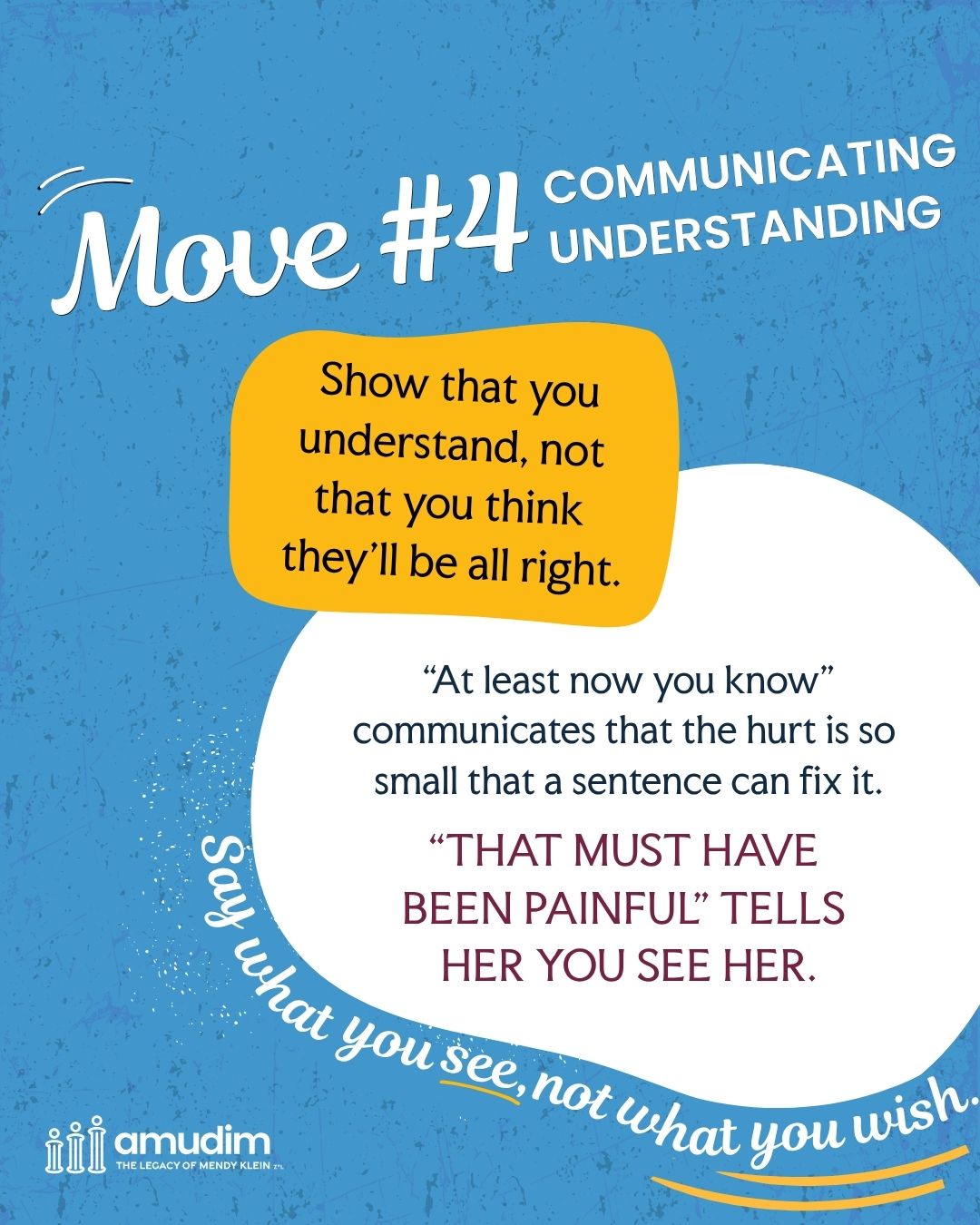
Move 4: Communicating understanding. Show that you understand, not that you think she’ll be all right. “At least now you know” tells her the hurt is small enough that one sentence can fix it. “That must have been painful” tells her you see her. Say what you see, not what you wish.
Most of us skip the first three moves and go straight to the fix. The fix is where our love goes when we can’t stand to watch someone we love hurt. But the fix takes something from her. If we hand her the bright side, she never gets to find her own. Give her the thirty seconds of “that must have been painful” and she’ll find it herself. It will mean more because it’s hers.
One more step when it’s our child
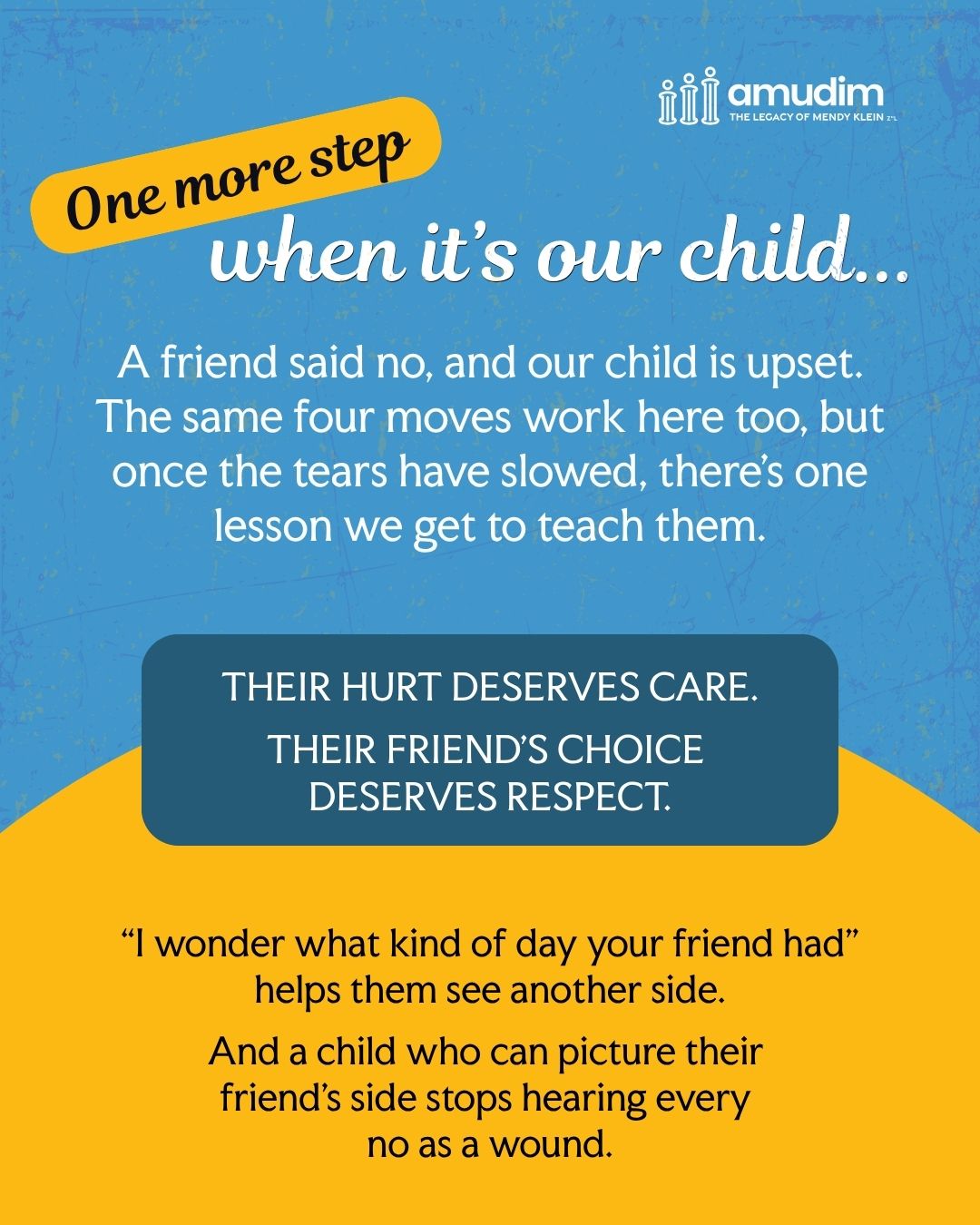
A friend said no, and your child is upset. The same four moves work here. Take her perspective, catch the judgment, name the feeling, say that you see it. Then, once the tears have slowed, there’s one lesson we get to teach a child that we would never say to a sister.
Their hurt deserves care. Their friend’s choice deserves respect.
Rabbi Avi Landa draws the line between sympathy and empathy with a pat on the head. Sympathy is noticing that she didn’t like it. Empathy is sitting with that long enough to remember it next time, before you reach out. I’m fine with it, she isn’t, and that’s okay. That last clause is the one our kids need to hear from us most. Different people have different lines, and that’s allowed.
So after the four moves, one question. “I wonder what kind of day your friend had.” You’re not correcting her. You’re not telling her the friend was right. You’re doing the perspective-taking out loud until she can do it in her head. And a child who can picture her friend’s side stops hearing every no as a wound.
It can hurt when a friend says no. Helping your child make room for that hurt while respecting her friend’s boundary takes practice and your support.
Why empathy and boundaries go hand in hand
Mrs. Berkowitz puts the order plainly. The rule comes second. The feeling comes first. A child who knows what it feels like to have her cup poured out understands why she can’t pour out someone else’s. So when your son grabs a toy, the first sentence isn’t “we don’t grab.” It’s “look at her face. That hurt her.” Then the rule. In that order, every time.
Saying no and hearing no are one skill, learned from both sides.
A child who can’t survive someone else’s no will never be able to hold her own, because every no she hears will feel like an attack, and every no she gives will feel like one too. It takes practice to sit with your child’s sadness without rushing to fix it. That same practice helps us hear their “no” and make room for it, too. We’ll get into that next week. This week, we started building the foundation.
This week's printable: Flip the Script
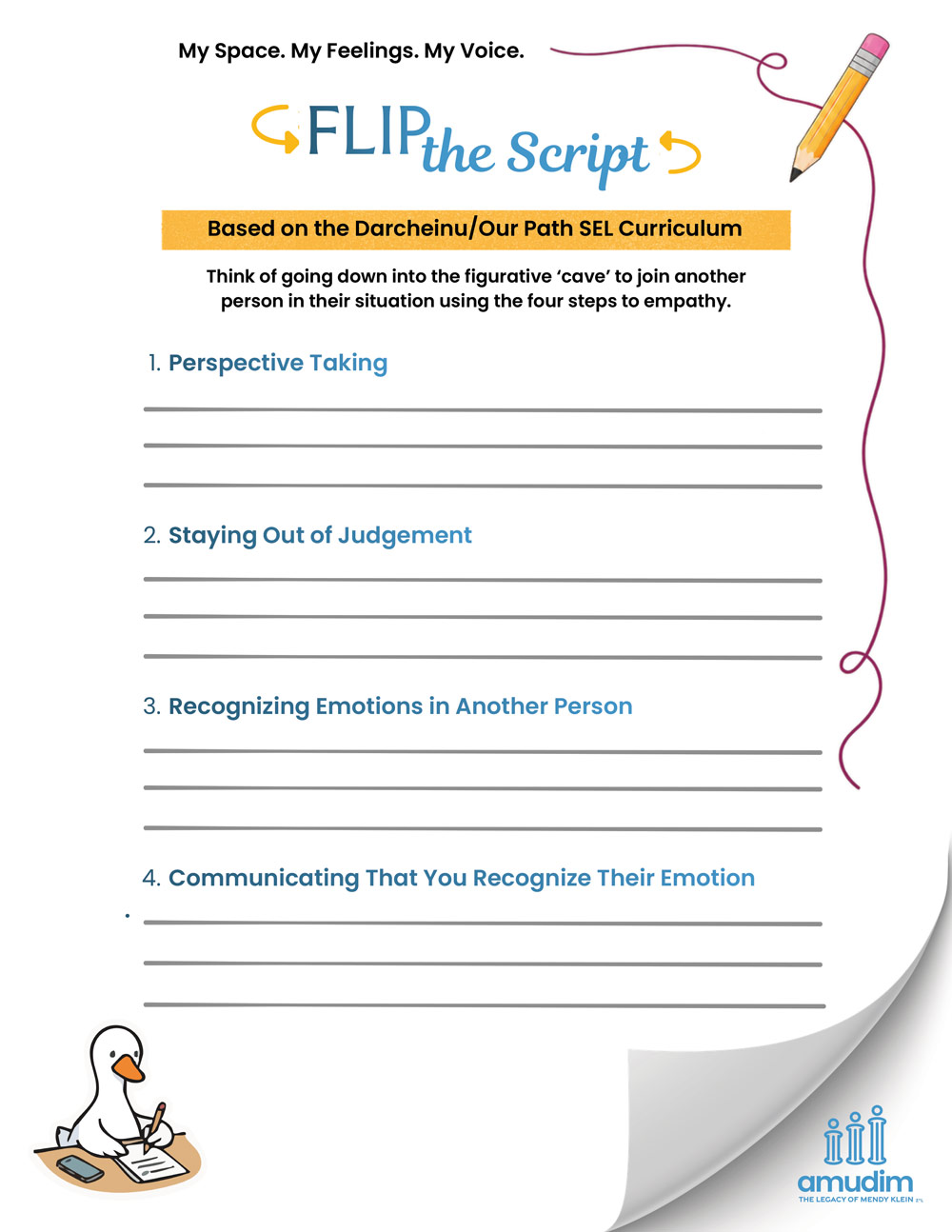
This week’s printable, Flip the Script, is the four moves on one page with room to write. Pick one moment from this week, one conversation you’d like a second try at, and walk it through all four steps on paper.
Next week, we’ll look at the other side of the same skill: hearing our children’s “no” and making room for it.
The empathy that makes us pillars
We’ve spent this week talking about empathy. It takes a lot of it to do this work: to pick up the phone and sit with someone on the worst day of their life and see a brother, a sister, a neighbor, not a case. Today, a thank you to the people who carry that empathy into every day.
Video
The Empathy That Makes Us Pillars
We’ve spent this week talking about empathy. How to teach it to our kids, how to hold it together with boundaries, how hard it actually is to do well.
It takes a lot of empathy to do this work. To pick up the phone and sit with someone on the worst day of their life and see a brother, a sister, a neighbor, not a case.
So today we would like to show our gratitude. To the Amudim staff and case managers, the ones who carry that empathy into every day. To every person who has followed this series and brought it home to their own family. And to every donor who makes it possible for us to keep showing up.
TRY THIS AT HOME:
Next time someone in your house brings you something hard, skip the fix. Go down into the cave with them. Take their side of it, drop the judgment, guess the feeling out loud, and say that you see it. Then stop. Let it sit. The silence after move four is the skill.
Thank you for continuing to follow along with us!
Wishing you a wonderful Shabbos,
The Amudim Team
You can revisit our SEL Parenting resources here. New resources are being added daily: