A kid who throws their backpack across the room after school isn’t trying to ruin our afternoon.
They are overwhelmed and just trying to catch their breath. Putting words to what happened – on the bus or in class – probably feels impossible when they don’t know how to name exactly what it is they’re feeling.
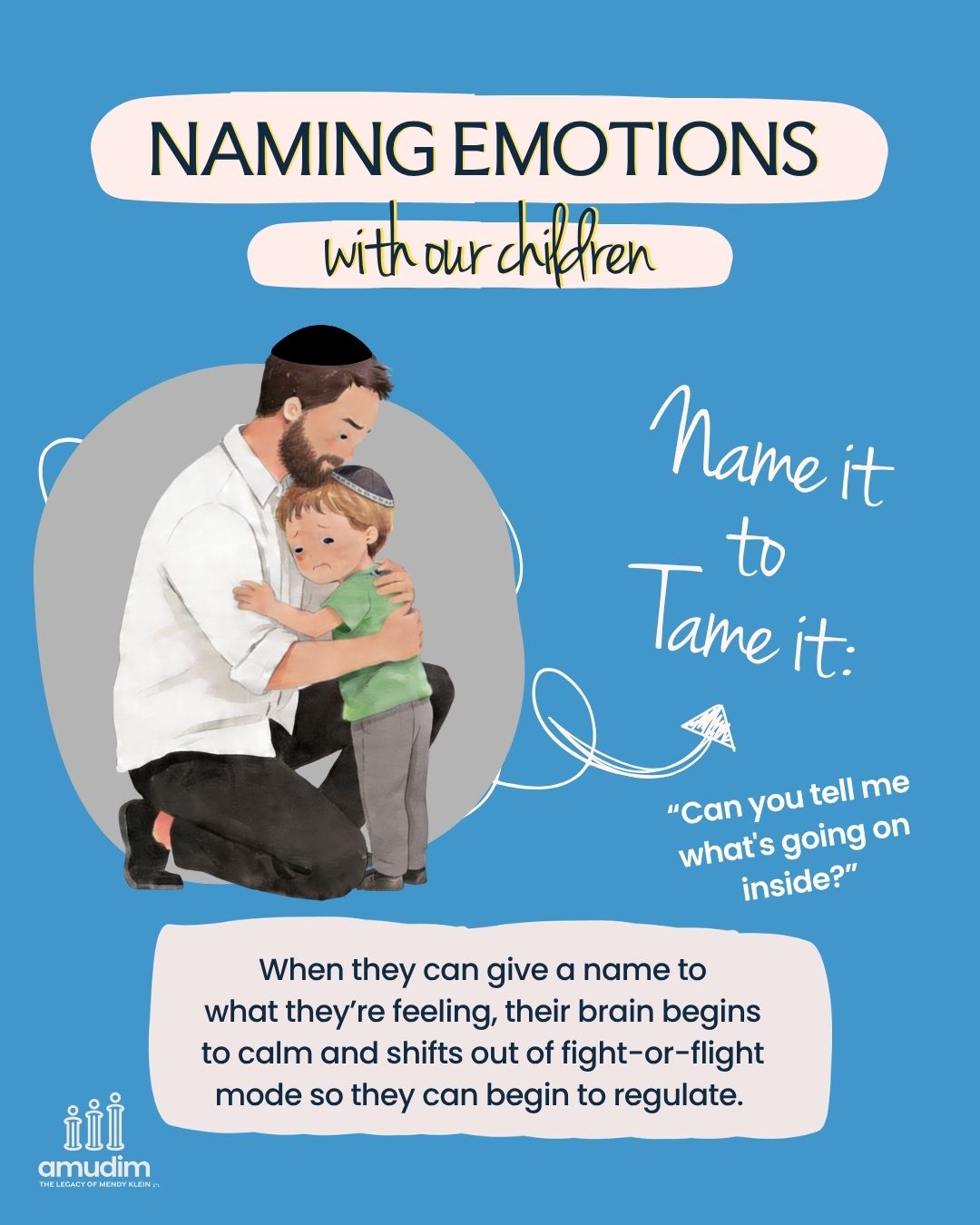
When we approach them with this understanding and help them find words for what’s going on inside, something shifts.
They start learning how to move through their emotions more steadily instead of being overtaken by them.
VIDEO
Give the Feeling a Name
“If a child is given that gift of feeling listened to, which allows them to then be able to consider tools for healthier living like ‘naming that monster’ with language, which allows them to then regulate and have accountability, then they’re going to feel so much better about themselves. They’re going to feel much greater self-worth, self-esteem, because they feel like they’ve got this with you at their side. And that’s the greatest feeling a parent can have to increase and to foster greater resilience in your children.“
– Rabbi Avi Landa, LCSW, Director of Education, Amudim
Article
When Kids Can’t Find the Words
Kids don’t learn emotional language from one big conversation. They learn it by how we talk about our own feelings, and by nudging them to go a little deeper to name what’s underneath the surface. Over time, they begin to understand that feelings aren’t good or bad – they’re signals better described as comfortable or uncomfortable. With that reframing, it becomes easier for them to connect their emotions to a cause .
And that’s when it starts to click. It’s the everyday, small moments and conversations that collectively help build their self-awareness. Maybe it’s at the Shabbos table, or on the drive home.
When our children are able to put words to what’s going on inside, something starts to settle. The intensity eases, their body shifts out of survival mode, and they can begin to steady themselves again.
And in that space, they have a moment to reset, and they’re learning how to handle what they feel next time, too.
Article
There is Value in Validation
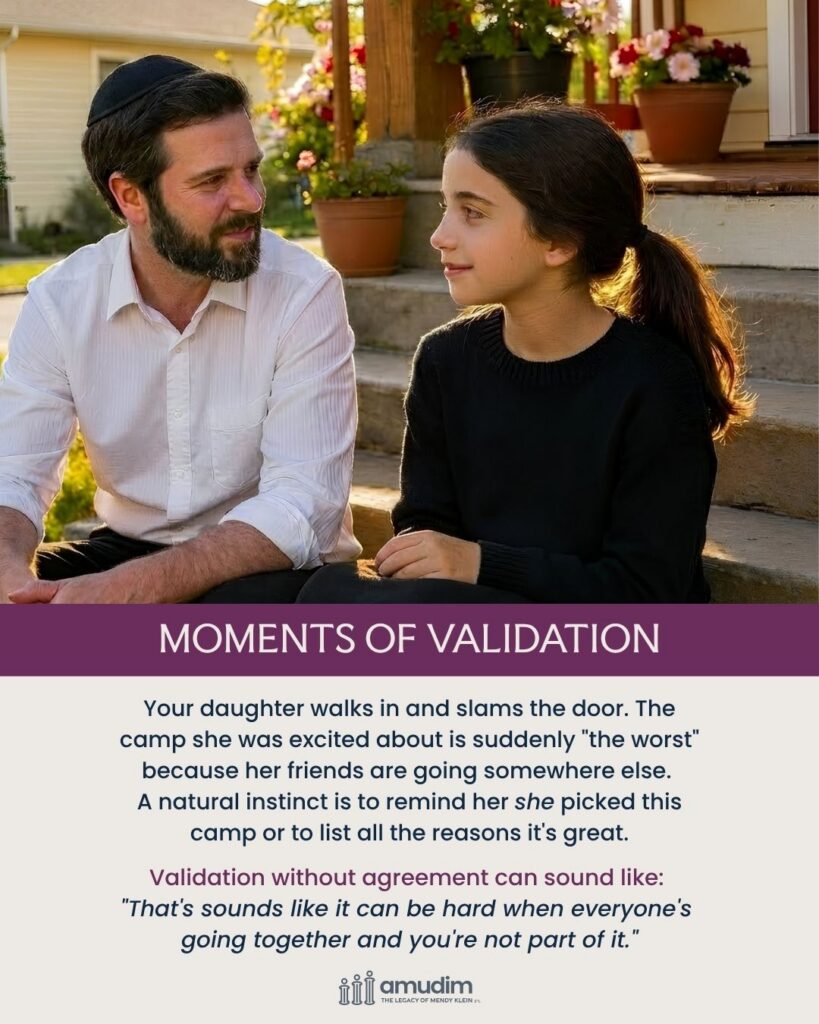
When we validate our children’s feelings, we are saying, “Your feelings are welcome here, and you matter so much. I’m going to stay with you in this.”
Our instinct as parents is to jump straight to fixing, because it’s hard to watch them struggle.
But to a child who’s upset, that can feel like we’re downplaying what they’re experiencing. What they really need is the space to feel it fully, with the safety of our presence and support.
When we take a moment to slow down and sit with them, the intensity of their emotions softens. What they’re feeling becomes less scary and more manageable.