




.svg)








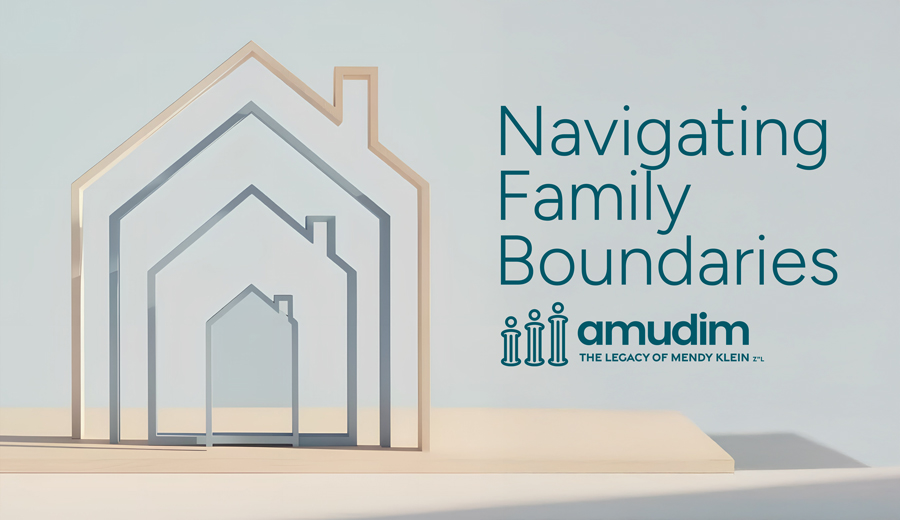
Shira* reached out about her 26 year-old son, Daniel,* who has been battling depression for many years. Daniel has been on and off several medications, has struggled to hold down a job, and was hospitalized recently after he expressed suicidal ideation. Shira called during this recent crisis, asking how she could help her son, who lives in a different state and has no support system nearby. Shira also shared that although the family has significant financial challenges, they have been paying for almost all of Daniel’s medical care, food and board. It was a difficult phone call, with many emotional and complex questions about how Shira could support her son and what the next steps might be to break this painful cycle.
Our case manager spoke with Shira about the importance of allowing Daniel to make his own choices. He pointed out that Shira is still taking care of her son as if he were a child, and that this is enabling him to always rely on his parents as a safety net. The case manager validated the pain of seeing an adult child struggle and feeling the need to jump in to help, but he pointed out that adults feel more accomplished and able to grow when they make the hard choices on their own. We referred Shira to a therapist to help process the emotions of watching her son in constant crisis. The case manager also coached Shira on how to speak with Daniel to encourage him to call us himself, if and when he decides that he is ready for outside assistance.
A month ago, Shira once again reached out. Daniel was in the hospital and needed help. But this time, Shira’s tone was different. She had taken a step back, letting Daniel know that she loves him but that he needs to make his own decisions about how to move forward. Daniel responded positively, expressing a desire to be supported by his family while he takes charge of his mental health needs. While this journey is far from over for Daniel, Shira and their family, they will hopefully move forward knowing the power of using their voice and maintaining loving and healthy boundaries.
If you or a loved one is struggling, please don’t hesitate to reach out. Amudim is just a phone call away and here to help.
*Names and details have been changed to protect privacy.
Week Ending December 12, 2025
78 New Matters Addressed This Week
Across 2 Countries Worldwide,
6 States and 20 Cities in the USA
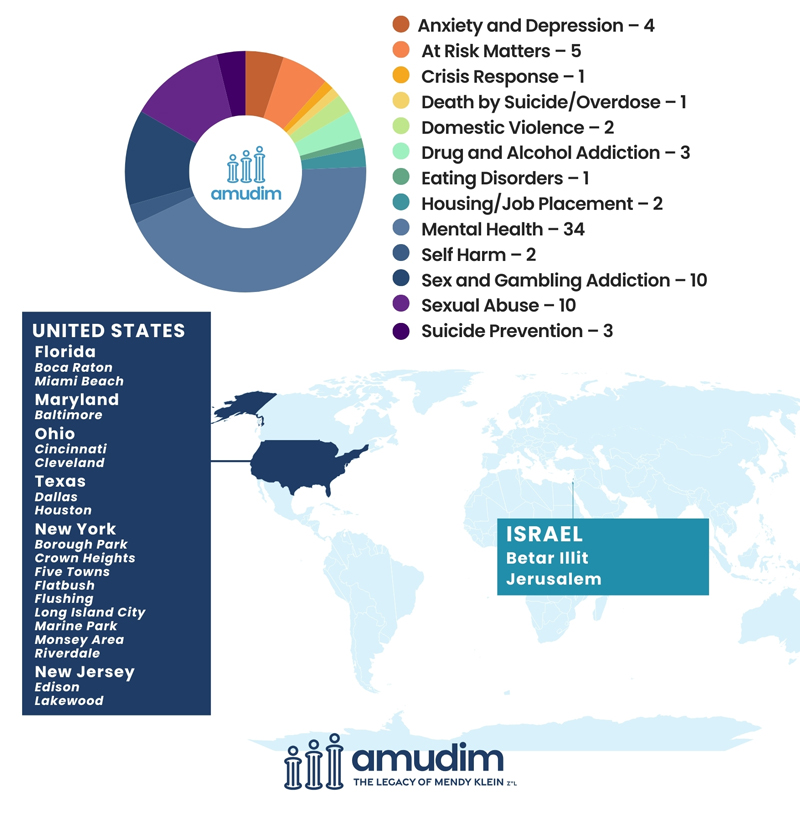
Each week, Amudim fields calls covering a wide range of crises and addressing various human concerns, including addiction, depression, abuse, health and domestic emergencies and many others. We track the calls and breakdown of issues for many reasons, foremost of which is to consistently improve and strengthen our knowledge and ability to address community’s needs.
Social Media
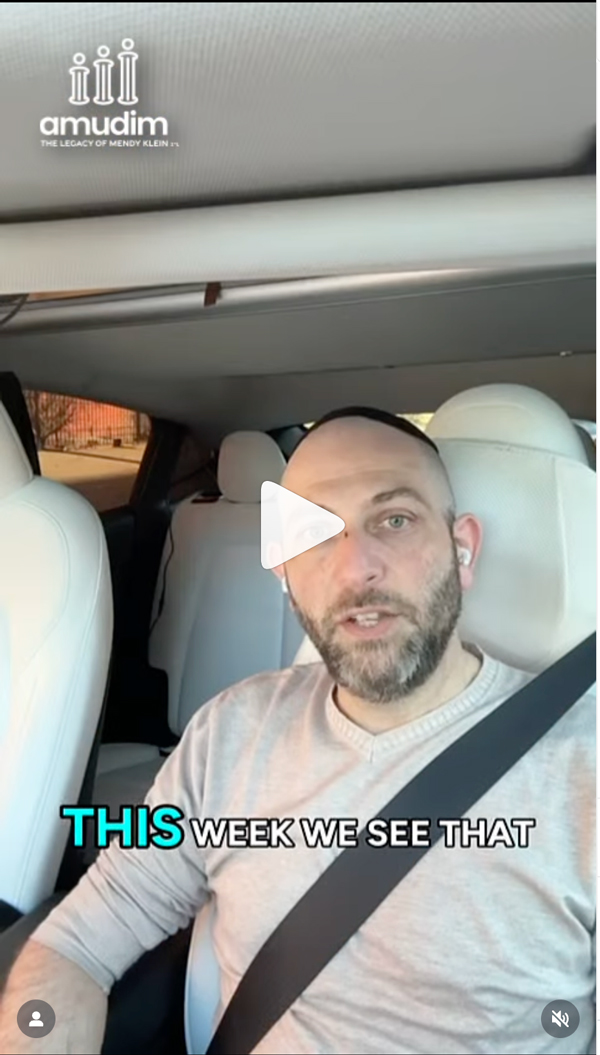
Have you ever felt thrown away - like the people meant to protect you just walked away?
This week’s parsha reminds us that Yosef was betrayed and left in a pit - but he didn’t let that moment define him. Healing began later with responsibility, presence, and people choosing to show up.
That’s what we saw this week at Amudim. Unite to Heal wasn’t just about a number - it was a statement: survivors deserve to be heard, seen, and not forgotten.
Healing isn’t measured in digits - it’s measured in dignity.
Good Shabbos.