



When Something Feels Off
A small change.
A comment you can’t forget.
A feeling that won’t leave.
A small change.
A comment you can’t forget.
A feeling that won’t leave.
January 23, 2026
Click Here to see our Weekly New Case Chart
Lately, many parents are carrying a quiet knot in their stomach. Something feels off - a change in behavior, a comment from school, a moment that didn’t sit right. When it involves our children, concern can escalate quickly, especially when words like drinking or addiction enter the conversation. And those words matter. They aren’t something to brush past.
From what our clinical teams are seeing, the safest way forward starts with clarity. Paying attention to concern is responsible. When something feels off, the next step is getting a careful, qualified assessment so families can understand what they’re actually dealing with and respond appropriately.
Substance-related concerns don’t always announce themselves clearly. They often begin quietly - a pattern that looks manageable, a situation that gets explained away, a phase others assume will pass. Families are frequently told it’s stress, curiosity, or normal teenage behavior. Sometimes that’s true. And sometimes it’s the beginning of something that needs attention sooner rather than later.
That’s why accuracy matters. Frequency, context, risk, and function all shape what a behavior means. The same behavior can point to very different underlying issues depending on what’s happening around it. And in some cases, it points to something serious. Responding well depends on understanding which situation you’re in.
Clinically, this is where assessment plays a critical role. A qualified, unbiased professional can help determine what’s going on and what level of support is needed. Seeking an assessment is an active step. It helps families avoid unnecessary escalation while also reducing the risk of missing something that requires timely intervention.
It’s also important to say this plainly: sometimes substance use truly is serious. When it is, early support matters. The earlier help begins, the more options families have and the less likely the situation is to escalate quietly over time. Knowing when a situation requires immediate attention is difficult - and families shouldn’t have to make that call alone.
For parents, this often means focusing on the next responsible step rather than trying to name or define the situation perfectly. Getting clarity from someone qualified. Staying grounded. Approaching your child with concern and steadiness rather than fear. These are protective actions, especially early on.
When a child is struggling, families often need support as well. Not because parents caused the problem, and not because something is wrong with them - but because navigating uncertainty, fear, and high-stakes decisions without guidance is exhausting. Support can steady the entire family system, regardless of how a child responds in the moment.
At Amudim, we see this every day. Our role is to help families respond thoughtfully and responsibly, without minimizing real risk and without escalating fear. We help families understand what they’re facing and connect them to appropriate next steps and resources.
If you’re worried, trust that instinct and get clarity.
Sometimes the most protective move is making the right call early.
If something feels ongoing or risky and you’re unsure where to start, you can reach out to Amudim to speak with a case manager and get guidance on next steps and available resources.
If you believe your child is in immediate danger, call 911 or your local emergency services right away.
Week Ending January 23, 2026
64 New Matters Addressed This Week
Across 4 Countries Worldwide,
7 States and 15 Cities in the USA
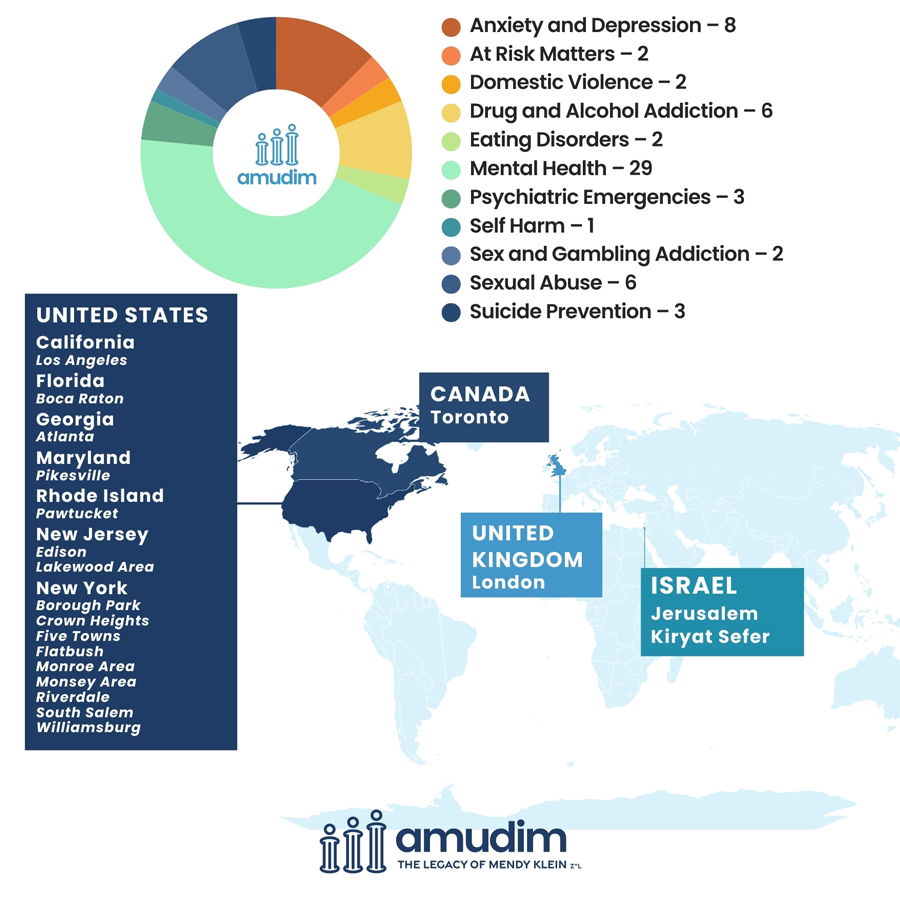
Each week, Amudim fields calls covering a wide range of crises and addressing various human concerns, including addiction, depression, abuse, health and domestic emergencies and many others. We track the calls and breakdown of issues for many reasons, foremost of which is to consistently improve and strengthen our knowledge and ability to address community’s needs.
Social Media

We’ve all heard, “Silence speaks louder than words.” But sometimes silence is what happens when language hasn’t been found yet.
Not because the pain isn’t real - but because saying it out loud feels impossible.
Parshas Bo lives right before freedom -
when dignity has to return before movement is possible.
Sometimes the work isn’t finding the words.
It’s remembering you’re allowed to have a voice.
Good Shabbos 🤍