


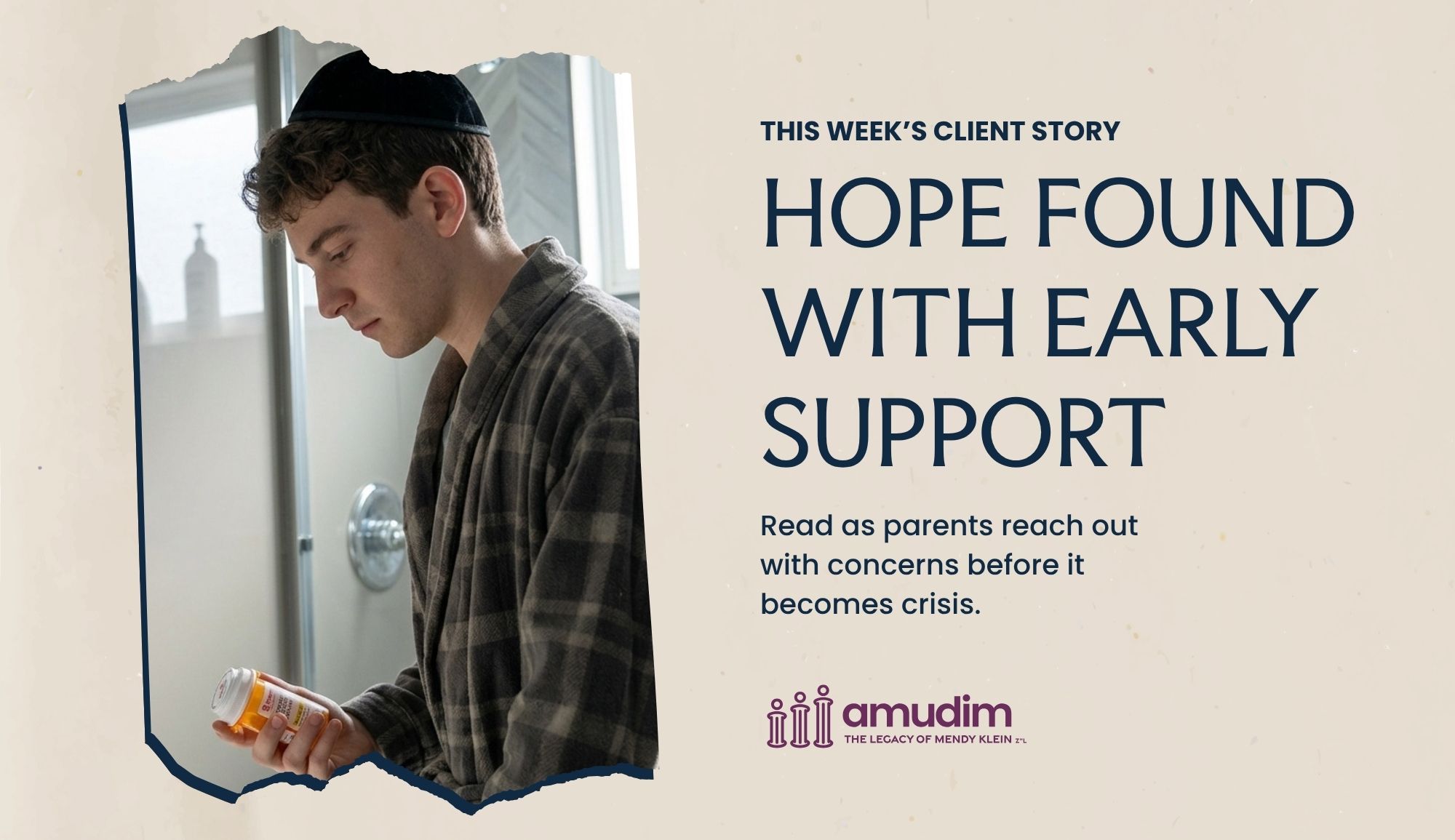
Leah* called Amudim after noticing that prescription medication was missing from her kitchen cabinet.
A few months earlier, someone in the family had a procedure and came home with pain medication. They used what they needed, and the bottle was pushed to the back of the cabinet, out of sight. No one thought about it again.
Until one afternoon, while looking for some Tylenol, Leah* noticed the bottle. The cap was not fully closed. It was sitting differently than she remembered. And when she picked it up, it felt lighter.
At first, she tried to explain it away, thinking maybe she had counted wrong or maybe her husband had taken one and forgotten to mention it. But that night, she asked her husband, “Did you take anything from that bottle recently?”
He looked confused and had no idea what she was talking about.
That was when fear settled in.
Their teenage son had been different lately. More tired. More irritable. More private. He was snapping at his siblings, coming home late, and going straight upstairs. His parents had noticed, but they kept telling themselves it was probably stress, friends, or normal teenage moodiness.
Now they were not so sure. The next morning, his mother confronted him. She was scared, and it came out fast.
“Did you take these?”
“Tell me the truth.”
“How long has this been going on?”
He denied everything and became very defensive. Within minutes, everyone was shouting, and their son stormed to his room, shutting down.
Leah stood in the kitchen, still holding the bottle, terrified. She knew her son was in trouble, but she had no idea how to reach him. That was when she called Amudim.
She did not know if this was a one-time mistake or something more serious. She did not know what her son would admit, or whether he would admit anything at all. She only knew that something was wrong, and she needed guidance before it got worse. Our team helped the parents focus first on safety. Were there immediate medical concerns? Were there other medications in the house that needed to be secured? Who needed to be brought in to assess what was really happening?
Then they helped the parents prepare to speak to their son again. Not to ignore what happened. It was serious. Medication was missing. Trust had been broken. Their son may have put himself in real danger.
They did not know yet if that was the full truth. But the call to Amudim opened the door to the next step.
In the days that followed, more came out. He had been overwhelmed. He was barely sleeping. A friend had told him the medication would help him relax. He told himself it was not a big deal. Then he was too ashamed to say anything.
That did not erase what happened. There had to be boundaries, supervision, and professional support. Leah* chose to intervene early, and that made all the difference for their son.
If you or someone you know is struggling, please don’t hesitate to reach out. Amudim is just a phone call away and here to help.
*Names and details have been changed to protect privacy.
Week Ending May 8, 2026

Each week, Amudim fields calls covering a wide range of crises and addressing various human concerns, including addiction, depression, abuse, health and domestic emergencies and many others. We track the calls and breakdown of issues for many reasons, foremost of which is to consistently improve and strengthen our knowledge and ability to address community’s needs.
This Month: Our Series for Parents
It Starts With Us
We all react to stress differently – it’s how our bodies are wired.
Today is about noticing which reactor type (or types) we tend to fall into.
That awareness is a powerful step toward becoming more self-aware and building deeper connection with our children.

Connection Before Consequence
When our child tells us something hard, our first response can become the bridge – or the wall.
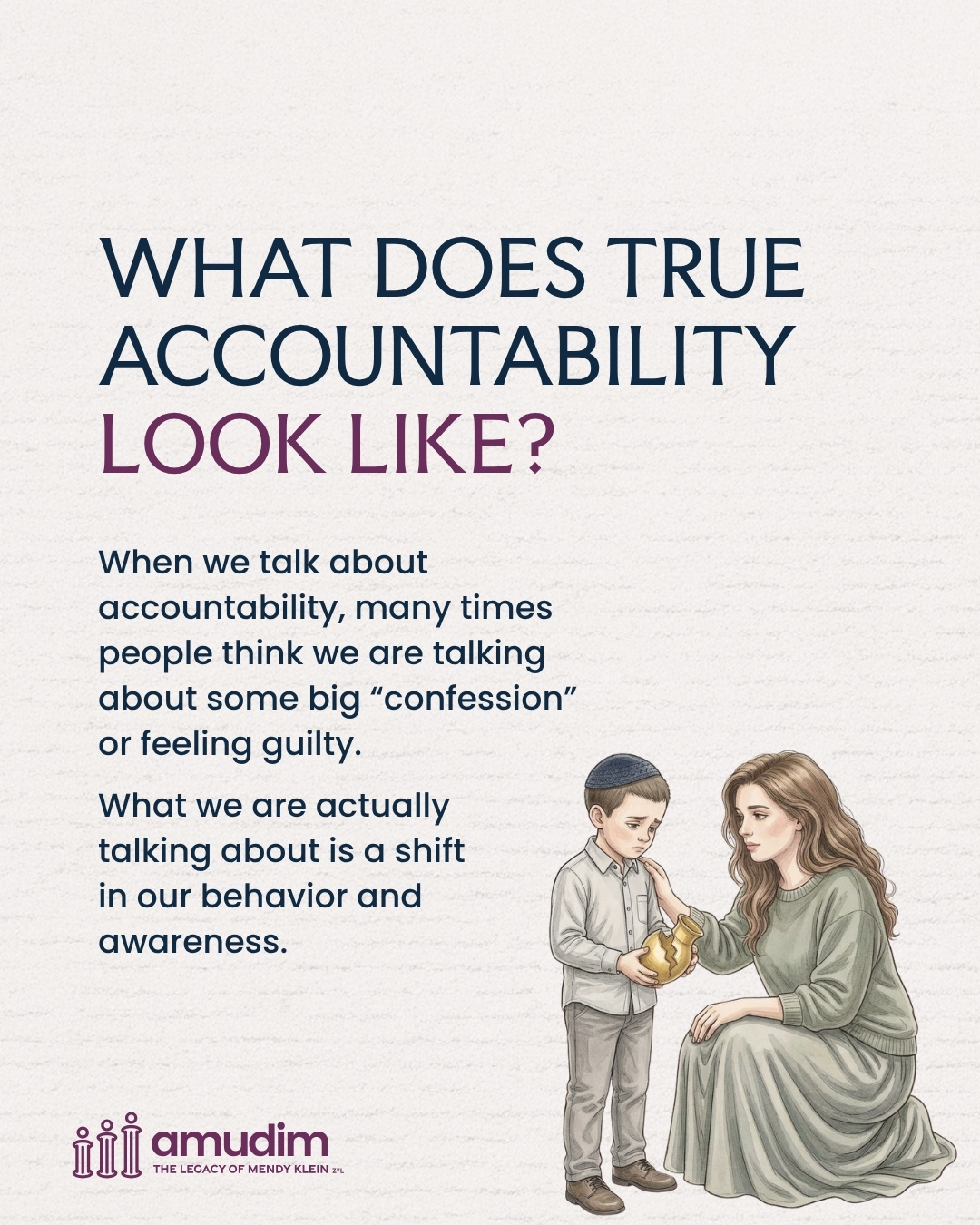
This week, we have been talking about accountability and repair.
We began with the way our children learn from how we respond when we are the ones who make mistakes. When we go back, take ownership, apologize, and repair, we show them that a mistake doesn’t have to be the end of the story.
This Month:

Over 500 People Attend EmpowerEd Mental Health Summit 2026 in Lakewood
The EmpowerEd Mental Health Summit, held this past Sunday, drew over 500 attendees for training, collaboration, and networking, in collaboration with Ray of Hope, Amudim, Touro University, and MASK. Participants flew in from multiple states, with representation from Monsey, Brooklyn, Baltimore, and across the tri-state area. The event was attended by over 100 Rabbanim, alongside a distinguished group of medical doctors and mental health professionals, reflecting a multidisciplinary approach.
This summit marked the launch of a biannual platform designed to foster collaboration among psychotherapists, psychiatric providers, medical doctors, and Rabbanim. Each summit provides 10 CEUs, enabling participants to complete the 40 CEUs required over a two-year cycle, with the next summit planned in six months.
Avi Schnall shared by the summit that a New Jersey State Senator who reviewed the full program was deeply impressed by its scope and impact, underscoring the significance of this initiative for the broader community.