



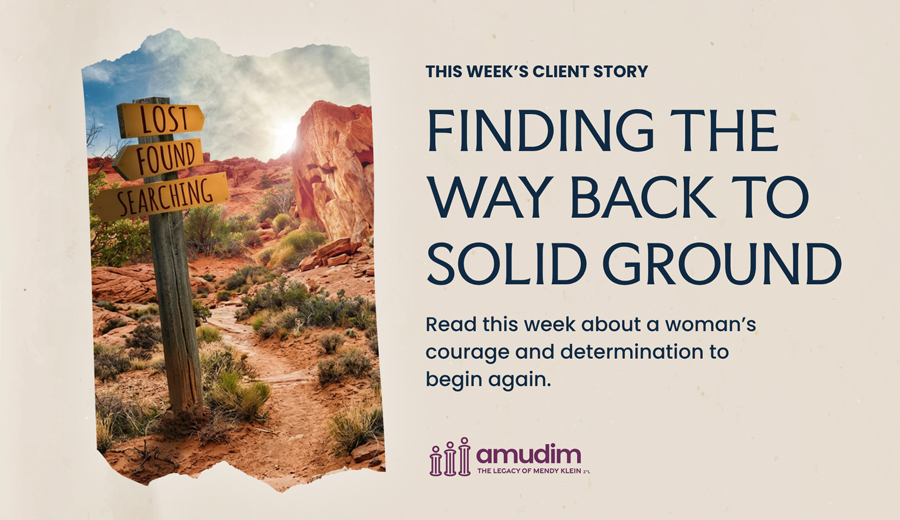
Evelyn* is a 39-year old woman who has had her share of disappointments. She was in a serious relationship in her 20s that ended with a broken engagement. Ten years later, she met someone with whom she developed a meaningful and heartfelt connection, and Evelyn was sure that they were headed towards marriage. After unexpectedly losing contact, Evelyn later found out that the man had passed away from a relapse. While she knew he had previously struggled with alcohol addiction, the news was a devastating shock. Overnight, the future Evelyn had envisioned disappeared, replaced with grief and many unanswered questions.
Evelyn began replaying conversations in her mind, wondering if she had overlooked important signs or whether she could have done something to ensure a different outcome. She struggled to sleep, found it difficult to concentrate at work and withdrew from friends and family. Even everyday tasks felt exhausting as she tried to process the loss.
Evelyn reached out to Amudim, seeking guidance to find her way back to solid ground. Her case manager provided a compassionate space where Evelyn could begin to process the trauma of her loss, and he connected her with a therapist experienced in treating grief. Over the next few months, the case manager maintained regular contact, checking in periodically to offer encouragement and ensure that Evelyn continued to receive much needed support.
Healing was not immediate. There were painful anniversaries and moments when the grief resurfaced with the same intensity Evelyn had felt in the beginning. But slowly, she began to move forward. She learned that healing did not mean forgetting – it meant finding ways to carry the loss while continuing to live a meaningful and happy life.
Today, more than a year later, Evelyn still misses the man who meant so much to her, but his loss no longer defines her. Recently, she called to share that she had gone on her first date since his passing. While she will always carry the memory of the life they never had, she is looking toward the future with renewed hope.
If you or someone you know is struggling, please don’t hesitate to reach out. Amudim is just a phone call away and here to help.
*Names and details have been changed to protect privacy.
Week Ending July 24, 2026
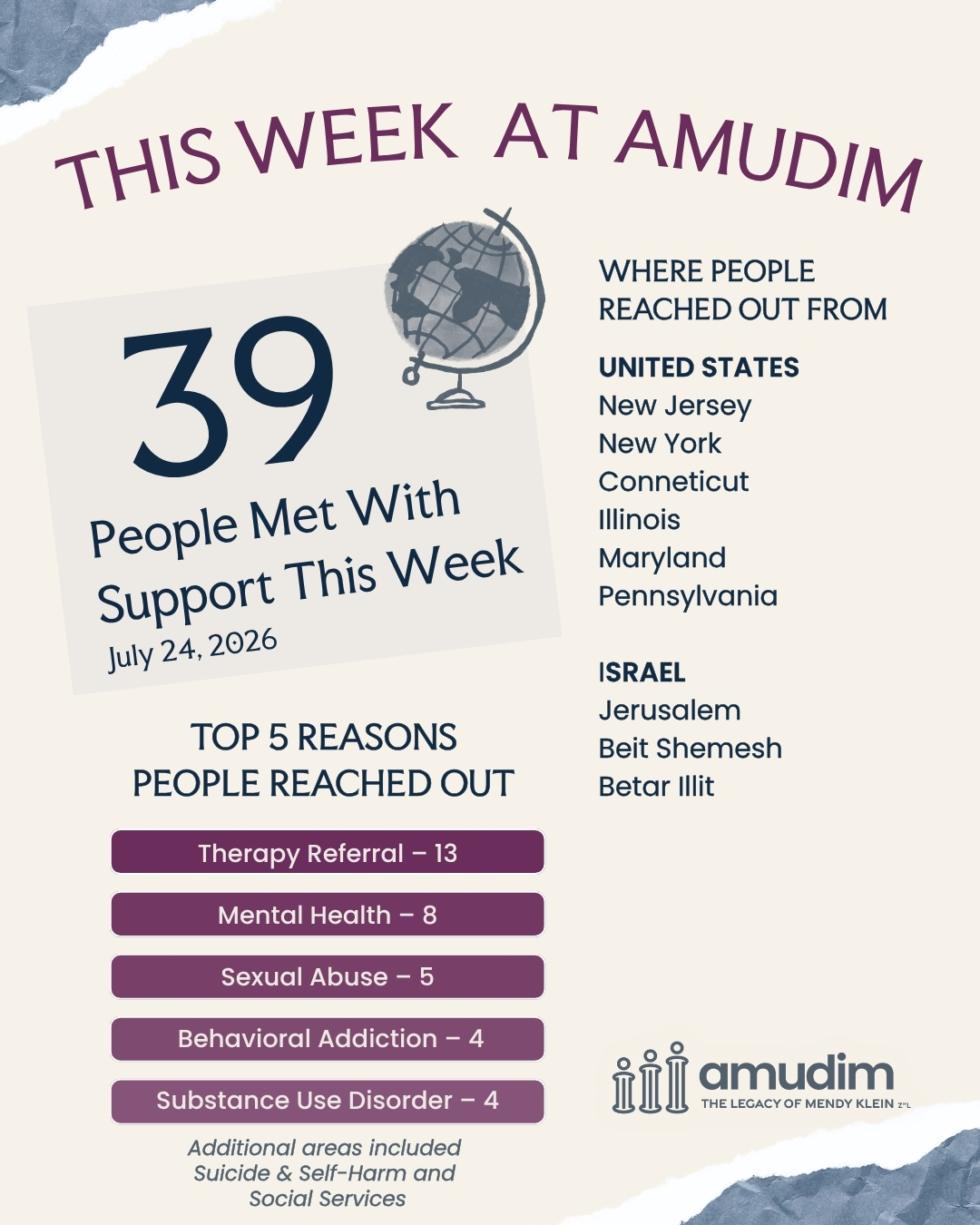
Each week, Amudim fields calls covering a wide range of crises and addressing various human concerns, including addiction, depression, abuse, health and domestic emergencies and many others. We track the calls and breakdown of issues for many reasons, foremost of which is to consistently improve and strengthen our knowledge and ability to address community’s needs.
Social Media
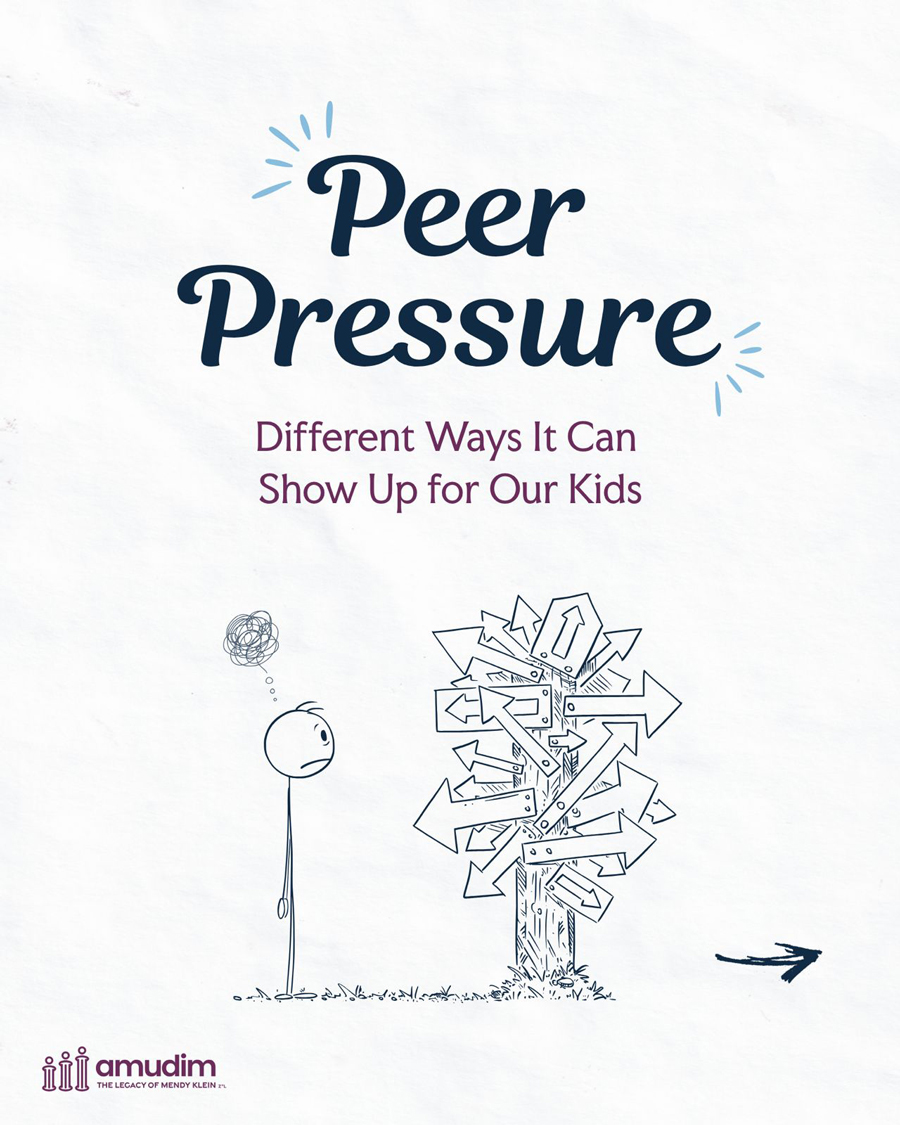
Our kids are always noticing what helps them fit in and what might set them apart.
Sometimes the pressure is obvious. Other times, it shows up through a look, a joke, or the feeling that everyone else is doing it.
Understanding the different ways it can show up helps us recognize what our kids are navigating and begin giving them the tools to handle it.
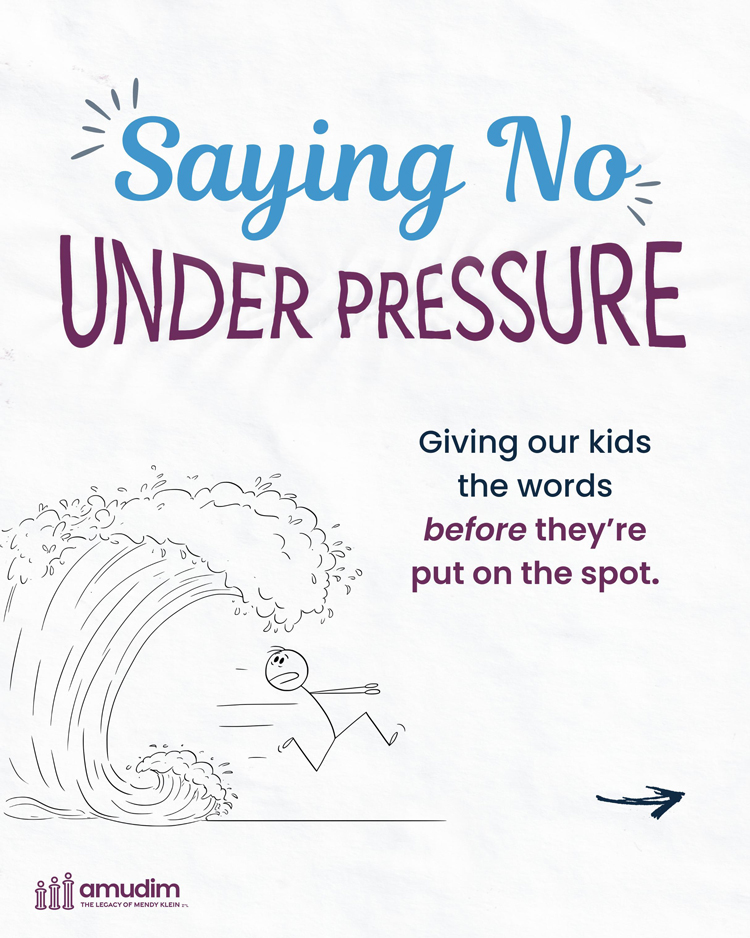
A lot of the time, our kids already know what not to do.
But in the moment, what they often need is help knowing what to say and what they can do next.
We can help them find language that feels natural to them while asking questions that encourage them to think more deeply about the people around them: Who makes it easier for them to be themselves? Who respects their choices, even when they are different?
Then, when the pressure comes, they already have several ways to respond within reach.
Read More and Download our free Standing My Ground worksheet to help kids choose words that feel right for them and begin practicing how to stand up to peer pressure